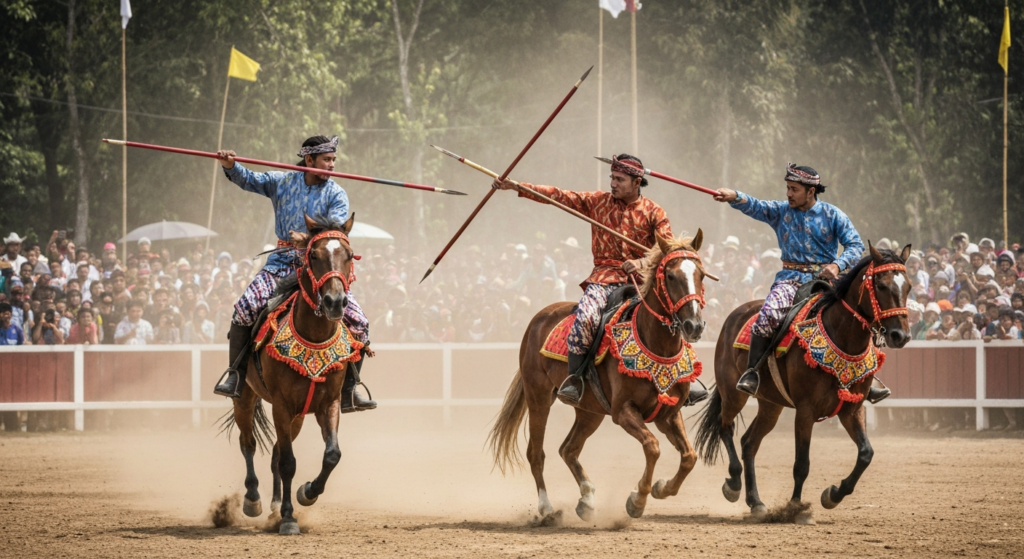
Sumba Horse Culture — A Living Heritage
Discover the ancient bond between the Sumbanese people and their horses — a cultural tradition spanning thousands of years that continues to shape island life today.
The Sacred Bond Between Sumba and Its Horses
On Sumba Island, horses are not merely animals — they are spiritual companions, economic assets, social status symbols, and living connections to ancestral traditions. No other island in the Indonesian archipelago maintains such a profound and multifaceted relationship with horses, making Sumba a uniquely compelling destination for equestrians and cultural travelers alike.
The Sumbanese horse culture predates written history on the island. Archaeological evidence suggests that horses were introduced to Sumba through ancient maritime trade networks connecting the island to mainland Asia, possibly as early as two thousand years ago. Over centuries of selective breeding adapted to the island’s harsh terrain and tropical climate, these horses evolved into the distinctive Sandalwood pony breed — small in stature but extraordinary in stamina, sure-footedness, and intelligence.
In traditional Sumbanese society, a family’s wealth is measured not in money or land, but in the number and quality of their horses, water buffalo, and ikat textiles. A man seeking to marry must present a substantial bride price to the woman’s family, and horses form a central part of this exchange. The finest horses can be worth the equivalent of thousands of dollars, and the negotiation over bride price horses is a complex social ritual that can take months to complete.
The Pasola — Sacred Mounted Warfare
The Pasola is the most dramatic expression of Sumbanese horse culture and one of the most spectacular traditional ceremonies in all of Southeast Asia. Held annually during the rice planting season between February and March, the Pasola is a mounted spear-throwing ceremony in which warriors from opposing villages charge at each other on horseback, hurling wooden javelins in a display of courage, skill, and spiritual devotion.
The ceremony is timed to coincide with the arrival of nyale — colorful sea worms that emerge from the ocean floor once a year. The Rato, or spiritual leader, reads the nyale to predict the coming harvest season. The Pasola itself is believed to ensure a bountiful rice harvest, with the blood of both riders and horses considered a sacred offering to the earth and ancestral spirits.
Preparation for the Pasola begins weeks in advance, with warriors training their horses and performing ritual ceremonies to seek the protection of their ancestors. The horses selected for the Pasola are the finest in each village — fast, agile, and fearless. The bond between a Pasola warrior and his horse is so deep that many warriors speak of their horses as trusted partners rather than animals, and the death of a Pasola horse is mourned with the same gravity as the death of a family member.
The Sandalwood Pony — A Breed Apart
The Sandalwood pony is indigenous to the islands of Sumba and Sumbawa, named after the sandalwood trees that once covered these islands in dense forests. Standing between 12 and 13 hands high (approximately 122-132 centimeters at the shoulder), these compact horses possess a strength-to-size ratio that continually surprises visitors accustomed to larger European and American breeds.
Sandalwood ponies are exceptionally sure-footed, navigating rocky coastal trails, steep hillsides, and soft sand beaches with equal confidence. Their small hooves are naturally hard and rarely require shoeing, and their compact build allows them to maintain balance on terrain that would challenge larger horses. These traits make them perfect mounts for the diverse landscapes of Sumba, from dense forest trails to open grassland canters.
Physical Traits
Height: 12-13 hands. Weight: 250-350 kg. Colors: bay, chestnut, grey, and black. Strong legs with dense bone. Deep chest for stamina. Alert, expressive ears and intelligent eyes.
Temperament
Known for calm, willing nature. Responds well to voice commands. Excellent with inexperienced riders. Brave in water — natural swimmers. Bonds quickly with regular riders.
Horses in Daily Sumbanese Life
Beyond the spectacle of the Pasola, horses play an essential role in the daily rhythms of Sumbanese life. In rural areas where roads are unpaved and vehicles are scarce, horses remain the primary means of transportation, carrying riders between villages, to markets, and across the vast grassland plateaus that dominate the island’s interior. Children learn to ride almost as soon as they can walk, and it is common to see young boys and girls riding bareback through village lanes with effortless confidence.
Horses are also central to funeral ceremonies, which represent the most elaborate and expensive rituals in Sumbanese culture. When a person of high social standing dies, their funeral may involve the sacrifice of dozens of horses and water buffalo, a practice rooted in the belief that these animals will serve the deceased in the afterlife. These ceremonies can last for days and involve entire communities, reinforcing social bonds and spiritual obligations.
Frequently Asked Questions
Can tourists attend the Pasola ceremony?
Yes, the Pasola is open to respectful visitors. The ceremony takes place in February-March at various locations across West Sumba. We organize special Pasola-season packages that combine horse riding with ceremony attendance. Advance booking is essential as this is peak season.
How are the horses cared for?
Our horses receive veterinary care, proper nutrition, and regular rest periods. They work no more than 4-5 hours per day with mandatory rest days between multi-day trips. We follow international equine welfare standards and welcome inspection by any animal welfare organization.
What makes Sandalwood ponies different from other breeds?
Sandalwood ponies evolved in isolation on Sumba and Sumbawa over centuries. They are uniquely adapted to tropical heat, rocky terrain, and sandy beaches. Their calm temperament, sure-footedness, and natural swimming ability make them ideal for the diverse riding conditions on Sumba Island.
Experience Sumba’s Horse Culture Firsthand
Ride the same trails as Sumbanese warriors. Bond with Sandalwood ponies. Discover a living equestrian tradition unlike anything else on earth.
Explore Our Tours