About Sumba Island — Indonesia’s Hidden Paradise
Discover an island where megalithic traditions endure, wild horses roam free, and some of the world’s most spectacular beaches remain virtually untouched.
An Island Unlike Any Other in Indonesia
Sumba Island sits in the eastern reaches of the Indonesian archipelago, positioned between Flores to the north and Australia to the south. Spanning approximately 11,000 square kilometers, it is one of the largest islands in Nusa Tenggara Timur province, yet remains one of the least visited destinations in all of Southeast Asia. While Bali welcomes over six million tourists annually, Sumba receives fewer than fifty thousand — preserving an authenticity that has vanished from most Indonesian islands.
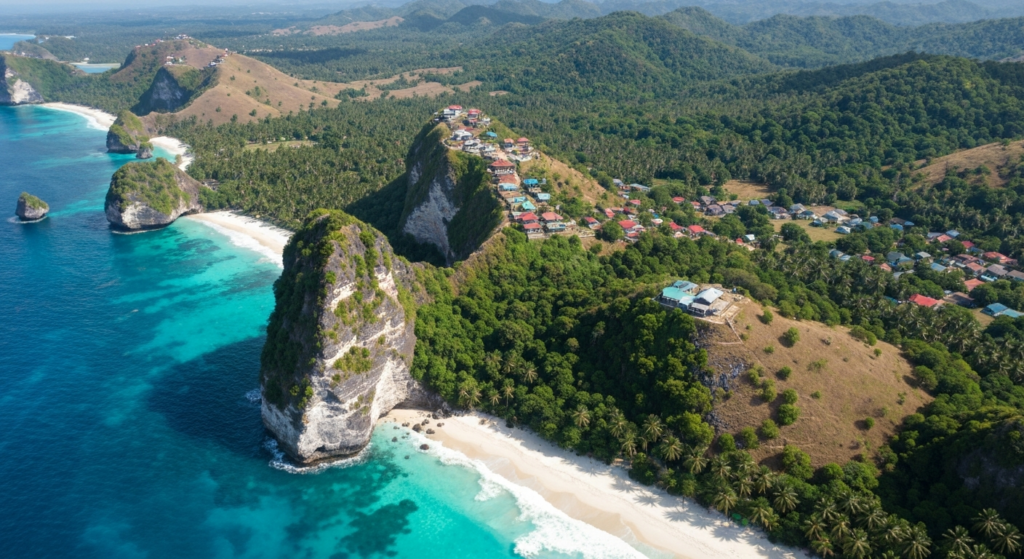
The island’s landscape is dramatically different from the lush volcanic terrain typical of Indonesian islands. Sumba features rolling grassland savannas reminiscent of the African savanna, dramatic limestone cliffs plunging into turquoise waters, hidden waterfalls cascading into natural swimming pools, and pristine beaches that stretch for kilometers without a single footprint. The contrast between the arid eastern plateau and the fertile western coast creates a diversity of ecosystems that supports an extraordinary range of flora and fauna.
Geologically, Sumba is unique among Indonesian islands because it sits on its own tectonic plate rather than the volcanic arc that forms most of the archipelago. This geological isolation has produced endemic species found nowhere else on earth, including the Sumba hornbill, the Sumba buttonquail, and several species of lizards and butterflies that have evolved in splendid isolation over millions of years.
The Marapu Culture — A Living Ancient Tradition
What truly sets Sumba apart is its living megalithic culture. The Sumbanese people practice Marapu, an ancestral belief system that predates the arrival of all world religions to the archipelago. Under Marapu, the spiritual world and the physical world are deeply interconnected, with ancestors serving as intermediaries between the living and the divine. This spiritual framework governs everything from architecture to agriculture, from marriage negotiations to funeral practices.
Traditional villages are organized around elaborate stone tombs that serve as the spiritual center of community life. These megalithic tombs, some weighing over twenty tons, are dragged from distant quarries by hundreds of villagers in ceremonies that can last for days. The construction of a single tomb represents the collective effort and spiritual devotion of an entire community, and the most impressive examples rival the megalithic structures of Stonehenge in both scale and cultural significance.
The traditional Sumbanese house, known as uma mbatangu, features a dramatically tall thatched roof that can reach up to twenty meters in height. These architectural marvels are constructed without nails or modern materials, using techniques passed down through generations. The height of the roof reflects the social status of the family, and the interior is organized according to strict spiritual protocols that govern the placement of hearth, sleeping areas, and sacred objects.
Sumba’s Horse Culture
Horses have been central to Sumbanese life for centuries. The native Sandalwood pony is a small, hardy breed that has adapted perfectly to the island’s terrain and climate. These horses are used for transportation, agriculture, ceremonial purposes, and most famously, for the Pasola — an annual mounted spear-throwing ceremony that takes place during the rice planting season between February and March.
The Pasola is not merely a sporting event but a deeply spiritual ritual believed to ensure a bountiful harvest. Mounted warriors from opposing villages charge at each other across open fields, hurling wooden spears in a display of courage and horsemanship. Blood drawn during the Pasola is considered a sacred offering to the earth, and the ceremony attracts participants and spectators from across the island.
Geography and Climate
West Sumba
Lush and green with higher rainfall. Home to the best beaches, Nihiwatu surf breaks, Weekuri Lagoon, and the majority of tourism infrastructure. Capital: Waikabubak.
East Sumba
Drier savanna landscape with vast grasslands. Strongest traditional culture, most impressive megalithic tombs, and the finest ikat textile weaving villages. Capital: Waingapu.
Sumba has a tropical climate with two distinct seasons. The dry season runs from April through October with temperatures between 27-33 degrees Celsius, clear skies, and minimal rainfall — ideal conditions for horse riding and outdoor exploration. The wet season from November through March brings afternoon thunderstorms, greener landscapes, and the Pasola ceremony season.
Frequently Asked Questions
Is Sumba Island safe for tourists?
Yes, Sumba is very safe for international visitors. The Sumbanese people are known for their warmth and hospitality. Crime rates are extremely low, and tourists are treated as honored guests. Standard travel precautions apply as with any destination.
What language is spoken in Sumba?
Indonesian (Bahasa Indonesia) is the official language. Several Sumbanese dialects are spoken locally. English is limited outside tourist areas, which is why our English-speaking guides are essential for cultural immersion and communication.
What is the currency in Sumba?
Indonesian Rupiah (IDR). ATMs are available in Waikabubak and Waingapu, but cash is essential for rural areas and village visits. We recommend bringing sufficient cash from Bali as ATM availability is limited.
Experience Sumba on Horseback
The best way to discover Sumba Island is from the saddle. Explore our riding packages and plan your adventure.
View Horse Tours