Best Time to Visit Sumba
Plan your Sumba horse riding adventure around the island’s seasons, cultural festivals, and optimal riding conditions for the experience of a lifetime.
Sumba’s Climate and Seasons
Sumba Island enjoys a tropical savanna climate that differs significantly from the humid equatorial weather of Bali and Java. The island experiences two distinct seasons: the dry season from April through November and the wet season from December through March. This climatic pattern makes Sumba one of the few Indonesian islands where you can plan outdoor activities with high confidence in clear weather for more than half the year.
Average temperatures range from 24 to 33 degrees Celsius year-round, with the hottest months being October and November. The dry season brings consistent sunshine, lower humidity, and spectacular golden-hour lighting that photographers and horse riders especially love. Even during the wet season, rain typically falls in intense afternoon bursts lasting 1 to 2 hours, leaving mornings clear and usable for riding activities.
Month-by-Month Guide for Horse Riding
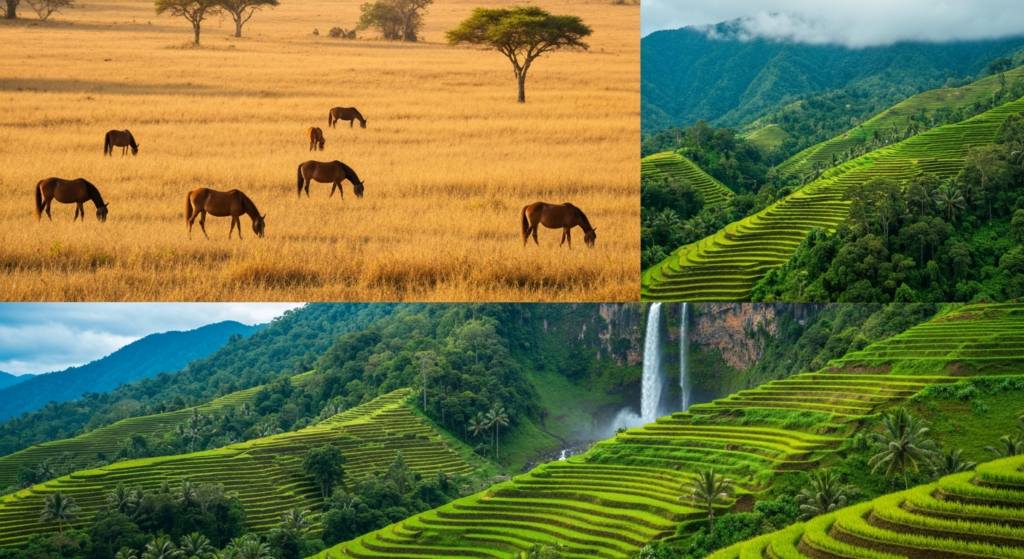
April to June — Peak Season Begins: The transition from wet to dry brings lush green landscapes combined with clearing skies. This is arguably the most beautiful time for horse riding, as the grasslands are vibrant emerald green, waterfalls are flowing at full volume, and the air is fresh and cool. April marks the start of reliable riding weather, and by May conditions are consistently excellent. June sees the beginning of peak tourist season with more international visitors arriving.
July to September — High Season: These are the driest, most predictable months with virtually zero rainfall. The landscape transforms to golden savanna dotted with lontar palms, creating a dramatic backdrop for photography. This is peak season for horse swimming as ocean conditions are calmest. Beach rides at sunset are spectacular during this period. Advance booking of 6 to 8 weeks is strongly recommended as availability is limited.
October to November — Shoulder Season: Temperatures peak and the first scattered rains appear, usually in late November. The landscape is dry and golden with dramatic cloud formations at sunset. Fewer tourists mean more privacy and availability, plus lower accommodation rates at partner properties. An excellent time for riders who want exclusive experiences without the high-season crowds.
December to March — Green Season: The wet season brings afternoon tropical showers but also transforms the island into a verdant paradise. Morning rides are typically dry and cooler, with misty mountain trails offering a completely different atmosphere from the dry season. This is when Sumba’s famous Pasola horse jousting festival takes place in February and March, offering a once-in-a-lifetime cultural experience combined with riding.
Cultural Events and Festivals
The Pasola festival, held in February and March, is Sumba’s most spectacular cultural event. Hundreds of skilled Sumbanese horsemen engage in ritual jousting on horseback, throwing blunt wooden spears at opposing riders. The event is deeply spiritual, connected to the annual nyale sea worm harvest, and draws visitors from around the world. We offer special Pasola packages that combine festival viewing with riding experiences alongside local horsemen.
Beyond Pasola, traditional ceremonies including funerals, marriages, and harvest festivals occur throughout the year and provide authentic cultural immersion during village visits on our riding trails. Your guide will always seek permission before approaching ceremonial activities, ensuring respectful engagement with local traditions.
Can I ride horses during the wet season?
Yes, we operate year-round. During the wet season, morning sessions are typically dry. Mountain trails can be muddy which some riders actually prefer for the adventure factor. Beach riding and horse swimming remain available with adjusted scheduling around weather patterns.
When is the cheapest time to visit Sumba?
November through March offers lower accommodation rates and flight prices, plus less competition for bookings. Our riding rates remain consistent year-round, but partner hotel discounts during the green season can reduce total trip costs by 20 to 30 percent compared to July through September.
How far in advance should I book?
For peak season visits from June to September, book 6 to 8 weeks in advance. For shoulder and green season, 2 to 4 weeks is usually sufficient. Pasola festival packages should be booked 3 months ahead as availability is extremely limited.
Plan Your Perfect Timing
Not sure when to come? Our team will help you match your schedule with the best riding conditions and available experiences.
Month-by-Month Riding Conditions
January and February bring the Pasola festival season — the ancient Sumbanese horseback spear-throwing ceremony — making it culturally the most exciting time to visit despite occasional heavy rain. March and April see the rains tapering off while landscapes remain lush and green. May through September is peak dry season with the best beach riding conditions, clearest skies, and most consistent temperatures. October is a transition month with excellent riding and fewer tourists. November and December mark the return of rains, bringing dramatic cloud formations and vivid green landscapes that photograph beautifully.
Booking and Availability
Peak season from June to September fills quickly, especially for longer packages. We recommend booking at least 3 months in advance for peak season visits and at least 4 weeks for shoulder season. Group sizes are capped at 8 riders, and popular dates sell out early. Early booking also secures the best accommodation options at our partner lodges.
Can I ride horses during the rainy season?
Absolutely. We operate year-round. Rain in Sumba typically falls in short, intense afternoon bursts, leaving mornings clear for riding. Beach sand drains quickly, and our horses are accustomed to all weather conditions. The wet season also brings fewer visitors, meaning more exclusive experiences.