Pasola
February–March · Marapu harvest rite
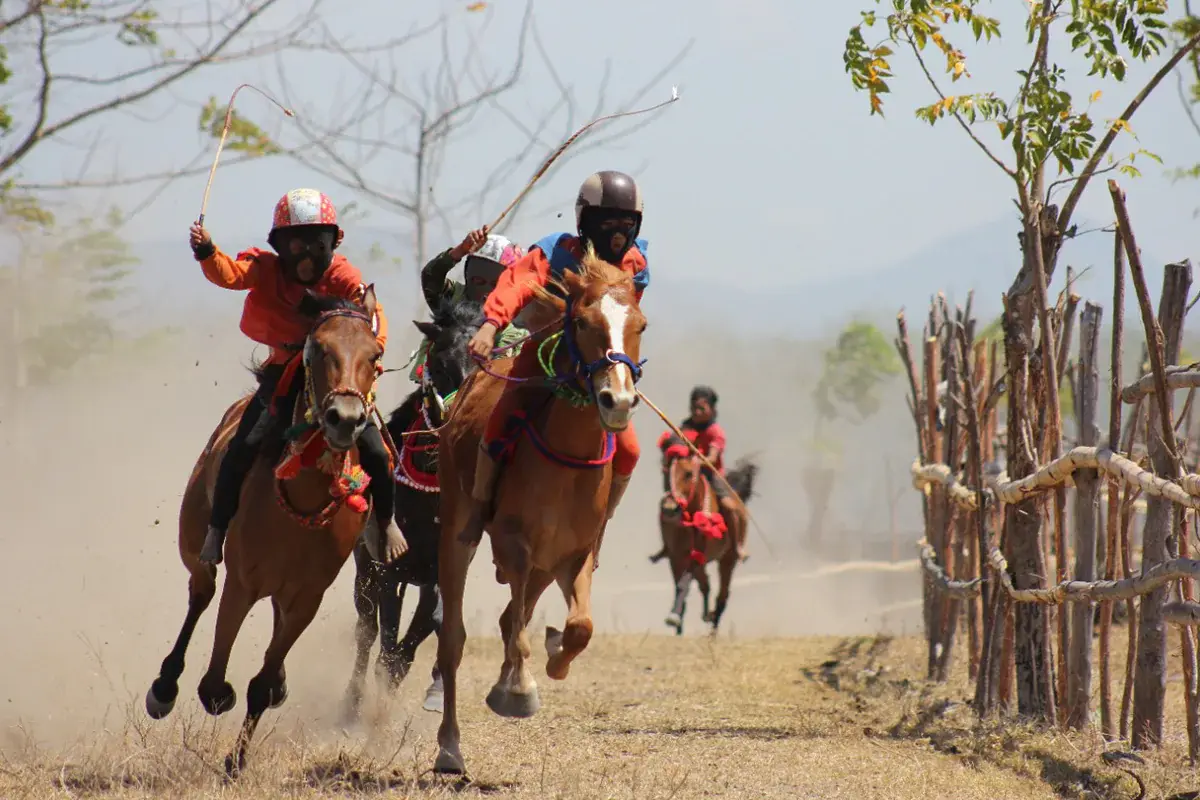
Horsemen from rival clans charge and exchange wooden spears at full gallop. It marks the start of the planting season and is religious observance, not tournament.

Under Marapu belief the horse is not livestock. It carries souls, settles marriages, and opens the planting season.
Discover Cultural ToursThe Marapu belief system, still practised across much of the island, places the horse in a position no other animal occupies. It is not a matter of affection or utility — it is cosmology.
Horses are believed to carry the souls of the dead to the afterlife. That single belief explains a great deal of what a visitor sees: why horses appear at funerals, why a family's herd is counted at a wedding, and why a horse is never quite a possession.
For centuries this belief has been woven into the spiritual, social and economic fabric of Sumbanese life at the same time.
Three moments where the sacred role becomes visible to an outsider.
February–March · Marapu harvest rite
Horsemen from rival clans charge and exchange wooden spears at full gallop. It marks the start of the planting season and is religious observance, not tournament.
Bride price and status
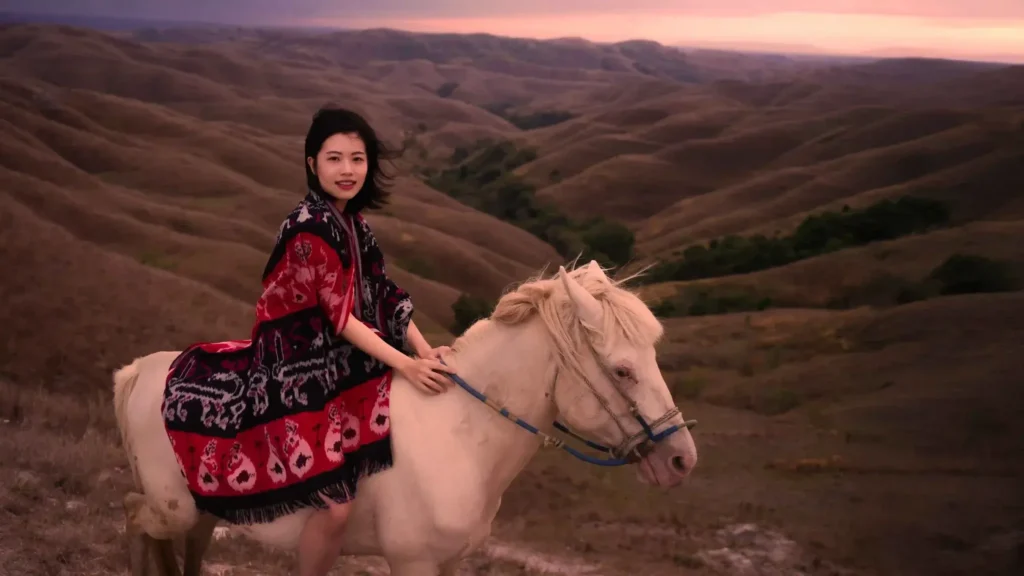
Horses form part of the exchange that binds two clans together. A family's herd is a public statement of standing that everyone in the village can read.
Soul-carrier
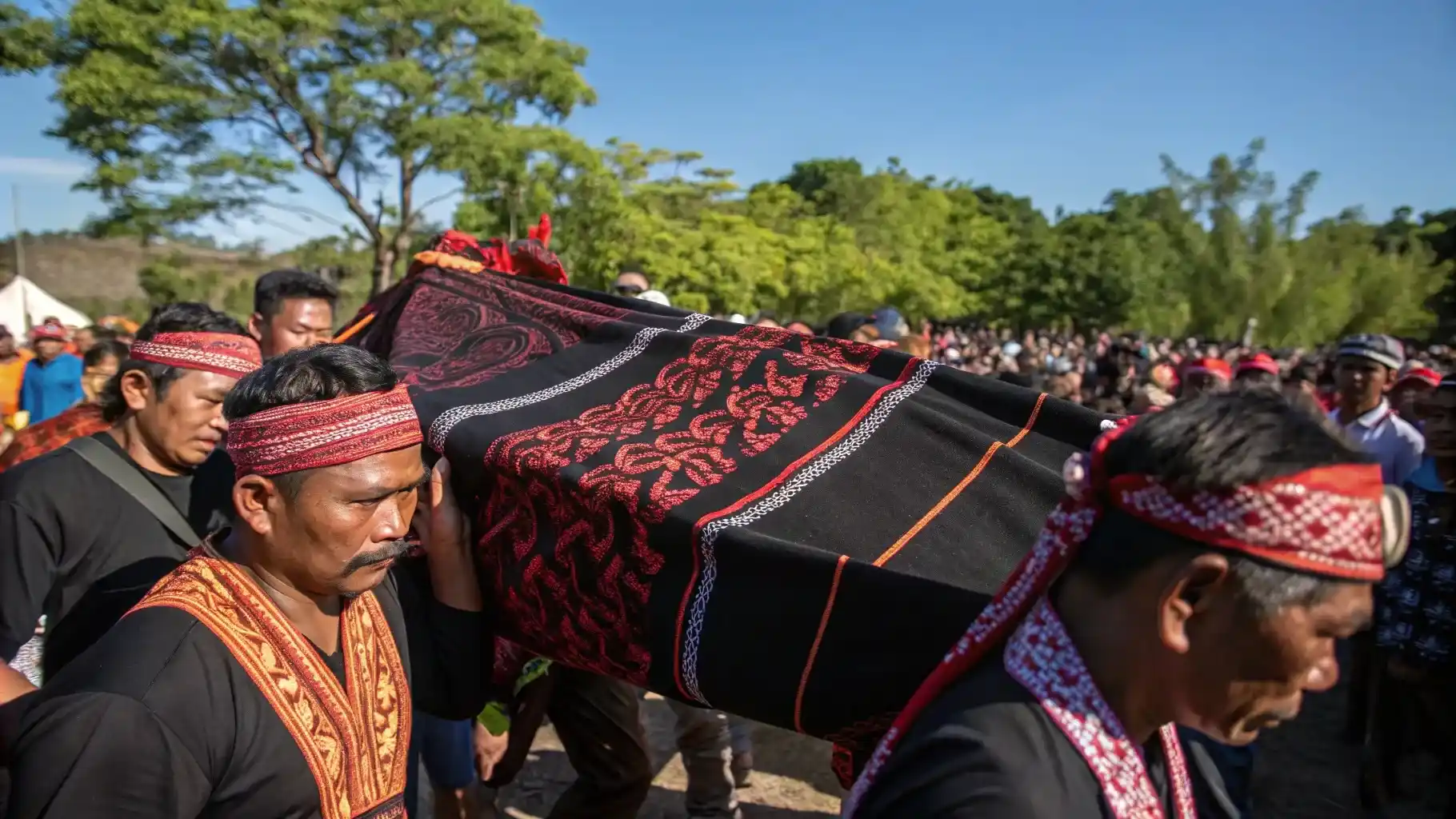
The belief that horses carry the dead to the afterlife is why they appear in funerary rites, and why the megalithic tombs of Sumba so often show them carved into the stone.
The sacred role does not sit apart from ordinary life. In many rural villages horses are still the primary transport — carrying farmers to their fields and goods to market along unpaved mountain tracks.
That continuity is the point. A horse that carries rice on Tuesday can carry a rider at Pasola in February, and the same animal is present at a funeral in between.
The Sandalwood pony's ability to thrive on sparse grazing in a semi-arid climate is what made that continuity possible over millennia rather than centuries.
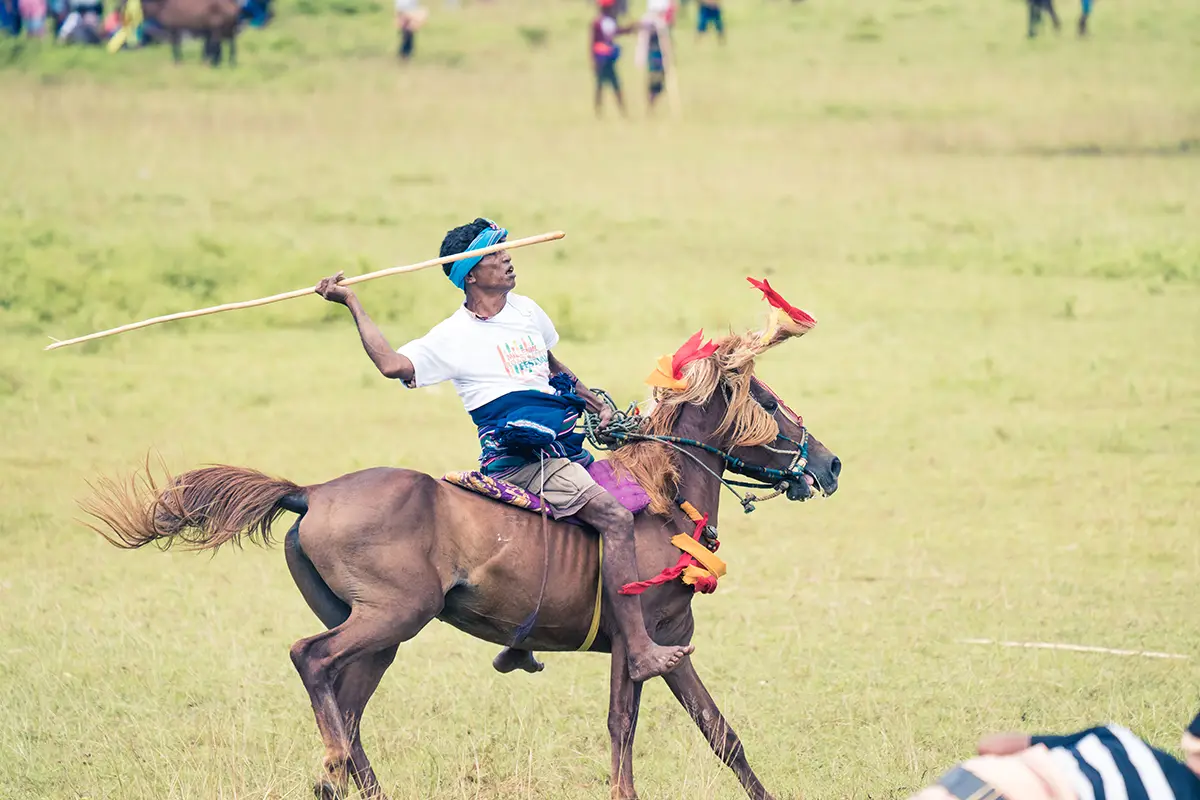
Pasola is open to visitors, but it is not staged for them. It happens on dates set by local priests according to the arrival of the nyale sea worms, and it would happen with or without an audience.
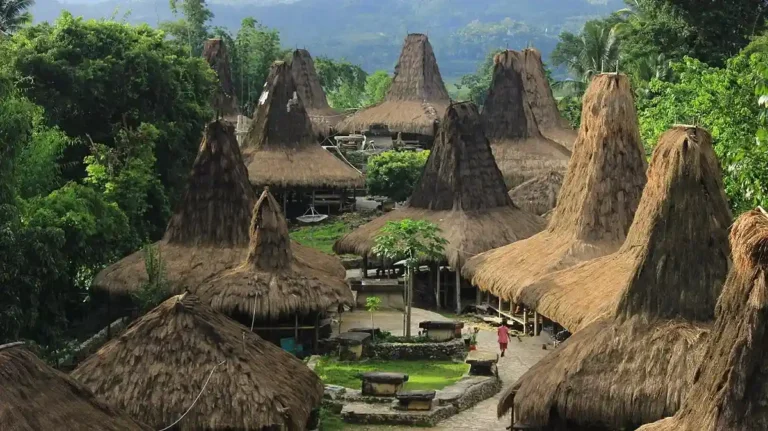
Our cultural rides go through villages where ikat weaving, megalithic tombs and daily Marapu practice are ordinary life rather than exhibits — which is why the protocol matters more here than the itinerary.
An annual mounted jousting ceremony held in February and March, where horsemen from rival clans charge each other with wooden spears as part of the Marapu harvest ritual.
The native Sumbanese breed, Kuda Sumba, present on the island for thousands of years. Standing 12–13 hands, known for exceptional endurance and a gentle temperament.
Yes. Cultural tours are built for all skill levels — the ponies are well trained and gentle, and guides give thorough instruction before each ride.
Only with permission, which your guide asks on your behalf. Some structures and moments should not be photographed at all, and your guide will tell you which.
Book a cultural ride and see why Sumba's equestrian heritage is unlike anywhere else.