
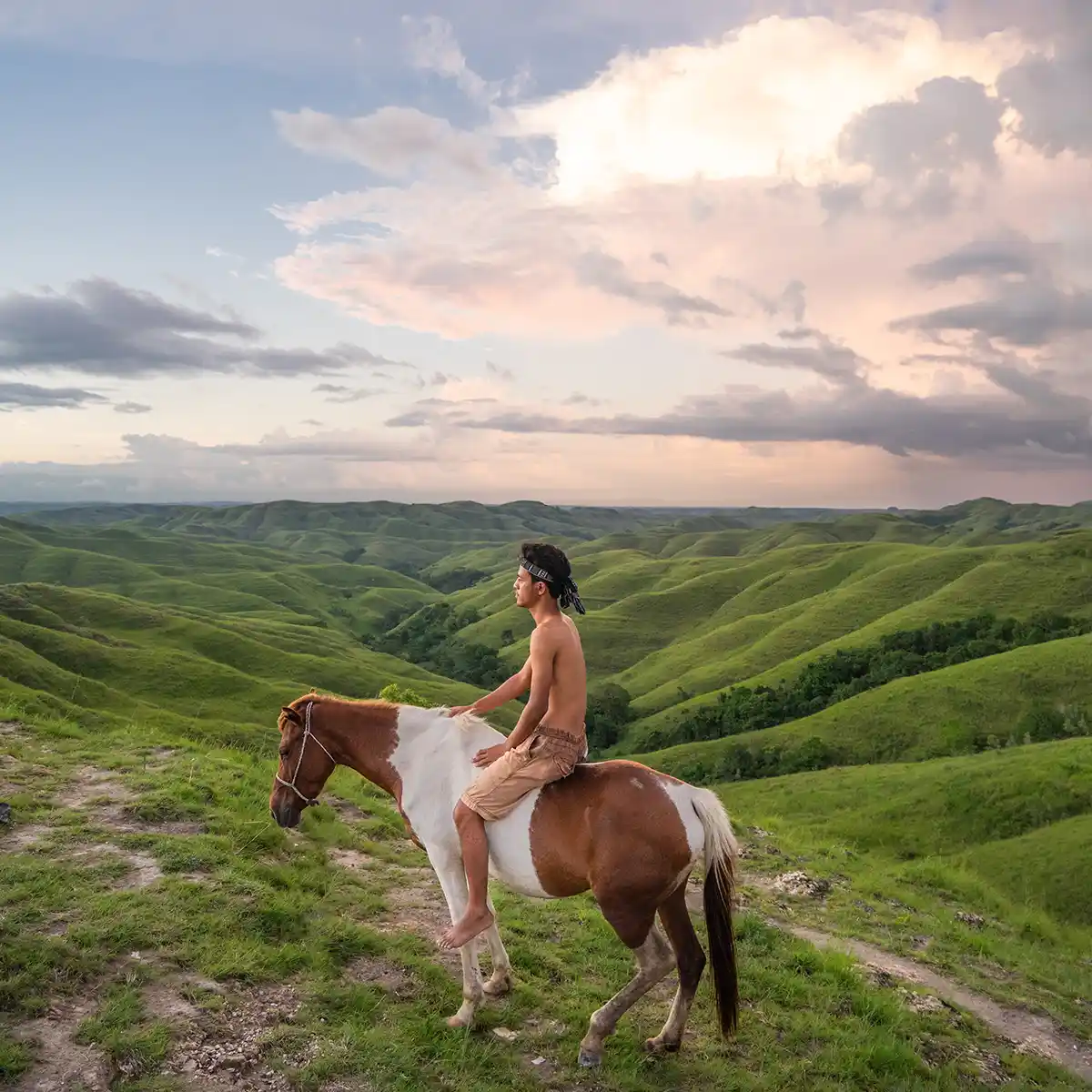
Our Expertise in Sumba Horses
Care, training and cultural context — the three things that decide whether a ride on Sumba is a good one.
Ask Us AnythingPractitioners, Not Enthusiasts
Our knowledge of Sumba horses comes from working with them daily, not from reading about them. Feeding, shoeing, training, treating, retiring — we do all of it ourselves, on this island, with these horses.
That matters for a practical reason. A Sandalwood pony is not a small version of a Western riding horse. It responds differently to the aids, handles heat and rock differently, and reads a nervous rider faster. Knowing that is the difference between a guest who relaxes in ten minutes and one who never does.
We are also open about it. Ask to see the stable, the feed, the rest rotation or the vet records and the answer is yes.
Where the Expertise Actually Sits
Each of these is a separate skill. An operation strong in one and weak in another produces horses that are either unwell or unsafe.
Care and Veterinary Oversight
Daily · monthly · annual
Nutrition planned around Sumba's forage and climate, monthly health checks with a consulting veterinarian, maintained vaccination schedules, and preventative treatment rather than reactive.
Our welfare commitmentsTraining and Temperament
90-day evaluation
Gentle, consistent methods drawn from Sumbanese practice. New horses spend at least ninety days being exposed to vehicles, water, wildlife and noise before they ever carry a guest.
How we keep rides safeCultural Knowledge
Lineage · ceremony · daily life
The breed's lineage, its role from Pasola to the planting season, and which parts of that a visitor may respectfully take part in. Kept current through local elders and horsemen, not archives.
Sumba horse culture
The Standards We Hold
These are the commitments we would want to see from an operator before handing over a booking, so they are the ones we publish.
Every one of them is open to inspection by any guest who asks, before or during a stay.
- No horse works more than four days a week
- Pre-ride health check on every horse, daily
- Tack inspected and maintained on schedule
- Workload matched to age, build and terrain
- Retired horses kept for life, never sold on
- Welfare protocols open to guest inspection
The Basis for the Claim
Expertise is easy to assert. These are the things behind ours that can be checked.
- Day evaluation
- 90 Day evaluation Minimum assessment and training period before any new horse joins the guest programme.
- Days per week
- 4 Days per week Hard ceiling on how often any horse works, enforced by rotation rather than goodwill.
- Monthly vet checks a year
- 12 Monthly vet checks a year Consulting veterinarian attends monthly, with emergency call-out available between visits.
- Guest nationalities
- 30+ Guest nationalities Riders from beginners to competitive equestrians, across more than thirty countries.
Responsible by Construction
Our tours run through communities we live alongside, which is a strong incentive to get the relationship right. Village visits are agreed in advance with elders, carry direct payment, and follow photography rules those elders set.
A significant share of tour revenue stays on Sumba — in wages, in feed bought from local farmers, in the Community Fund. Tourism that extracts from an island and banks the proceeds elsewhere does not survive contact with the people who live there.
We would rather be asked hard questions about any of this than not be asked at all.
Frequently Asked Questions
What is your experience with Sumba horses?
Our team has decades of collective experience in Sumba horse care, training and cultural context, much of it across generations on the island itself. Several of our grooms and guides come from families that have kept horses here for as long as anyone can recall.
How do you ensure the welfare of your horses?
Nutrition planned for Sumba's conditions, monthly veterinary checks, a hard four-day working limit per horse per week, daily pre-ride health checks, and gentle consistent training. Retired horses remain in our care for life.
What makes your experiences authentic rather than staged?
We work directly with Sumbanese communities rather than recreating them. Village visits happen in real villages, on terms those villages set, with Sumbanese horsemen who are sharing their own tradition rather than performing someone else's.
Can I see your horse care setup before I book?
Yes. Stable visits can be arranged on request, and we are happy to walk you through feed, rest rotation, tack and veterinary records. If an operator will not show you this, that is worth noticing.
Ride With People Who Know These Horses
Bring your questions — about the breed, the training, or which horse would suit you.