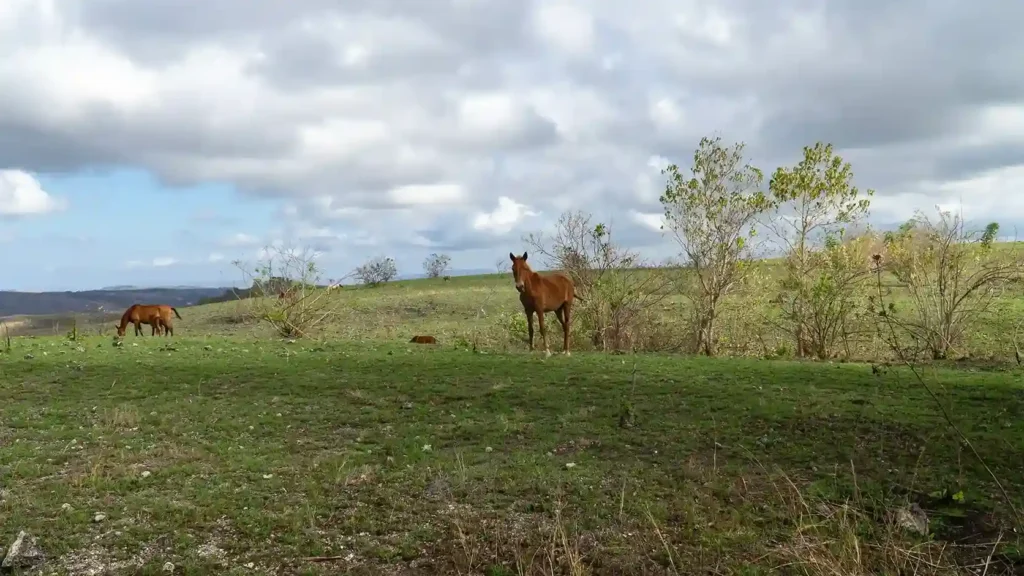
Morning Safari
First light · Photographers
Herds graze actively in the cool hours after dawn, the light is soft and directional, and the savanna is at its quietest. Our most popular format.

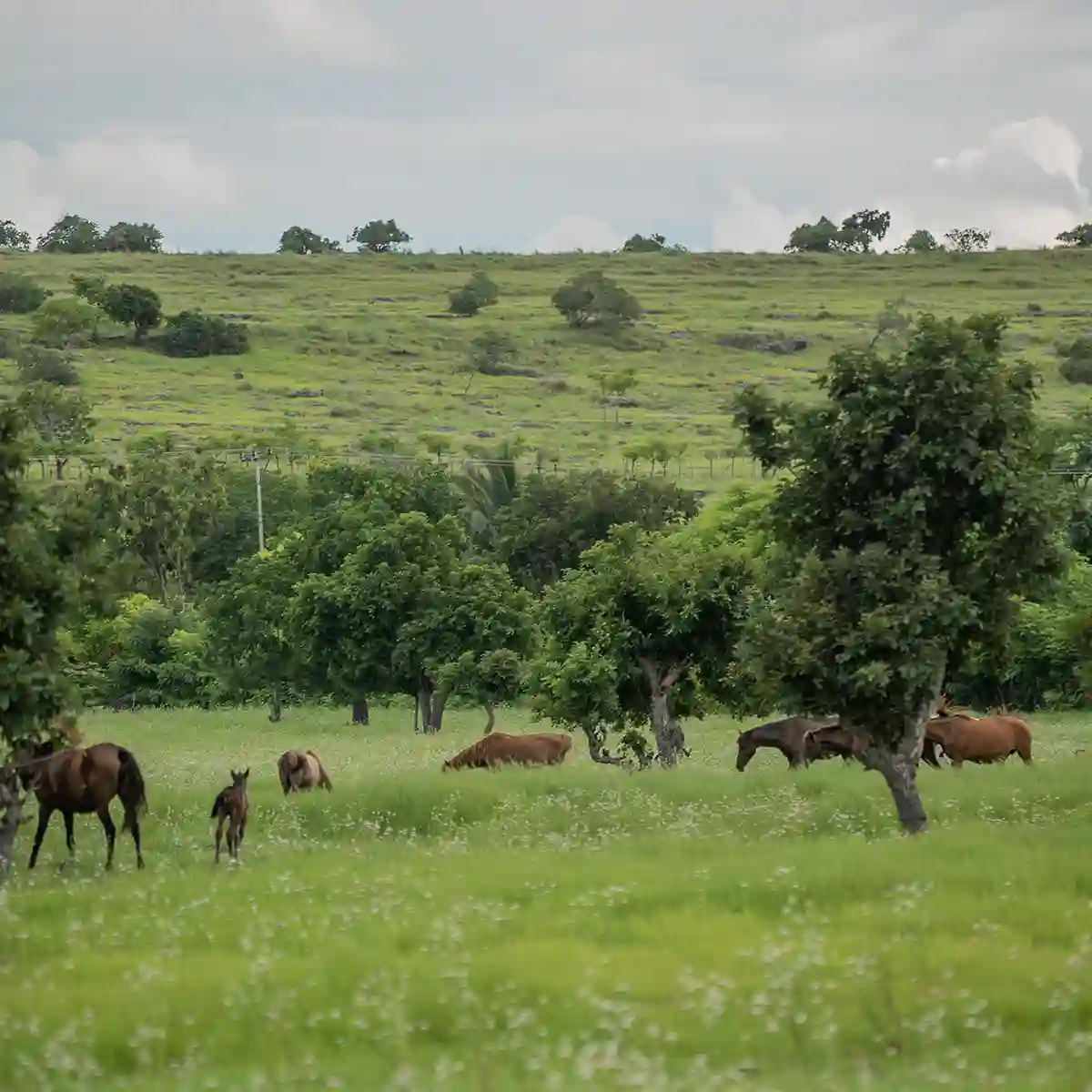
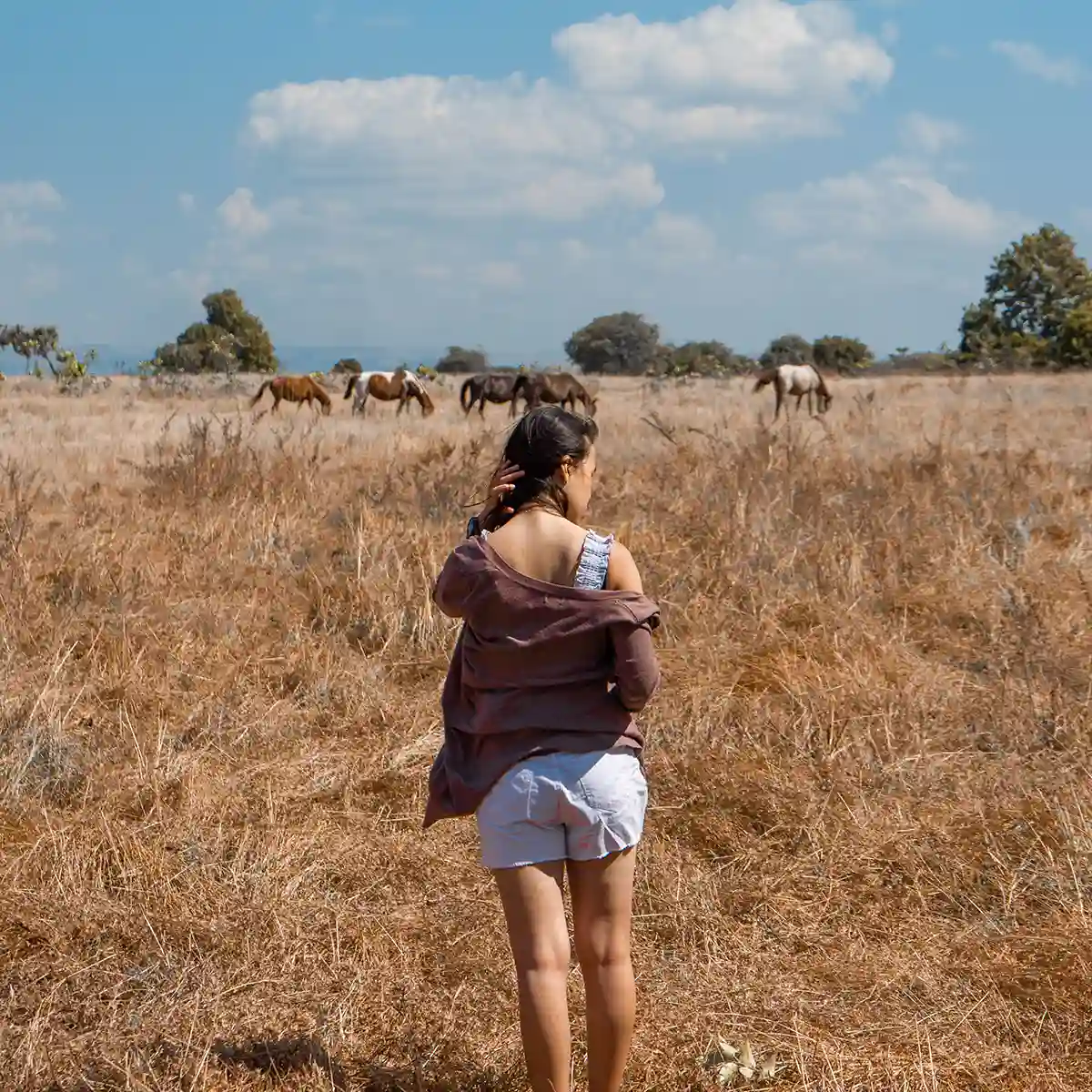
Free-roaming Sandalwood herds grazing open coastal savanna between the hills and the sea — a guided safari, with an optional short ride.
Book SafariPuru Kambera is a stretch of coastal savanna in East Sumba, about an hour from Waingapu, where grassland runs almost to the shoreline.
The open terrain is what makes it work for wildlife viewing. There is nowhere for a herd to disappear, so sightings are a matter of light and patience rather than luck.
This is a safari, not a ride. You travel by vehicle with short optional walks, and the horses you watch are not the horses you sit on.
Both departures are built around light. Add a short ride on trained ponies if you want both.
First light · Photographers
Herds graze actively in the cool hours after dawn, the light is soft and directional, and the savanna is at its quietest. Our most popular format.
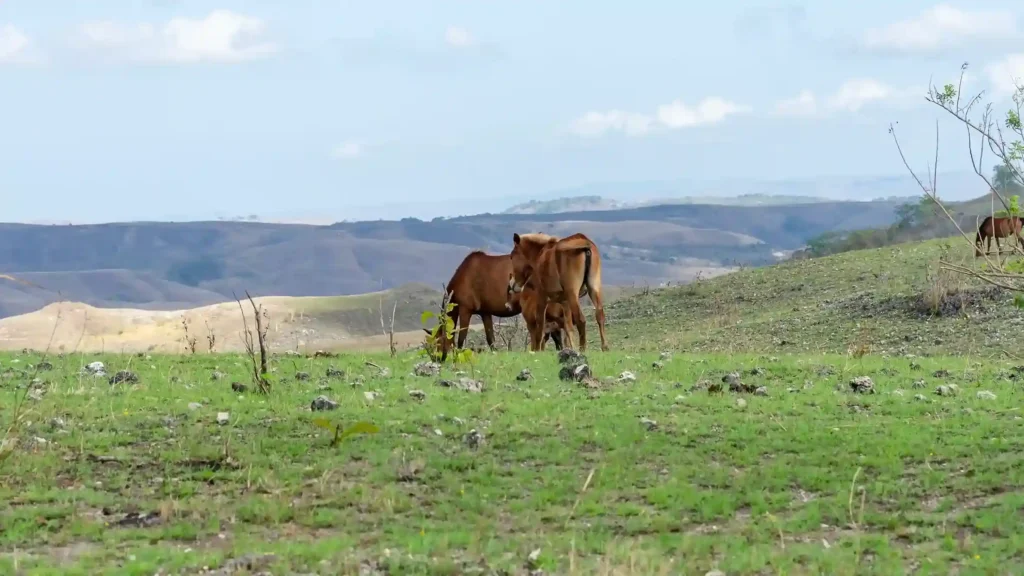
Departs 14:30–15:00
The afternoon mirror of the morning run, when herds move back toward water and the grass turns copper in the low light.
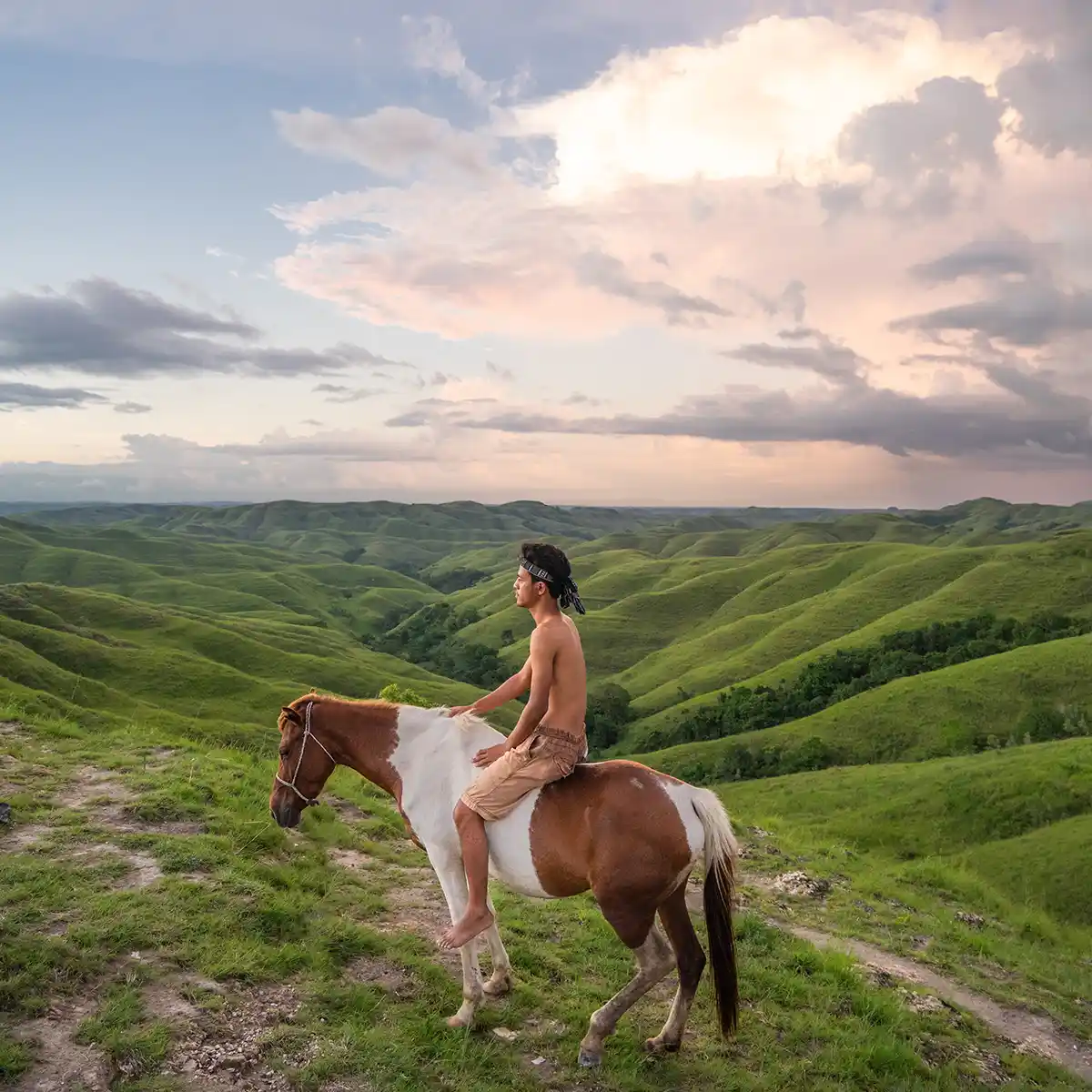
Both, without mixing them
Watch free herds from a distance, then ride calm trained ponies separately. You get the wildlife and the saddle in one outing.
Free-roaming does not mean fair game. The quality of your sighting, and the long-term health of wild horse viewing here, depends entirely on discipline in the field.
We keep distance, we do not feed, and we never move a herd for a better frame. Guests who want hands-on contact — grooming, leading, meeting foals — should book the stable experience instead, where that contact is designed for.
There is a conservation argument too. A 1997 count reported about 55,000 Sandalwood ponies in Indonesia; by 2003 the estimate for Sumba and Sumbawa had slipped to roughly 50,000. That is a declining trend, not a stable one.
Fitness requirements are light: vehicle time plus short optional walks of ten to twenty minutes over uneven grass.
The dry season, roughly May to October, gives the most reliable access and the classic golden savanna. The early wet season turns the grassland green, though some tracks get slower.
The herds roam free across open savanna without fences, stabling or daily handling, behaving as wild harems led by stallions. Like most of Sumba's free-roaming horses they live alongside local communities, and some animals may be loosely owned.
The dry season, roughly May to October, gives the most reliable access and the classic golden look. The early wet season turns the grassland green, though some tracks become slower going.
No. Keeping distance is the foundation of our field ethics and the reason the herds stay relaxed around careful visitors. For hands-on contact, book the stable experience instead.
Yes — it is vehicle-based with optional short walks, so children of any age can join with a parent. The short-ride add-on has a minimum age of six, with led ponies and fitted helmets.
Private departures are limited each day. Tell us your dates as soon as your Sumba plans firm up.