Sumba Barat
West · Capital Waikabubak
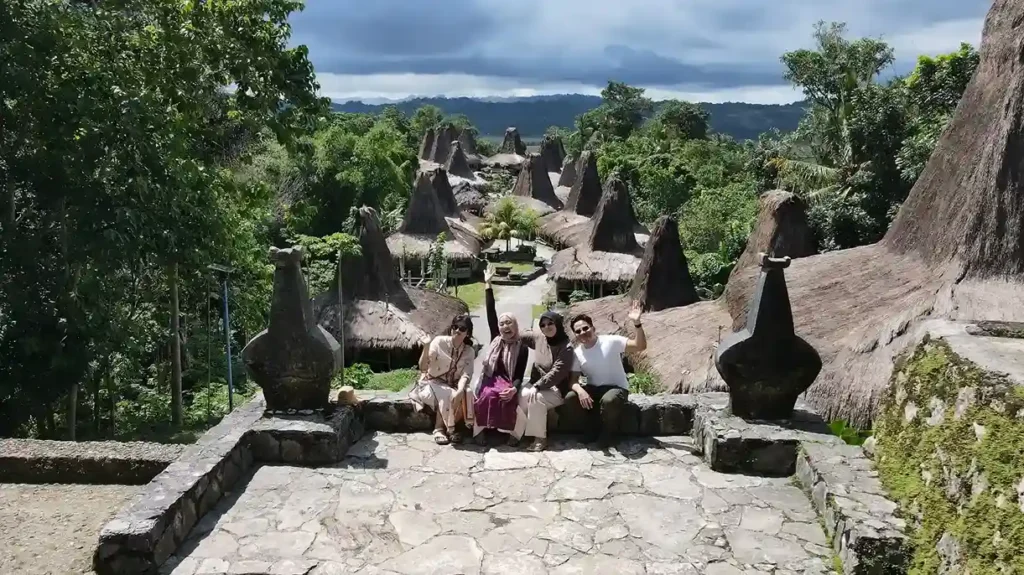
The cultural heartland and the gateway airport. Cliff-top villages, Pero Beach, Weekuri Lagoon, and most of the island's tourism infrastructure.
West Sumba
An island on its own tectonic plate, with its own religion, its own horse, and beaches that still take a footprint.
Plan a TripSumba sits in the eastern archipelago, between Flores to the north and Australia to the south. It is roughly the size of Bali. Bali receives over six million visitors a year; Sumba receives fewer than fifty thousand.
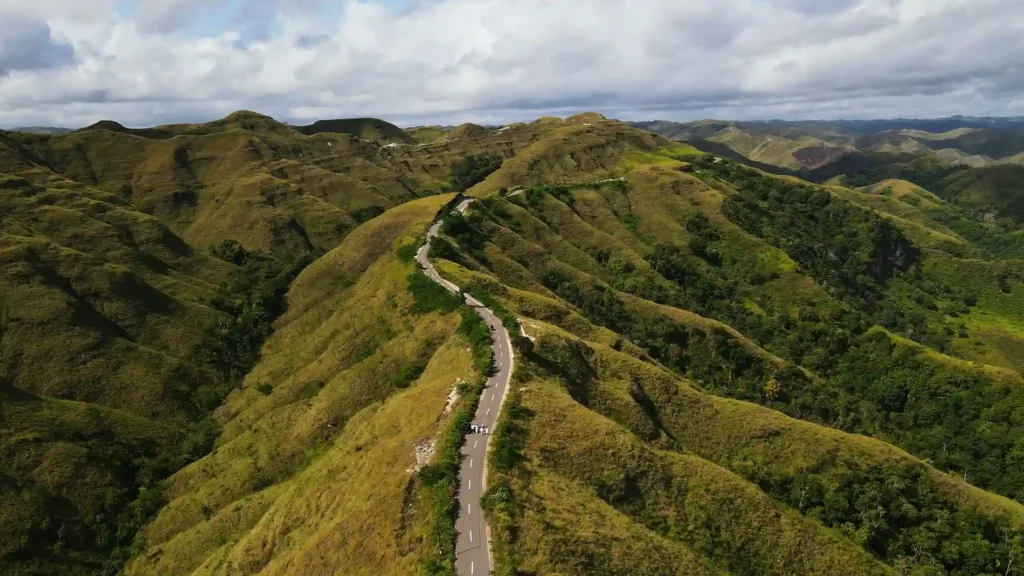
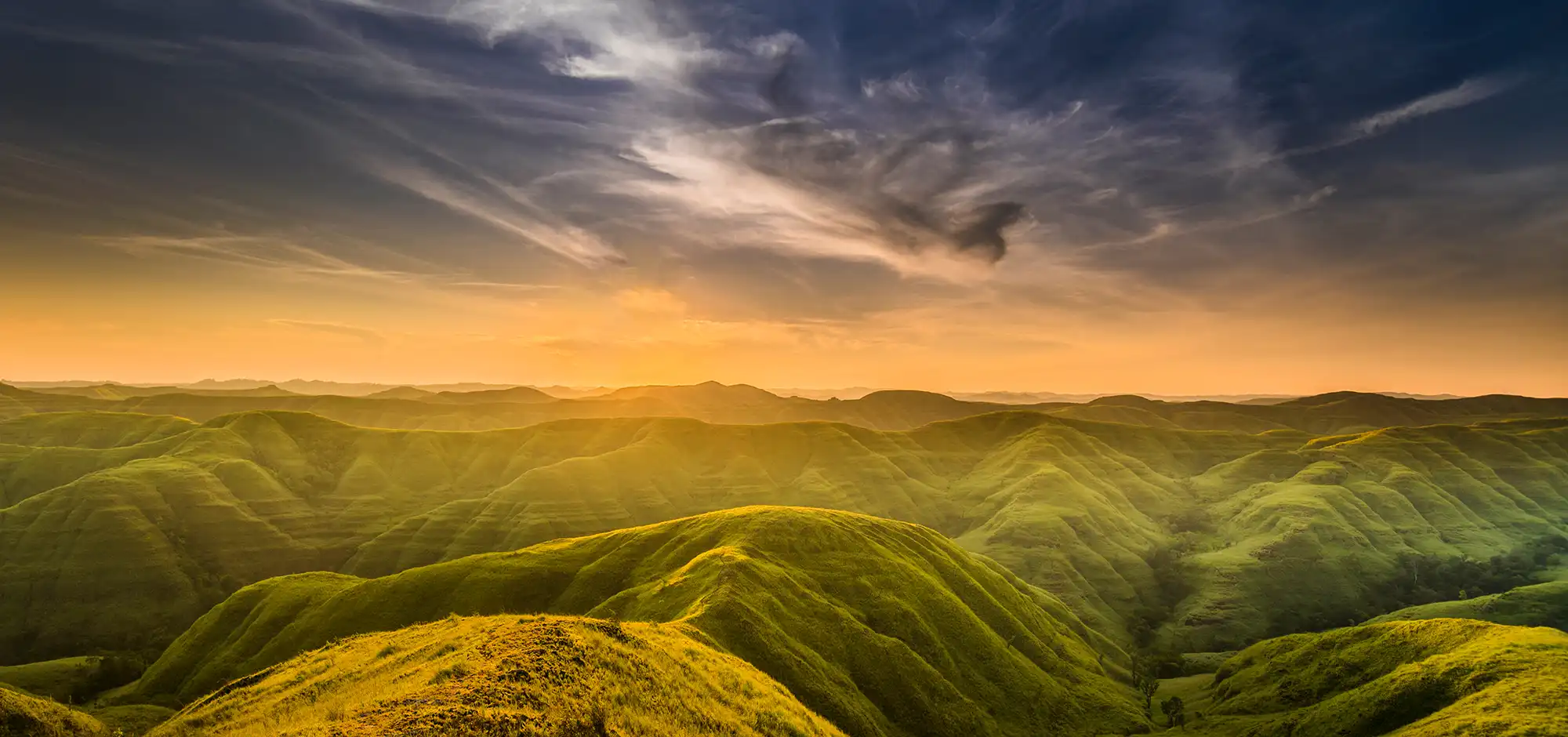
It also looks nothing like the Indonesia most people picture. Instead of volcanic rainforest there are rolling grassland savannas, limestone cliffs dropping into turquoise water, and beaches that run for kilometres without a footprint. The arid eastern plateau and the fertile western coast are almost different countries.
The reason is geological. Sumba rides its own tectonic plate rather than the volcanic arc that made the rest of the archipelago, and that isolation produced species found nowhere else — the Sumba hornbill and the Sumba buttonquail among them.
Riders often assume Sumba is one landscape. Choosing the wrong regency for what you came for is the most common planning mistake we see.
West · Capital Waikabubak
The cultural heartland and the gateway airport. Cliff-top villages, Pero Beach, Weekuri Lagoon, and most of the island's tourism infrastructure.
West Sumba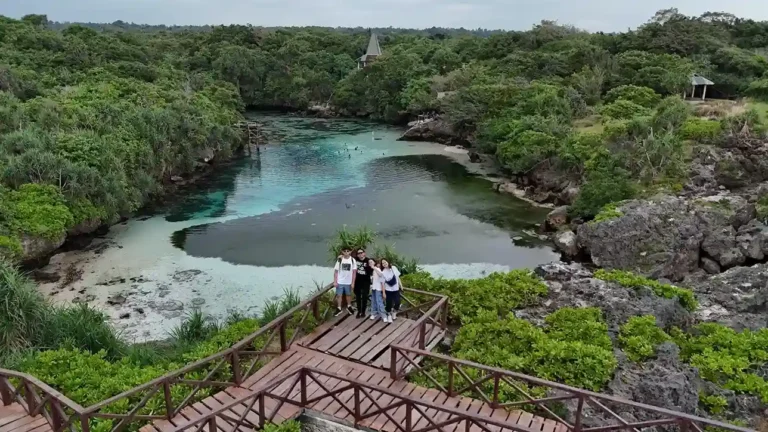
Southwest · Capital Tambolaka
Waterfalls and hidden coves. Lapopu, Manupeu Tanah Daru National Park, and the ikat weaving villages of Wanokaka.
Southwest Sumba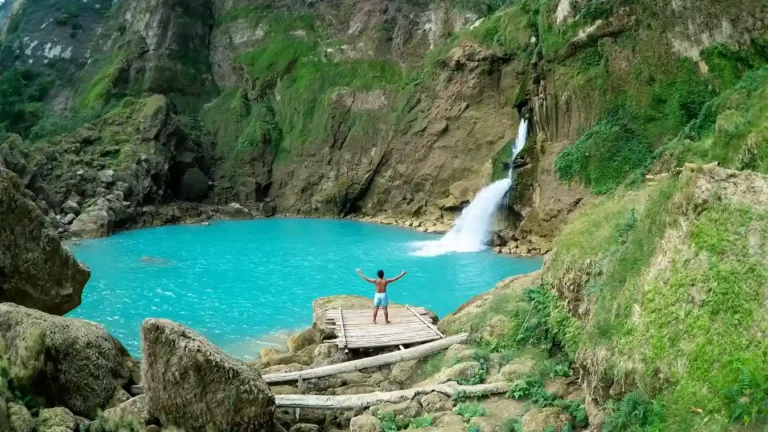
Central · Capital Waibakul
The least developed regency and the most traditionally intact. Anakalang's megalithic tombs and open savanna made for long-distance riding.
Central Sumba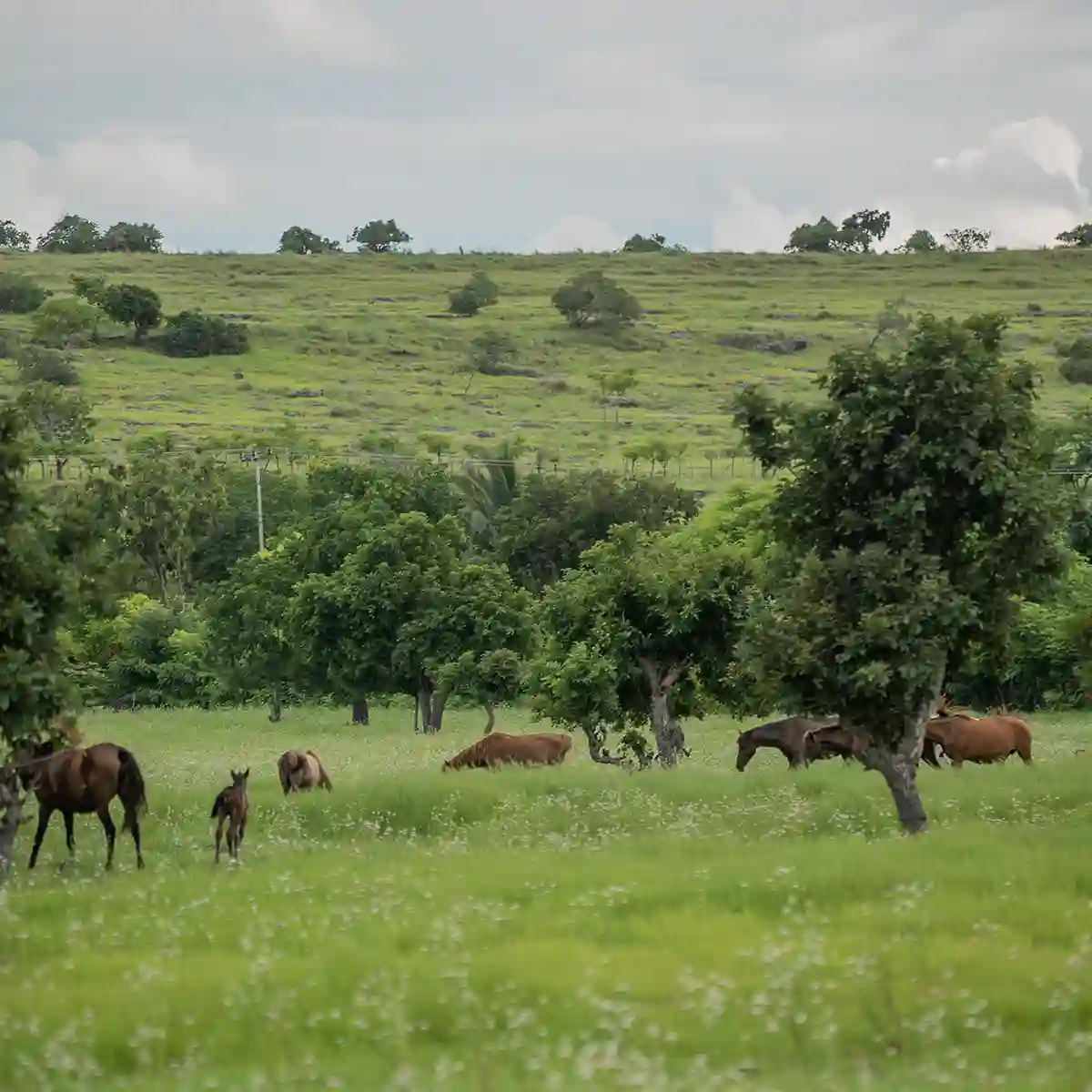
East · Capital Waingapu
The largest regency. Endless grassland with semi-wild horse herds, the finest ikat weaving on the island, and Walakiri's dancing mangroves.
East Sumba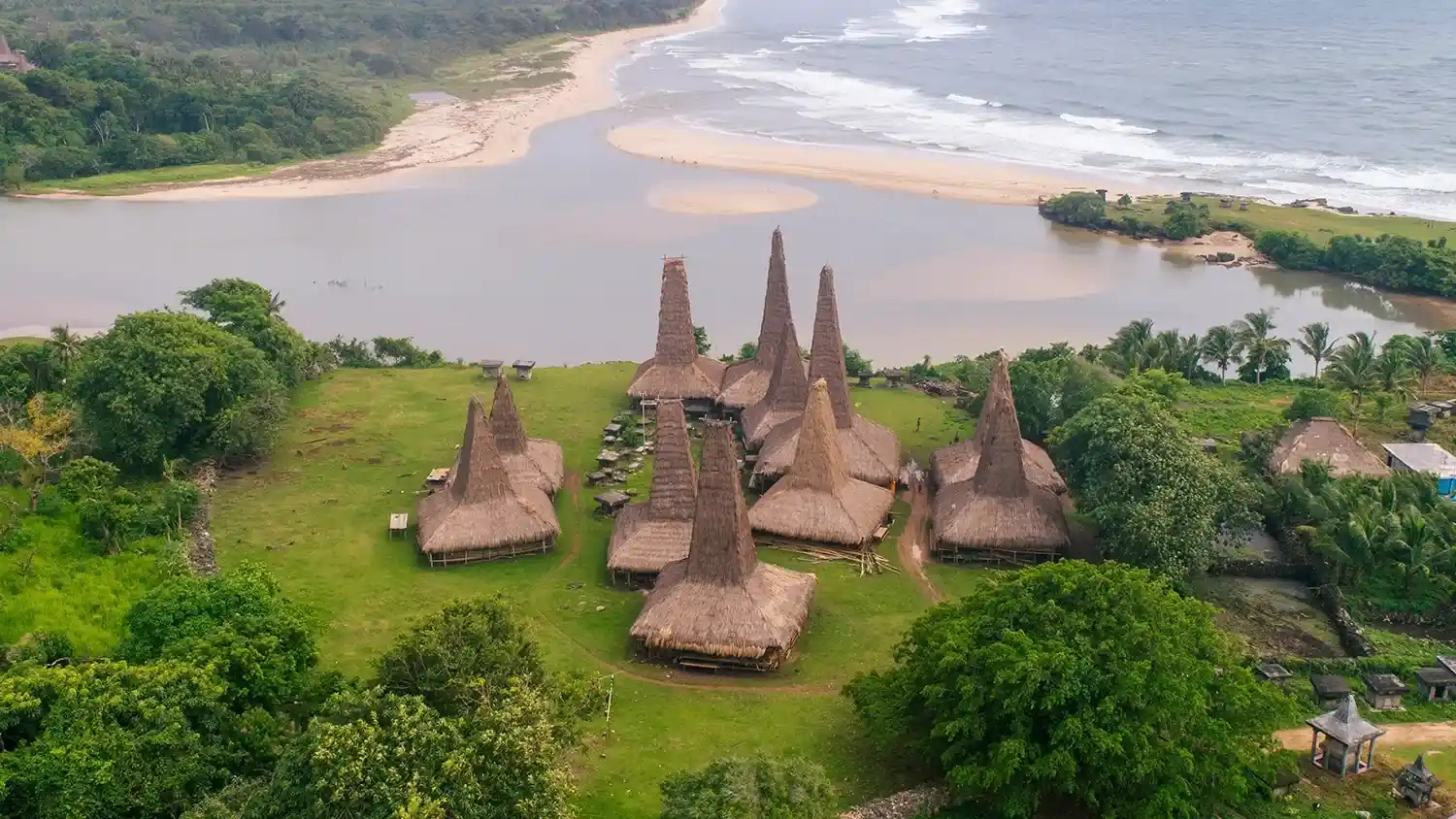
Sumba has a tropical savanna climate with two clean seasons — unusual in Indonesia, and the reason you can plan outdoor days here with confidence for more than half the year.
The dry season runs April to October: clear skies, 27–33°C, and golden grassland. The wet season, November to March, brings afternoon storms, vivid green, and the Pasola.
What sets Sumba apart is not the scenery. It is that the Sumbanese still practise Marapu, an ancestral belief system older than every world religion that reached the archipelago, and that it still governs how houses are built and when rice is planted.
Villages are organised around stone tombs — some over twenty tonnes, dragged from distant quarries by hundreds of people in ceremonies lasting days. The traditional house, the uma mbatangu, carries a thatched roof up to twenty metres high, built without nails, its height reading the family's standing.
The horse sits inside that framework rather than beside it. The Sandalwood pony is transport, wealth, ceremony, and — at the Pasola each February and March — the centre of a mounted spear ritual believed to secure the harvest.
Yes. Crime rates are very low and visitors are treated as guests. The Sumbanese are known for their hospitality. Standard travel precautions apply, and the island's remoteness matters more than its safety — see our travel guide for medical and insurance advice.
Bahasa Indonesia is official, with several Sumbanese dialects spoken locally. English is limited outside tourist areas, which is why our English-speaking guides matter for village visits and cultural interpretation.
Indonesian Rupiah. ATMs exist in Waitabula, Waikabubak and Waingapu but can run out of cash. Bring enough Rupiah from Bali — rural areas and village visits are cash only.
Grassland rather than rainforest, fifty thousand visitors rather than six million, and a living pre-Hindu culture rather than a Hindu one. Practically: fewer roads, fewer ATMs, no traffic, and beaches with nobody on them.
The parts of this island worth reaching are the parts a vehicle cannot get to.