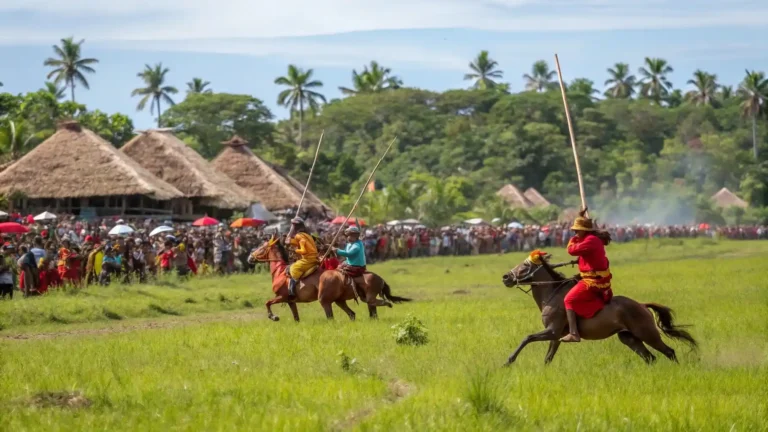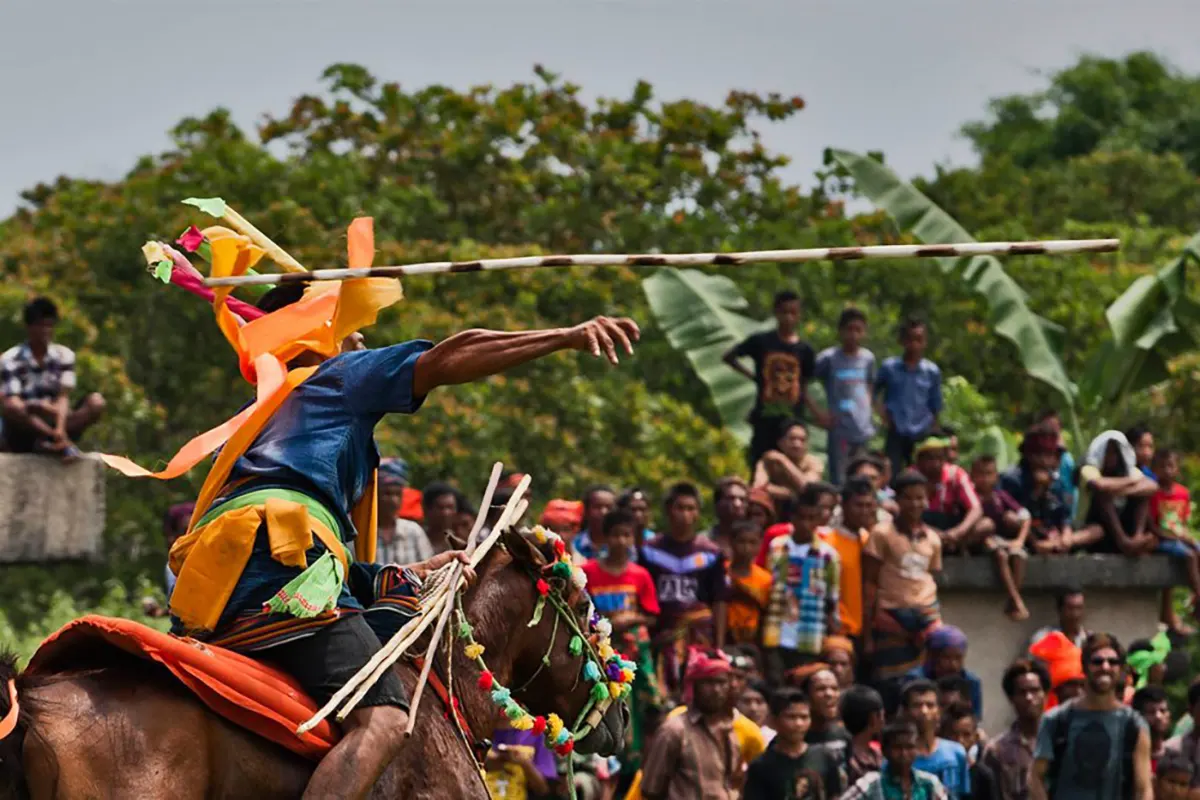
The Pasola
February–March · West Sumba
A mounted spear ritual held at the start of the rice planting season — the most dramatic expression of Sumbanese horse culture, and a living ceremony rather than a show.
The sacred role
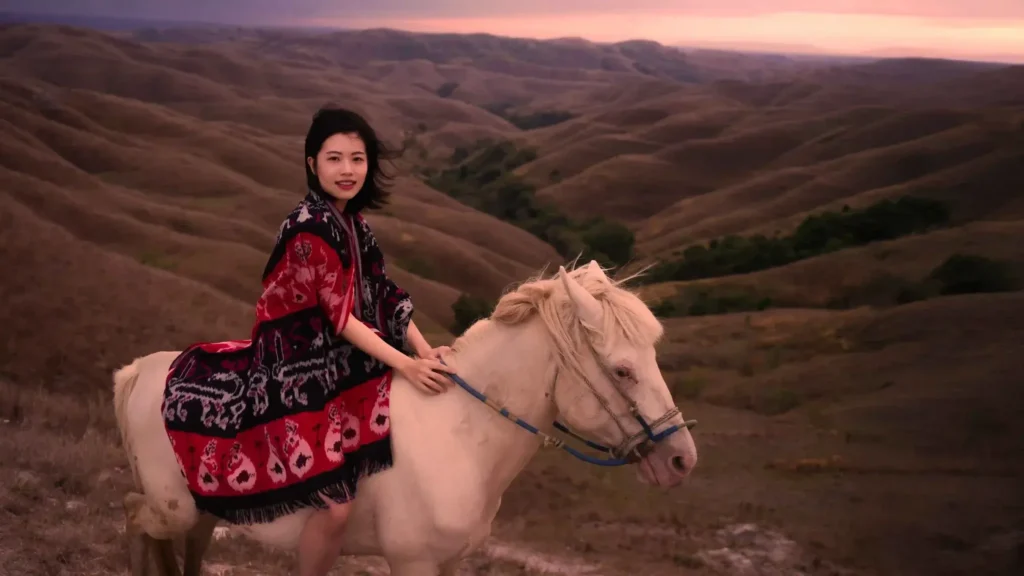
The bond between the Sumbanese and their horses is thousands of years old, and it still shapes daily life on the island today.
Explore Our ToursOn Sumba, horses are not merely animals. They are spiritual companions, economic assets, markers of social standing, and a living link to ancestral tradition.
No other island in the Indonesian archipelago maintains a relationship with the horse this deep or this multi-layered. A family's standing can still be read in its herd, and a horse still appears at the moments that matter most — marriage, death, and the planting season.
This page is the overview. The three pages linked below go deeper into the spiritual role, the long history, and the horses in our own stable.
Ceremony, breed, and everyday work — the three places the tradition is still visible.
February–March · West Sumba
A mounted spear ritual held at the start of the rice planting season — the most dramatic expression of Sumbanese horse culture, and a living ceremony rather than a show.
The sacred role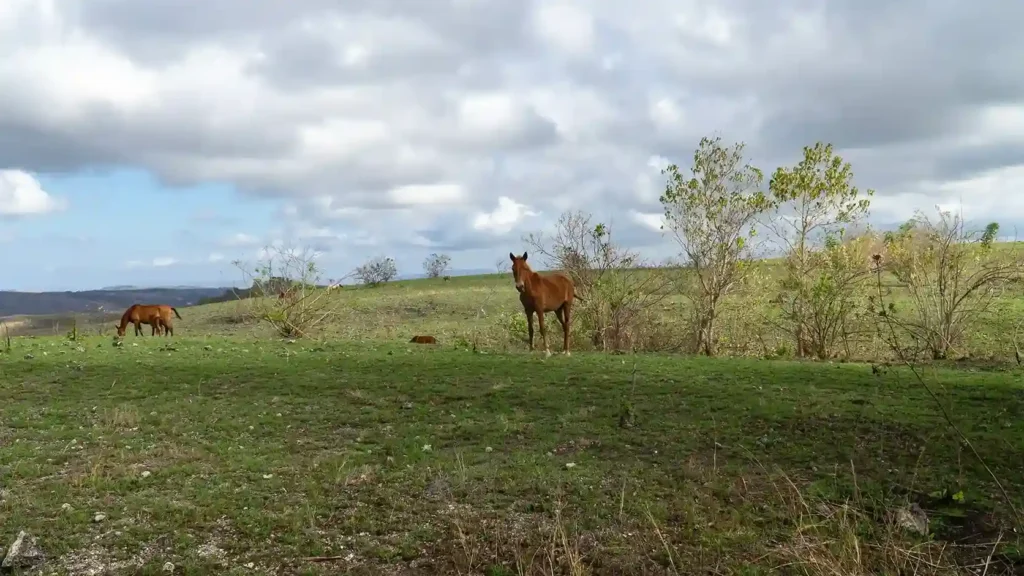
12–13 hands · 250–350 kg
Indigenous to Sumba and Sumbawa, named for the sandalwood forests that once covered both. Bay, chestnut, grey and black; deep-chested, dense-boned, calm.
Meet our herd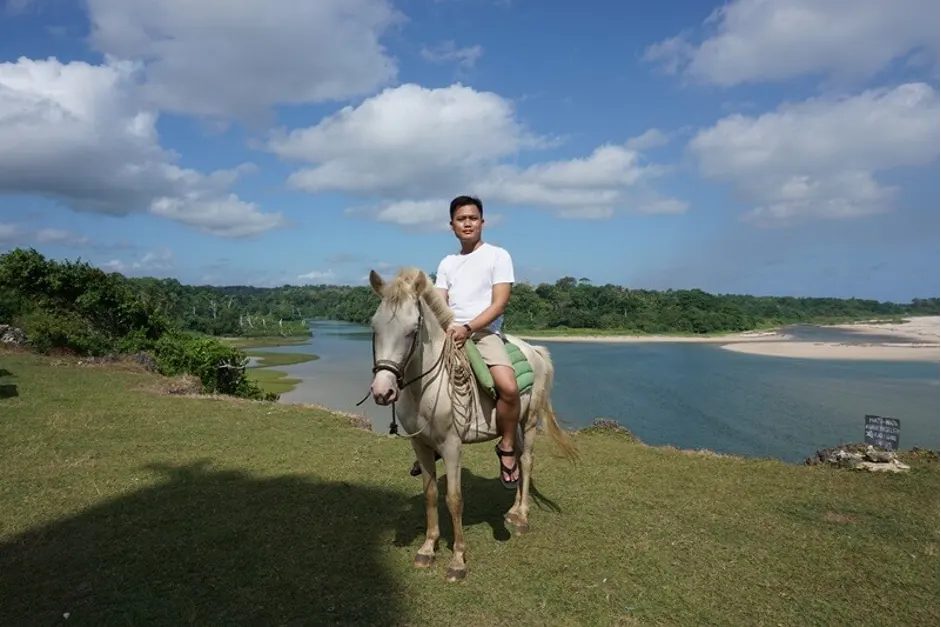
Still working animals
Where roads are unpaved and vehicles scarce, horses remain transport — carrying riders between villages and goods to market along mountain tracks.
The full history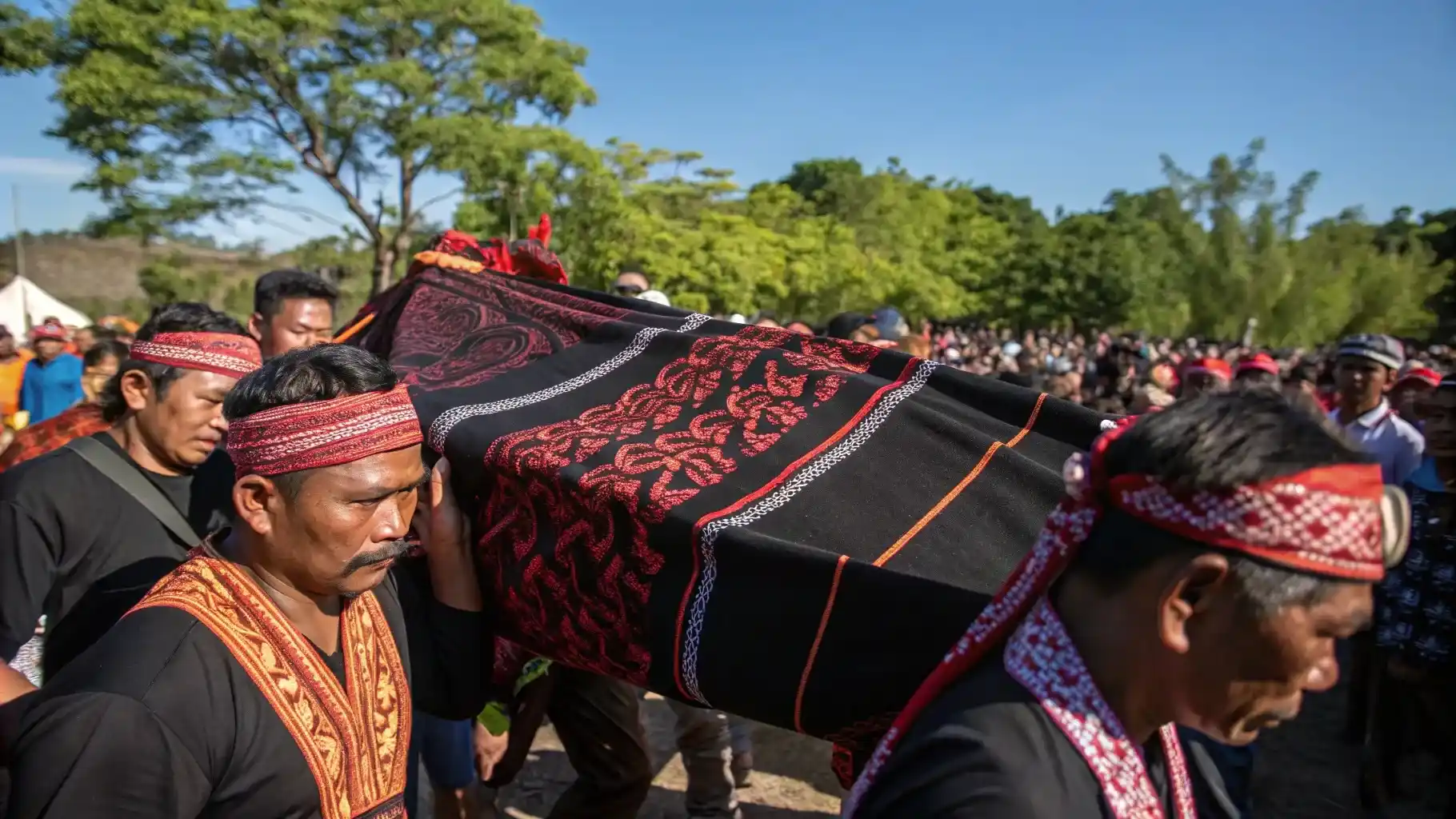
The Sandalwood evolved in isolation on Sumba and Sumbawa over centuries, which is why it reads so differently from imported breeds.
It is adapted to tropical heat, rocky ground and sand — and it swims willingly, which almost no other working breed does.
Motorcycles have taken over daily transport in much of Sumba, and younger generations do not always see the horse traditions as theirs to carry.
That is precisely why responsible tourism has a role here. Riding with Sumbanese horsemen, buying textiles from the weaver rather than a shop, and attending Pasola as a guest rather than a spectator all put value back into the practice.
Our horses work no more than four to five hours a day with mandatory rest days between multi-day trips, and we welcome inspection by any guest who asks.
Yes, the Pasola is open to respectful visitors. It takes place in February and March at various locations across West Sumba. We run Pasola-season packages combining riding with ceremony attendance — advance booking is essential.
They evolved in isolation on Sumba and Sumbawa over centuries, adapting to tropical heat, rocky terrain and sandy beaches. The calm temperament, sure-footedness and natural swimming ability are what make them suited to the rides we run.
Veterinary care, proper nutrition and regular rest. They work no more than four to five hours a day with mandatory rest days between multi-day trips, following international equine welfare standards.
No. It is a living religious ceremony rooted in Marapu belief and tied to the agricultural calendar. Visitors are welcome, but the ceremony happens whether or not anyone comes to watch.
Ride the trails Sumbanese horsemen have always ridden, and meet the ponies at the centre of it.