
Sumba for Experienced Riders: Gallops, Endurance Routes & No-Nanny Rides
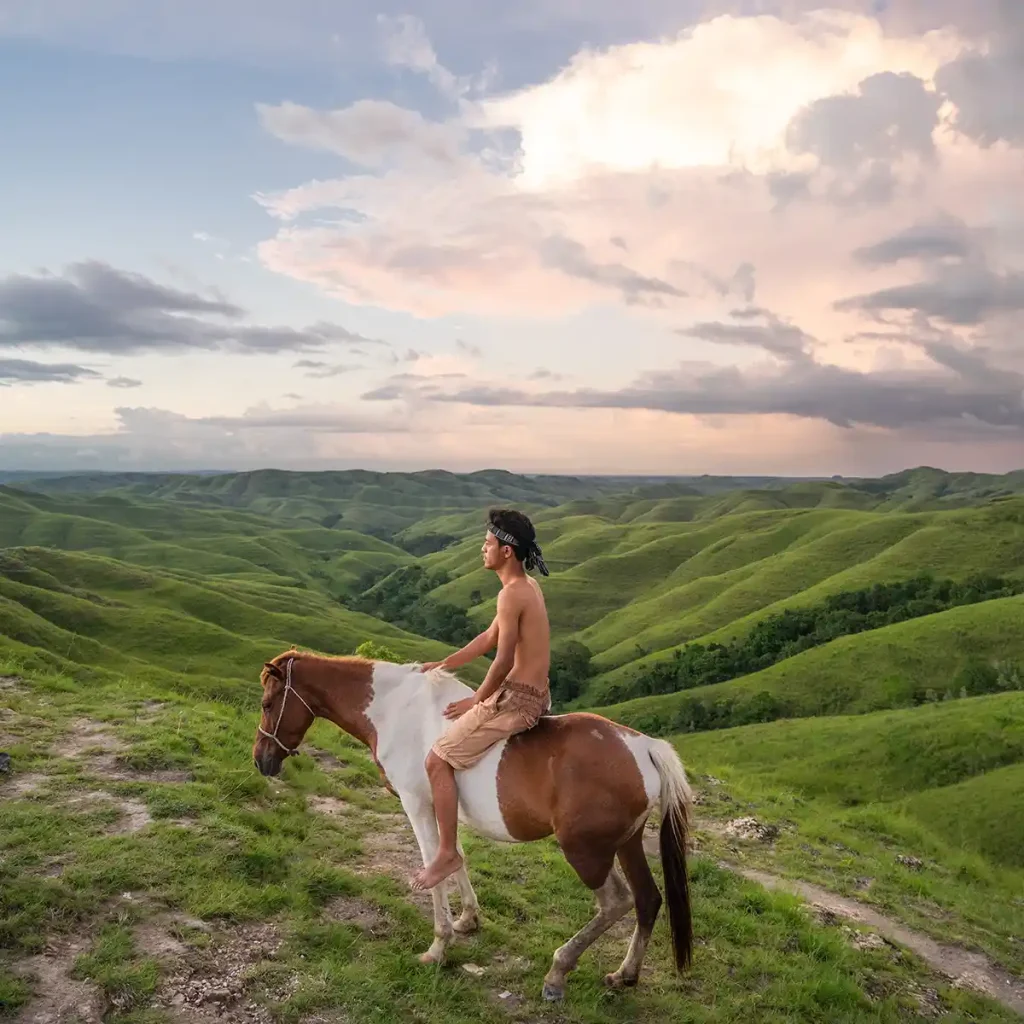
If you can ride a forward canter on a loose rein and you are tired of nose-to-tail trail rides, Sumba is one of the few destinations in Indonesia built for you. This is a guide to what experienced rider holidays in Indonesia actually look like here: long gallops on savanna and low-tide beaches, an honest assessment that earns you independent riding, endurance routes shaped by local racing tradition, and bareback sessions with Sumbanese horsemen.
Most riding tourism in Indonesia is designed for first-timers: led walks, thirty minutes on a beach, back to the van. That model protects beginners, and we run those rides too, but it wastes what Sumba does best. This page is written for the rider who already has a seat and wants to use it.
Why Sumba Is Different for Experienced Riders
The Sandalwood pony, Sumba’s native breed, is one of Indonesia’s eight officially recognized horse breeds, developed from local island ponies crossed with Arabian horses brought by traders from around the 8th century onward. The result is a small horse, typically 12 to 13 hands, that carries a higher proportion of Arabian and Thoroughbred blood than most other Indonesian ponies. That ancestry shows in exactly the qualities an experienced rider cares about: speed, stamina and a light, responsive way of going.
These are not resort machines that have learned to shuffle in a line. On Sumba, Sandalwood ponies are still raced bareback over distances of two to three miles, and the breed is also used for endurance riding, light draft and farm work. When you ask one of our horses for a real gallop, you are asking for something it was bred and raised to do. The horses in our string are selected from this working population and schooled for guest riding without dulling that engine.
Long Canters and Gallops: Savanna and Low-Tide Beaches
Sumba’s interior is open grass savanna rolling for kilometres with clean sightlines and few fences. For a competent rider this is the main event: sustained canters where you choose the pace within the guide’s brief, and controlled gallop stretches on ground our team rides and checks year-round. Our savanna riding tour is the natural starting point, and for assessed riders we extend the same route with longer, faster sections that simply are not offered on the standard itinerary.
The coast is the second arena. At low tide, beaches on Sumba’s west and south coasts expose long, firm sand flats. We plan fast beach work around the tide table, because hard wet sand near the waterline is safe galloping ground while soft dry sand is leg-straining and slow. Expect an early start or a late-afternoon slot depending on the tides, not a fixed daily schedule.
Our No-Nanny Policy: Earning an Independent Ride
We do not hand-hold riders who do not need it, and we do not take your word for it either. Every guest who wants to ride independently takes a short mounted assessment on day one, usually 20 to 30 minutes in an enclosed area and on quiet trail. A guide watches you walk, trot and canter, halt from a canter, change direction, and manage a horse fresher than a typical trail plodder.
Pass the assessment and the ride changes shape. You ride your own line within the group, you are trusted with pace decisions on agreed sections, and on gallop stretches the guide sets the ground rules, then lets you ride. A guide still accompanies every ride because this is remote country; that is a safety matter, not a skill judgment. What disappears is the lead rope, the enforced single file and the pace of the weakest rider, because assessed riders are grouped together. If the assessment shows gaps, we say so plainly and place you on the ride that fits.
Endurance Riding, Sumba Style
Endurance is not an imported concept here. Sumbanese horsemen have always ridden long distances between villages, pastures and ceremonies, and the Sandalwood pony’s documented endurance and hardiness come from that daily reality. Our long-distance day rides borrow the local logic: start early, ride steadily through the cool hours, rest the horses through midday heat near water and shade, finish in the late afternoon.
A full endurance-format day covers far more ground than a standard tour, mixing walking on technical terrain with long trotting and cantering stretches in the open. You learn to rate your horse the way local riders do, by feel, keeping something in reserve for the final hour. These days are only open to assessed riders with genuine fitness, because six-plus hours in the saddle finds out every weakness.
Bareback With Sumba’s Horsemen
On Sumba, bareback is not a party trick. Local races are ridden bareback, and Pasola, the island’s famous mounted spear-fighting festival held each February and March, is ridden bareback or with minimal tack. Riding without a saddle is simply how many Sumbanese horsemen grew up, and several of them work with us.
For experienced guests we offer supervised bareback sessions: first in an enclosed area, then, for those who are secure, a quiet bareback trail stretch or a swim with the horses. Riding a Sandalwood pony bareback beside a man who has done it since childhood is a masterclass no arena lesson can copy. If you want to go deeper into the technique, the same horsemen teach at our Sumba horsemanship clinic, where bareback balance, groundwork and local riding culture are the curriculum rather than a side dish.
Honest Skill Requirements
Marketing that calls everyone an “advanced rider” helps nobody, so here is our honest bar. To be assessed for independent riding you should be able to: mount unassisted; ride a balanced rising and sitting trot; canter on a loose rein in open country without gripping for balance; stop and turn a forward-going horse reliably; and stay calm if a horse spooks or jogs. For endurance-format days, add real riding fitness, meaning recent time in the saddle, not gym fitness alone.
You do not need competition experience, and you do not need to be young. You do need to be honest, because the savanna is a bad place to discover your last canter was ten years ago. If you are borderline, tell us; a private refresher on day one beats a failed assessment.
The Ultimate Challenge: Coast to Coast Across Sumba
For riders who pass the assessment and want the full expression of what this island offers, the answer is our coast-to-coast Sumba horse expedition: a multi-day traverse linking savanna, ridgelines, villages and both coastlines on the same hardy ponies the whole way. It is the ride everything on this page is preparation for. Places are limited by horse welfare, not by marketing, so serious riders should enquire early with their dates.
Sumba Horse operates within the Juara Holding Group travel ecosystem, so a hard riding week here is easy to pair with the rest of Indonesia. Many guests bolt on a Komodo boat charter after the expedition, or have the Bali Premium Trip concierge team arrange the Bali legs and transfers around their Sumba dates. Pricing for private advanced itineraries is tailored and available on request.
Frequently Asked Questions
Can I really gallop, or is “gallop” just marketing?
Assessed riders genuinely gallop on designated stretches of savanna and firm low-tide sand. The guide briefs the section, sets the order and the pull-up point, then you ride at pace. Unassessed riders do not gallop with us.
Are Sandalwood ponies too small for adult riders?
At 12 to 13 hands they are small but exceptionally strong for their size, bred for racing and endurance work carrying adult local riders. We match horse to rider individually and apply weight guidance for horse welfare; tell us your height and weight when you enquire and we will be straight about fit.
What tack do you use, and can I ride bareback on the trail?
Standard rides use well-maintained saddles, with helmets available and encouraged. Bareback is a supervised session for secure riders: first in an enclosed area, then on quiet trail once a guide has seen you ride.
Is there a formal endurance race I can join?
No. Local bareback racing is a community affair, not a tourist event. What we offer is endurance-format riding: long, paced days built on the same tradition, open to assessed riders. In February and March you may also watch Pasola, with exact dates set by local ritual leaders shortly in advance.
How far in advance should experienced riders book?
For advanced day rides, a few weeks is usually enough. For the coast-to-coast expedition or multi-day endurance itineraries, contact us two to four months ahead: groups are deliberately small and dry-season dates fill first.
Ride Sumba Properly
If you are the rider this page was written for, talk to us directly. Message us on WhatsApp at wa.me/6281139414563 with your riding background and dates, or email [email protected], and we will build an itinerary around your ability instead of asking you to ride down to everyone else’s.
Keep Reading
Best Luxury Cruise Indonesia After Sumba: 2026 Guide
After a week among Sumba’s sandalwood horses, megalith villages and waterfall pools, the natural next leg is the sea. The best luxury cruise in Indonesia for…
Weekuri Lagoon Sumba 2027: A Kodi Coast Day Plan With Mandorak and Ratenggaro
Weekuri Lagoon sits on the Kodi coast of Southwest Sumba, about 2 to 2.5 hours by road from Tambolaka Airport, and the sensible way to see…
Wairinding Sunrise Viewpoint 2027: Timing the Light and the Horses on East Sumba’s Ridges
The Wairinding sunrise viewpoint is a run of grass ridges inland from Waingapu, about 1.5 to 2 hours by road, so catching first light means leaving…
Planning a Trip to Sumba?
Two trips across the island — shared on a fixed date, or private on yours.