
Wairinding Sunrise Viewpoint 2027: Timing the Light and the Horses on East Sumba’s Ridges
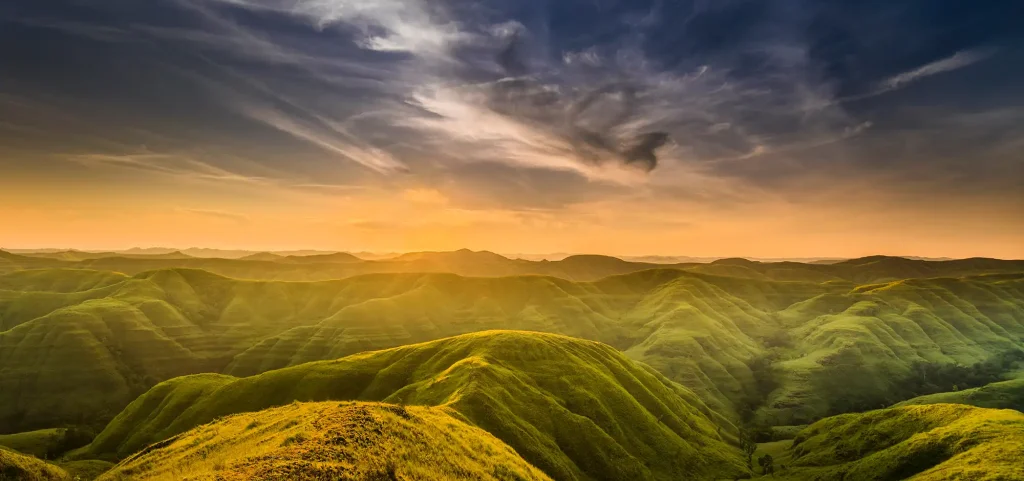
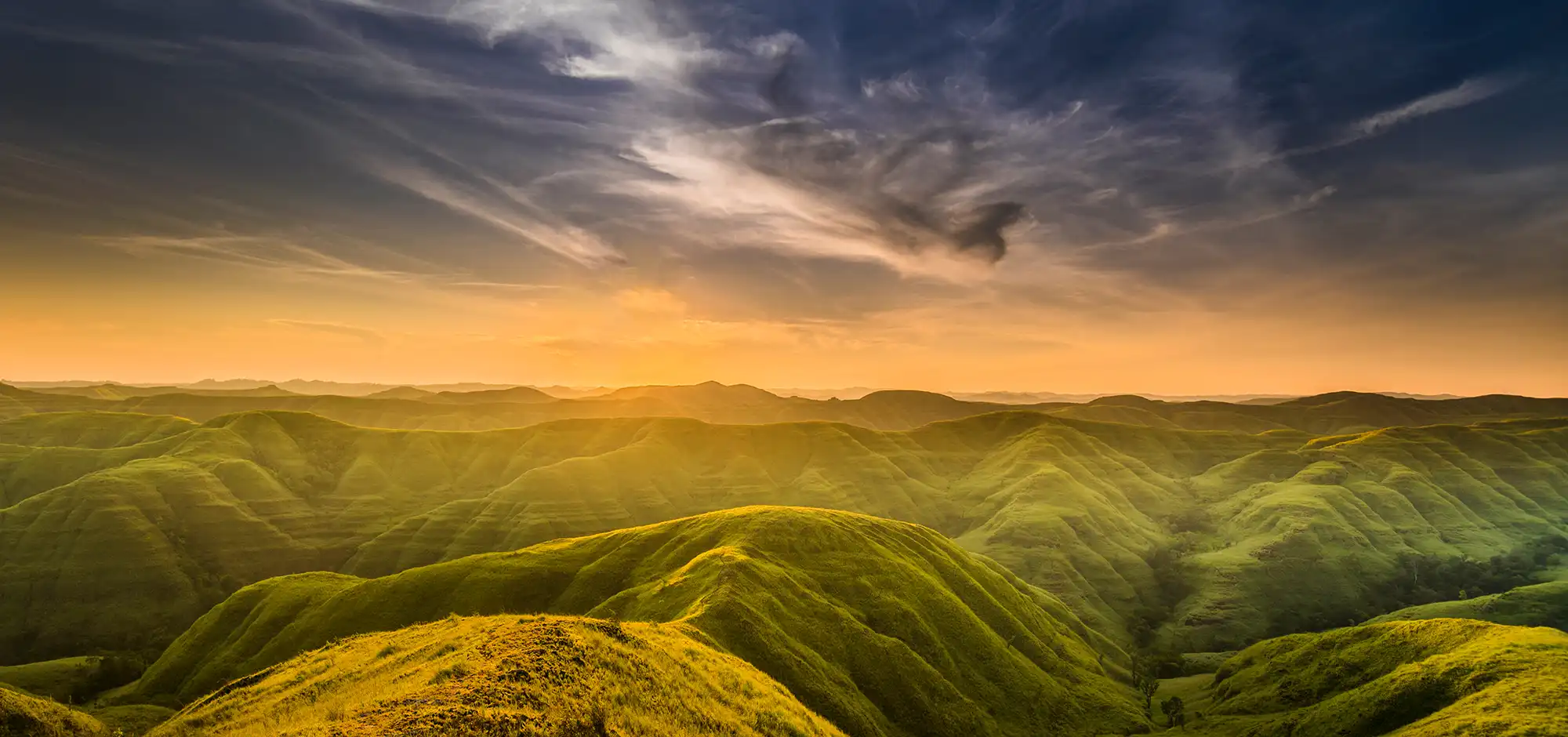
The Wairinding sunrise viewpoint is a run of grass ridges inland from Waingapu, about 1.5 to 2 hours by road, so catching first light means leaving town between roughly 03:45 and 04:15 WITA. Sunrise on Sumba falls somewhere between about 05:35 and 06:20 depending on the month, and the usable golden light on those ridges lasts only 40 to 60 minutes before the hill goes visually flat.
That is the short answer. The rest is what our driver-guides use: the timing maths, what the horses do and do not do, and how to pair bukit Wairinding with the other savannah hills without ending the day bored of grass.
What Wairinding Hill is, and when to leave Waingapu
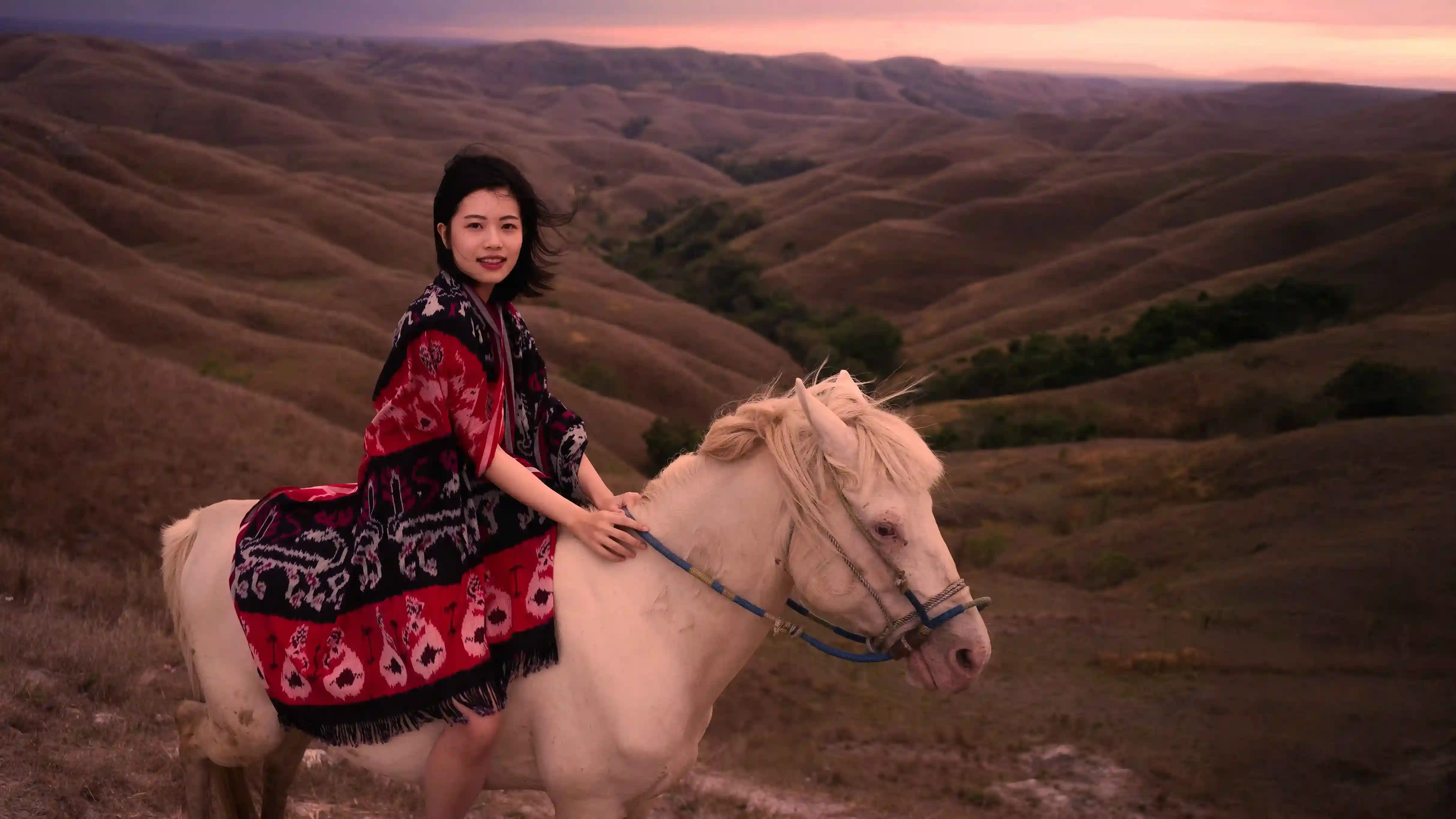
Wairinding hill in Sumba is not a summit with a signboard and a staircase. It is a series of open, treeless ridges beside the trans-island road, grazed for generations by clan-owned horses and cattle, with footpaths worn by animals rather than a tourism department. You park on the shoulder and walk up: no gate, no ticket booth, no toilets. Families sometimes collect a small donation or sell coffee and cloth at the roadside.
Work the timing backwards: confirm the day’s sunrise with your driver the night before, subtract the drive, then subtract twenty minutes for the walk up. The ridge is cold and windy before dawn and guests routinely under-pack for it. The drive takes 1.5 to 2 hours for a reason: the road is paved but narrow, with potholes that appear without warning, so speeds sit at 40 to 50 km/h and drop after rain. Anyone quoting “one hour from Waingapu” is quoting a map, not a road, and dogs, goats, buffalo and horses use that asphalt at night — so we do not push the pace in the dark.
How long the good light lasts, and when the hill goes flat
Expect 40 to 60 minutes of genuinely good light after the sun clears the horizon. Before that you get blue-hour silhouettes, often the strongest frames of the trip if animals are on a crest. Afterwards the shadows separating one ridge from the next collapse and the landscape reads as a flat sheet. By around 08:30 the hill is finished.
That is why we schedule Wairinding first, never as a mid-morning filler. The same physics runs in reverse from about 16:30, which is why East Sumba sunset spots like these ridges, Tanarara and Walakiri Beach reward a late-afternoon return.
The horses: semi-wild Sandalwood ponies on the savannah
The ponies grazing the ridges are Sandalwood horses — kuda Sumba — semi-wild, not feral: almost every animal is owned by a clan or family and simply allowed to range across common grazing land. They are small and tough, roughly 11 to 13 hands — about 112 to 132 cm at the withers, with most animals you meet sitting near 120 cm — with a short muscular neck and legs shaped by dry savannah. Their ancestry is local island stock refined by Chinese and Mongolian horses, then Arab blood brought by Middle Eastern traders from roughly the 8th century onward — endurance rather than size, and the reason Sumba is called Pulau Kuda, the island of horses.
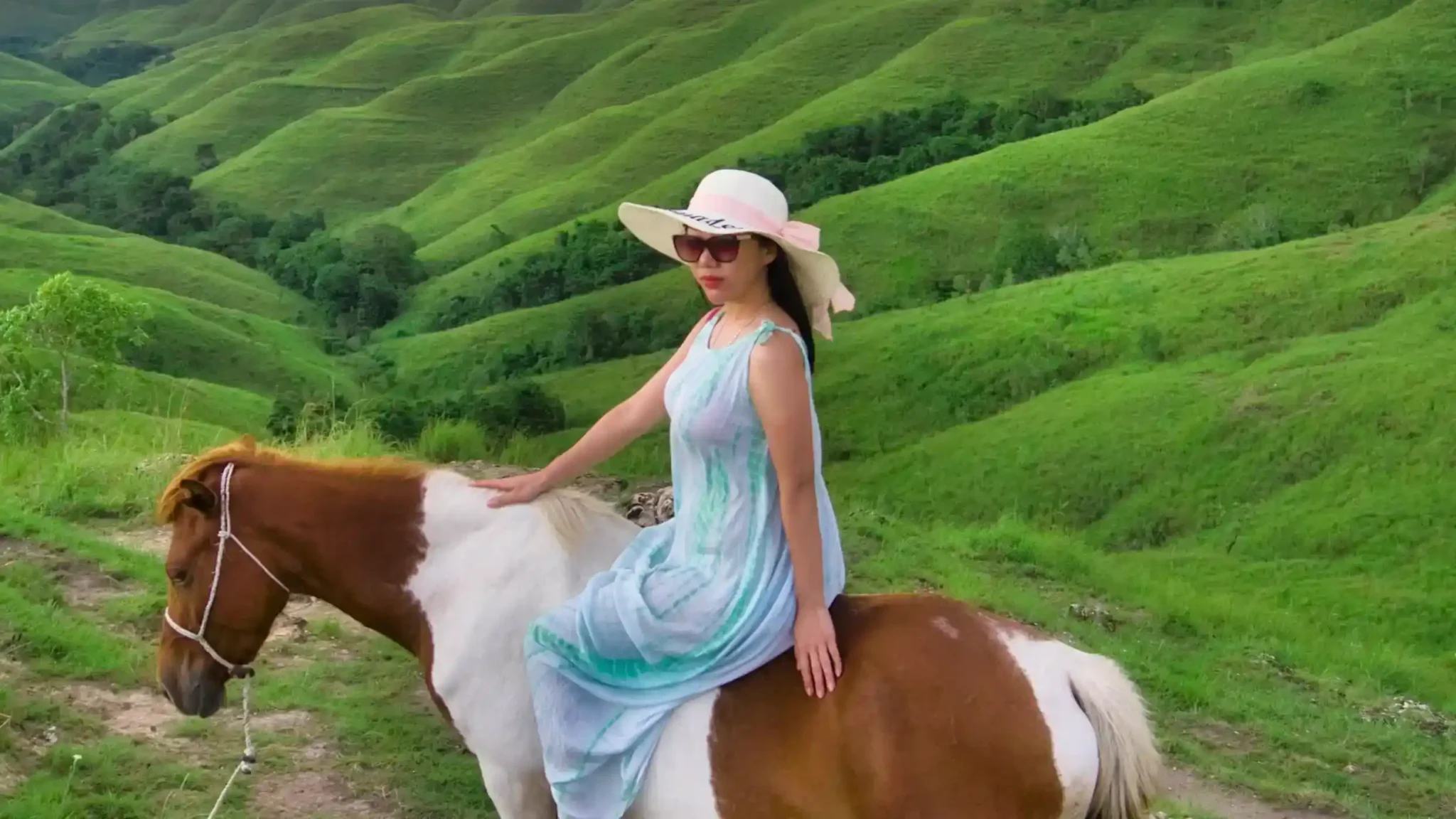
On where to see horses in Sumba: sightings are not guaranteed, and any operator promising ponies on a crest at sunrise is selling what it cannot control. The dry months, roughly May to October, are more reliable — grass is short and animals concentrate around the remaining water — and morning and late afternoon are the windows, because in the heat the herds seek shade. Most of all, our driver-guides know the families responsible for the herds around Wairinding, Tanarara and Puru Kambera, and which grazing zone is in use that week.
If horses are the point of your trip rather than a bonus, do not rely on roadside luck. Our multi-day horse trekking across the savannah puts you on the grass with the ponies for days; Puru Kambera is the other classic free-roaming landscape here.
Field etiquette around semi-wild herds
- Keep your distance and let them close it. Walking at a grazing herd scatters it and ruins the frame.
- Move slowly and quietly — no running at animals, no shouting for a head-turn.
- Do not feed them — not fruit, not bread, not anything from the car.
- Never mount a semi-wild horse without the owner’s permission. It is someone’s animal, often untacked and unprepared for a stranger.
- Ask before photographing people, and accept no.
The same line applies when riding is part of your programme: sensible weight limits for a 120 cm pony, shade, water, real rest and fitted tack — the reasoning sits on our page about ethical horse riding and welfare in Sumba.
Building the day: Wairinding, Tanarara, Prailiu
A realistic day: Wairinding at sunrise, breakfast on the road, Tanarara or Tenau ridge late morning, then Prailiu — the ikat weaving village 15 to 30 minutes from Waingapu — in the afternoon, with Walakiri Beach held for sunset.
The warning we give every guest: three savannah hills in one day feels repetitive. Wairinding, Tanarara and Tenau are variations on one landscape, and by the third most people have stopped shooting. Treat Tanarara as a stretch-legs stop.
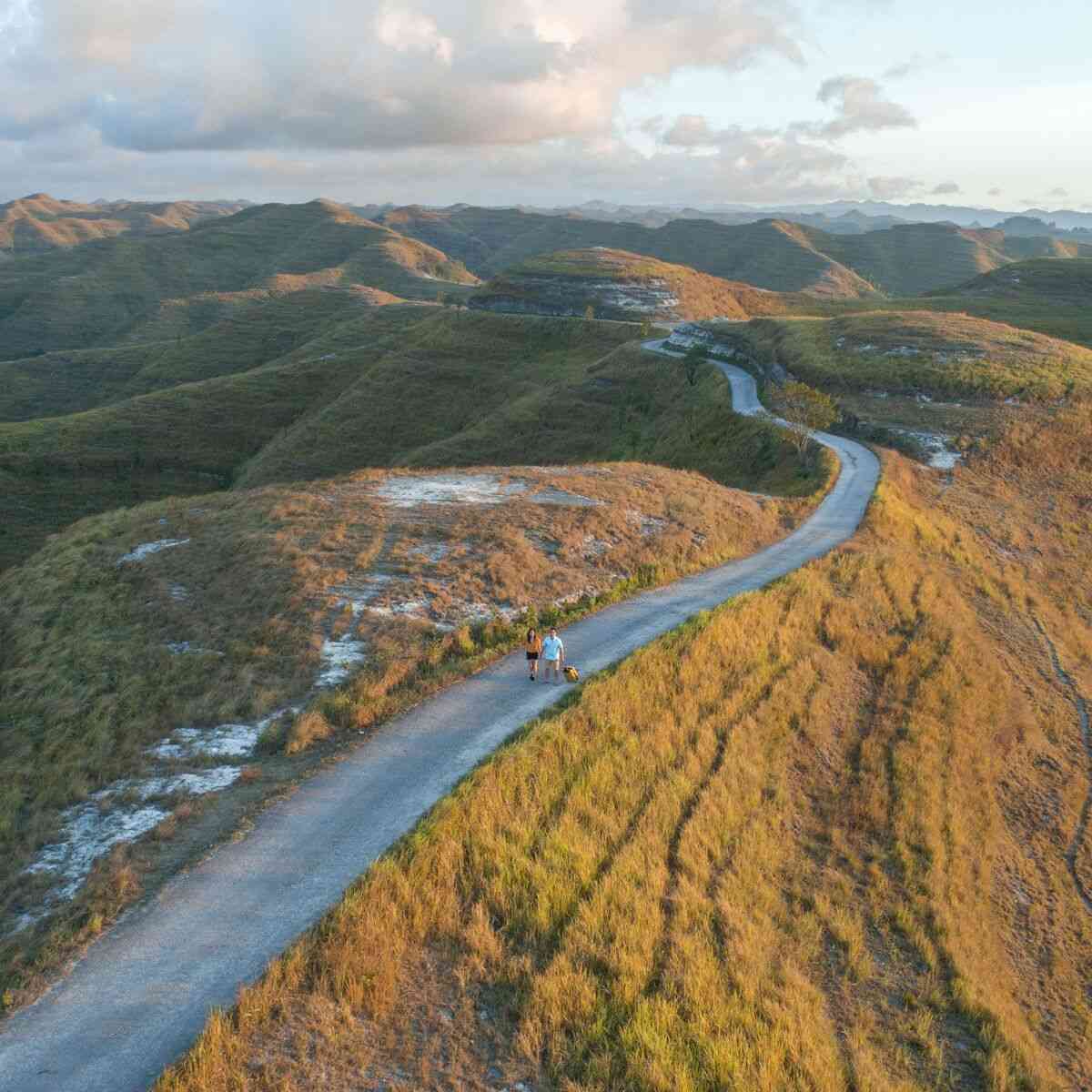
For an East Sumba itinerary of 3 days: day one Prailiu plus Wairinding at sunset; day two the long Puru Kambera and Tanggedu waterfall day; day three a second Wairinding attempt at sunrise, then Walakiri at dusk before flying out. Two major sights per day, maximum.
Photography notes for the ridges
A short telephoto around 70–200 mm is the workhorse: it compresses the ridges into stacked bands and frames distant horses without walking into the herd. Wide lenses need one thing: a strong foreground of grass or a footpath into the folds. Without it they turn Wairinding into an empty green field.
Wind is constant on the crests, so keep the strap short and brace against a knee rather than a light tripod; dry season pushes fine dust into everything, so change lenses in the car. On drones, our house rule is no launching near a herd, no chasing animals, no low passes over livestock, houses or grave sites — horses spook, and a spooked herd endangers itself and the family that owns it. Ask your guide first, and stay clear of ceremonies. See our Sumba horse photography pages for portfolio work.
Rates, and what a Wairinding morning sits inside
Wairinding is a stop, not a product: it sits inside a private, driver-guided trip running from the airport meet to your drop-off. Rates start from USD 700 per person (indicative) on the 4D3N at eight guests, and from USD 890 per person (indicative) on the 5D4N private Sumba trip, also at eight guests; longer programmes such as the 10D9N expedition are quoted on request. Cost per person is not linear — it rises at five and nine guests because a second vehicle is needed — so four and eight are the sweet spots. Confirm current rates with us before planning around one.
The Private Trip Sumba 4D3N / 5D4N / 6D5N by IndonesiaJuara page carries the live matrix. We are the Sumba horse desk of that network, which holds the TripAdvisor Travellers’ Choice Award for 2023, 2024 and 2025.
Frequently Asked Questions
What time should I leave Waingapu for the Wairinding sunrise viewpoint?
Between roughly 03:45 and 04:15 WITA. The drive takes 1.5 to 2 hours on narrow road, and you want twenty minutes on the ridge before the sun appears. Confirm the exact sunrise the evening before; it shifts between about 05:35 and 06:20 by season.
How long does the good light last at Wairinding Hill?
About 40 to 60 minutes after sunrise. The ridges need low, raking light to separate one fold from the next; once the sun climbs the shadows collapse and the hill looks flat, generally by 08:30. It returns from roughly 16:30.
Am I guaranteed to see wild Sumba horses on the savannah?
No, and we will not promise it. The Sandalwood ponies are semi-wild and clan-owned, free to range, so they move. Odds are best early morning or late afternoon in the dry season, May to October, with a guide who knows the grazing zone.
Can I ride or feed the horses I meet at Wairinding?
No, not without the owner’s permission arranged in advance. These are working animals belonging to specific families, and mounting a semi-wild pony without its owner present is unsafe and unfair to the horse. Never feed them.
Is it worth visiting Wairinding, Tanarara and Tenau on the same day?
Usually not all three. They are variations on one savannah landscape and most guests lose interest by the third. We pair one hill at golden hour with something different: a village, a waterfall, a beach sunset.
When is the savannah greenest, and does that help with the horses?
December to March is greenest, but herds spread out because water and grazing are everywhere. June to September brings drier roads, easier access and better-concentrated horses on short grass. Green hills or reliable horses — you choose one.
Plan your Wairinding morning with us
Tell us your dates, your group size and whether horses are the point of the trip, and we will build the days around the light rather than a template.
Message us on WhatsApp at wa.me/6281139414563 or email [email protected] for a current quote. Rates are confirmed per date, group size and accommodation tier.
Keep Reading
Best Luxury Cruise Indonesia After Sumba: 2026 Guide
After a week among Sumba’s sandalwood horses, megalith villages and waterfall pools, the natural next leg is the sea. The best luxury cruise in Indonesia for…
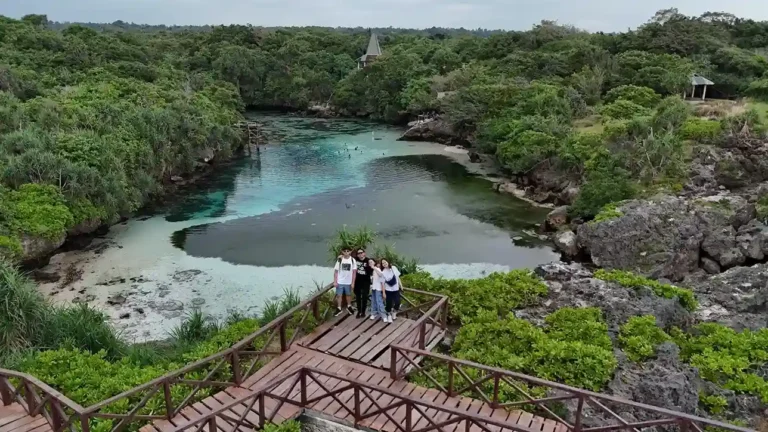
Weekuri Lagoon Sumba 2027: A Kodi Coast Day Plan With Mandorak and Ratenggaro
Weekuri Lagoon sits on the Kodi coast of Southwest Sumba, about 2 to 2.5 hours by road from Tambolaka Airport, and the sensible way to see…
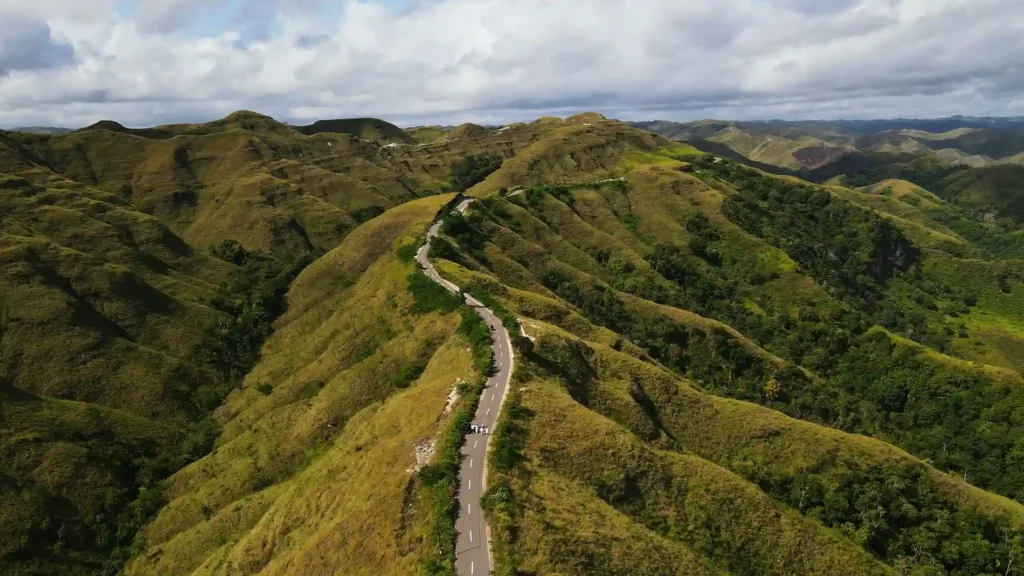
Waingapu Travel Tips 2027: Using East Sumba’s Capital as a Three-Night Base
The most useful of all Waingapu travel tips is also the simplest: make Waingapu your fixed base for three nights and drive out to a different…
Planning a Trip to Sumba?
Two trips across the island — shared on a fixed date, or private on yours.