
Marapu: Understanding Sumba’s Ancestral Faith Behind Pasola & the Horse
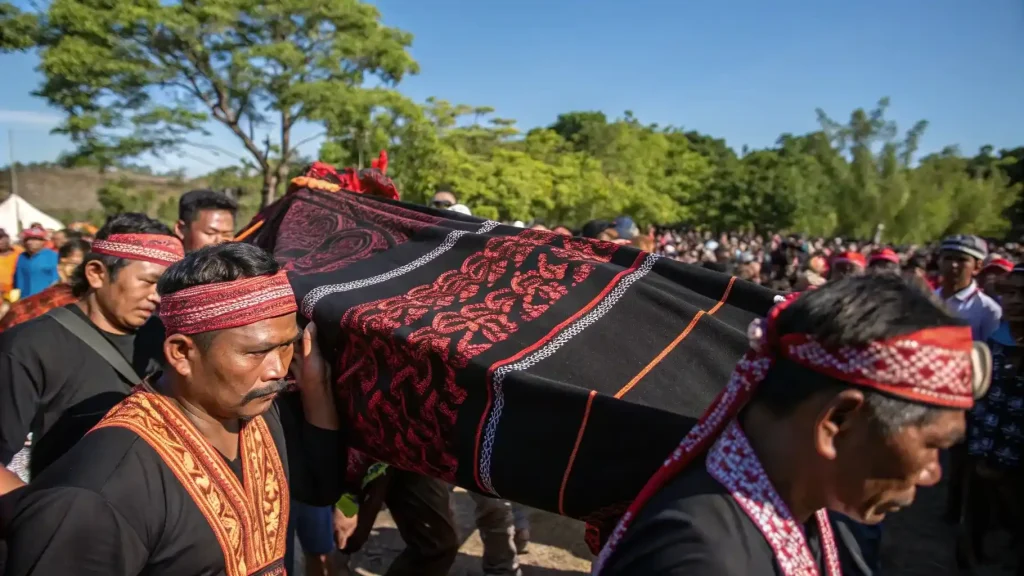
Marapu is the ancestral belief system of Sumba, Indonesia: a faith built on keeping harmony between the living and the spirits of the ancestors who came before them. It is the reason Pasola exists, the reason villages are arranged around megalithic tombs, and the reason the Sumba horse is treated not as simple livestock but as a companion in marriage, status, and even the journey after death.
If you plan to ride Sumba’s savannas or watch the spear-riders of Pasola, Marapu explains almost everything you will see, from the shape of a roofline to the way a horse is led into a funeral. This guide covers the core ideas of the faith, the people who keep it alive, and how to visit its sacred places with respect.
What Is Marapu? The Core Principles
The word Marapu refers both to the ancestral spirits themselves and to the belief system that honors them. At its heart, Marapu teaches that the ancestors never truly leave: they remain present, watching over their descendants, and the living owe them remembrance, offerings, and correct behavior in return.
Three ideas run through almost every Marapu practice:
- Balance between worlds. The visible world of the living and the unseen world of the spirits are two halves of one reality, kept in equilibrium through ritual.
- Reciprocity. The ancestors protect the harvest, herds, and family; the living respond with ceremonies, offerings, and adherence to custom, known locally as adat.
- Continuity of the clan. Houses, tombs, and heirlooms are less personal property than vessels carrying the family line forward.
Marapu coexists today with Christianity, and many families blend practices, but the ancestral framework still shapes the agricultural calendar, marriages, funerals, and the great rituals that draw travelers to the island.
The Rato: Priests Who Read the Signs
Marapu has no printed scripture. Its knowledge lives with ritual specialists called Rato, priests who inherit the prayers, genealogies, and ceremonial rules of their communities, mediate between the living and the ancestors, lead offerings, interpret omens, and decide when the great rituals may proceed.
The clearest example of their authority is Pasola itself. The festival is not fixed on a calendar: Rato watch the moon and the sea for the arrival of the nyale sea worms along the coast, the sign that the planting season and its rituals can begin. Exact dates vary by year and village, announced only shortly in advance. This is why any serious Pasola festival tour is built with flexible dates and local sources on the ground rather than a rigid itinerary printed months ahead.
Marapu and Pasola: Why the Spear Riders Charge
Pasola is often described as a mock battle, but within Marapu it is a fertility ritual. Teams of riders on Sandalwood ponies charge across an open field hurling wooden spears at one another, a controlled clash that historically allowed bloodshed believed to fertilize the fields and secure the harvest.
The festival takes place once a year between February and March, timed by the Rato to coincide with the nyale appearance and the start of the agricultural cycle. Modern Pasola uses blunt wooden shafts rather than sharpened weapons, and local regulations keep foreign visitors out of the fight itself. Travelers watch from designated areas, both a safety measure and a mark of respect: Pasola remains a religious act performed by and for the community, not a show for outsiders.
The horses matter here too. Pasola riders traditionally ride Sandalwood ponies bareback or with minimal tack: small, hardy horses with Arabian ancestry dating to trade contact around the 8th century, famed for endurance and speed. A Pasola charge is a partnership between rider, horse, and ancestral obligation rehearsed for generations.
Uma Mbatangu: The Peaked Houses Where Ancestors Dwell
Traditional Sumbanese villages are built around the uma mbatangu, towering peaked houses whose steep central roofs rise like spires above the settlement. The architecture maps the Marapu cosmos: the high tower is reserved for the ancestors and the clan’s sacred heirlooms, the middle level houses the family, and the space beneath the floor traditionally shelters animals.
A single house thus stacks the worlds of the spirits, the living, and the animals in one structure. Hearth, carved posts, and doorways follow customary rules, and important rituals are performed inside or in front of the house. Stand in a village square surrounded by these rooflines and you are standing inside a religious diagram, not just a picturesque kampung.
Megalithic Tombs: The Ancestors at the Center of the Village
Sumba is one of the few places on earth where megalithic burial remains a living tradition. Massive stone tombs, some carved with buffalo horns, horses, and human figures, sit not in separate cemeteries but in the village plaza, between the houses of the living. The dead are not sent away; they remain at the heart of daily life, exactly as Marapu teaches.
Erecting a tomb stone is a huge communal undertaking involving extended family, feasting, and animal offerings, and its scale speaks to the standing of the clan. For visitors these stones are among the island’s most striking sights, and its most sensitive, which is why etiquette matters so much.
The Horse in Marapu Life: Bride Wealth, Funerals, and Status
Nowhere is the horse’s sacred position clearer than in Marapu ceremony:
- Bride wealth. In traditional marriage negotiations, horses are central to the belis, the bride wealth a groom’s family presents to the bride’s family, carrying the weight of alliance between clans.
- Provision for the departed. In funeral tradition, a favored horse may be honored in the send-off of an important person, so the departed does not travel to the ancestor world unprovided.
- Status and identity. Fine horses have long marked standing in Sumbanese society, carved on tombs, danced at ceremonies, and raced across beaches.
A trail ride on Sumba is not a pony ride at a resort; it is entry into a landscape where the animal beneath you has ritual meaning. Our tailor-made Sumba horse riding trips pair riding days with village visits where the culture is explained by people who grew up inside it.
Etiquette: How to Visit Marapu Sacred Sites Respectfully
A few practical rules will keep you welcome in traditional villages and at ritual events:
- Ask before entering and before photographing. Villages are homes and sanctuaries, not open-air museums; have your guide seek permission first.
- Never climb or sit on tombs. The stone graves in the plaza are active sacred objects, not benches or photo platforms.
- Dress modestly and follow your guide’s lead. Some houses, objects, and ritual moments are restricted; if your guide asks you to wait outside or put the camera away, that comes from the community.
- At Pasola, stay in the designated spectator areas. The field belongs to the riders and the ritual; keep distance from the fast-moving horses.
- Accept hospitality graciously. Betel nut, coffee, or a seat on the veranda may be offered; receiving it politely is part of the exchange.
Frequently Asked Questions
Is Marapu still practiced on Sumba today?
Yes. While many Sumbanese are also Christian, Marapu practice remains alive, especially in the traditional villages of West and Southwest Sumba. Ancestral rituals, the authority of the Rato, and ceremonies such as Pasola continue to structure the year.
When does Pasola happen, and can I plan a trip around it?
Pasola is held once a year between February and March, with exact dates set by local ritual leaders after the nyale sea worms appear, usually confirmed only shortly in advance. Travel with an operator that tracks the announcements locally and keeps the itinerary flexible.
Can tourists take part in Pasola?
No. Foreign visitors generally cannot join the fight itself; local regulations restrict participation, and guests watch from designated areas. This protects both spectators and the religious integrity of the ritual.
Why are horses so important in Marapu culture?
Horses serve as bride wealth, feature in funeral ceremonies as companions for the departed, and mark family status. The Sandalwood pony, a small and hardy breed with Arabian ancestry, is at the center of all of it, including Pasola.
Is it disrespectful to visit Marapu villages as a traveler?
Not if you come correctly: visit with a local guide, ask permission, dress modestly, and never touch tombs or ritual objects. Communities generally receive respectful visitors warmly; problems arise only when villages are treated as photo backdrops.
Experience Marapu Culture With People Who Know It
Sumba Horse operates as the Sumba riding and culture specialist within the wider Indonesian travel ecosystem of Juara Holding Group, which means local guides, vetted horses, and direct lines to the villages where these traditions live. Whether you want to time a journey to the Pasola window or thread a private riding itinerary with village visits and megalith sites, we plan around the ritual calendar, not against it.
Tell us your dates and interests on WhatsApp at wa.me/6281139414563 or email [email protected], and we will map out a Sumba journey that honors the ancestors’ island while giving you the ride of a lifetime.
Keep Reading
Best Luxury Cruise Indonesia After Sumba: 2026 Guide
After a week among Sumba’s sandalwood horses, megalith villages and waterfall pools, the natural next leg is the sea. The best luxury cruise in Indonesia for…
Weekuri Lagoon Sumba 2027: A Kodi Coast Day Plan With Mandorak and Ratenggaro
Weekuri Lagoon sits on the Kodi coast of Southwest Sumba, about 2 to 2.5 hours by road from Tambolaka Airport, and the sensible way to see…

Wairinding Sunrise Viewpoint 2027: Timing the Light and the Horses on East Sumba’s Ridges
The Wairinding sunrise viewpoint is a run of grass ridges inland from Waingapu, about 1.5 to 2 hours by road, so catching first light means leaving…
Planning a Trip to Sumba?
Two trips across the island — shared on a fixed date, or private on yours.