
The Nyale Ritual Explained: Sea Worms, Priests & Why Pasola Has No Fixed Date
Pasola has no fixed date because it is scheduled by Sumba’s Marapu priests — the Rato — who wait for the seasonal arrival of nyale sea worms on the island’s beaches before confirming when the mounted spear battles may begin. The worms appear once a year, usually between February and March, and until the Rato have read them, no calendar can tell you the exact day. This guide explains the nyale ritual from the ground up: what the worms are, how the priests interpret them, why it is all tied to the rice harvest, and what you may witness on the beach at dawn.
The Short Answer: Pasola Waits for the Sea
Pasola is not a performance staged for a tourism calendar. It is the climax of an agricultural and spiritual cycle governed by Marapu, the ancestral belief system of the Sumbanese people. Each year, somewhere in the February–March window, nyale sea worms rise from the reef and wash toward the beaches of western Sumba. In Marapu tradition, this swarming signals that the ancestors have opened the planting season. Only after the Rato — the ritual priests — have observed the worms and read them as favourable can the community proceed to Pasola, the ritual battle on horseback that consecrates the fields.
Because the swarming follows the rhythm of the moon and the tides rather than a printed calendar, the exact dates shift every year and differ from village to village, and they are announced locally, often only shortly in advance. Any operator who promises a confirmed Pasola date twelve months out is guessing.
What Is Nyale? The Sea Worm That Sets the Calendar
Nyale are marine worms that live in the reefs off Sumba’s coast for most of the year, invisible to anyone on land. Once annually, during a brief spawning period, they release into the water in shimmering, thread-like masses that drift ashore in the hours before sunrise. For a few mornings the shallows of certain beaches fill with them — and then they are gone until the following year.
To an outsider this is a curious natural event. To the Sumbanese it is a message. The worms arrive just as the rice fields are ready for planting, so generations of farmers have treated the nyale as the most reliable signal in their agricultural year — reliable enough to anchor a festive season across western Sumba.
The Rato: Priests Who Read the Worms
The Rato are the priests of the Marapu faith, and the nyale ritual is one of their most important duties. In the weeks before the expected arrival they watch the moon, the sea, and the natural world around their villages; when the time is near, they declare the ritual period open and lead the preparatory ceremonies.
On the appointed morning, the Rato are first to the water. The first nyale gathered are examined closely: their abundance, colour, and condition are read as signs for the season ahead. A rich, healthy swarm is interpreted as the promise of a generous harvest; a thin catch is read as a warning that calls for further ritual attention. Only once this reading is complete do the Rato confirm that Pasola may be held, and on which day each participating village will ride.
This is why the dates arrive so late: the decision is simply not made until the priests have seen the worms — a theme we explore further in our guide to Sumba’s horse culture.
Nyale, Pasola, and the Fertility of the Rice Fields
In Marapu belief, the nyale, the Pasola battle, and the rice harvest form one continuous chain of fertility. The worms are the ancestors’ gift from the sea, confirming the land is ready. Pasola completes the exchange: riders charge and hurl wooden spears in controlled ritual combat, and blood spilled on the field has traditionally been understood as an offering that fertilises the soil for the coming planting.
Seen this way, “why can’t they just fix a date?” answers itself. Detaching Pasola from the nyale would sever the battle from its purpose. The fight exists because the worms arrived; the harvest is expected because the fight was fought.
The horses matter too. Pasola is ridden on the island’s own Sandalwood ponies — small, fast, courageous horses shaped by centuries of crossing local ponies with Arabian bloodlines. They are the same breed our guests ride, which is why many travellers pair a festival visit with a tailor-made Sumba horse riding trip built around whatever dates the Rato announce.
What Happens During Pasola Itself
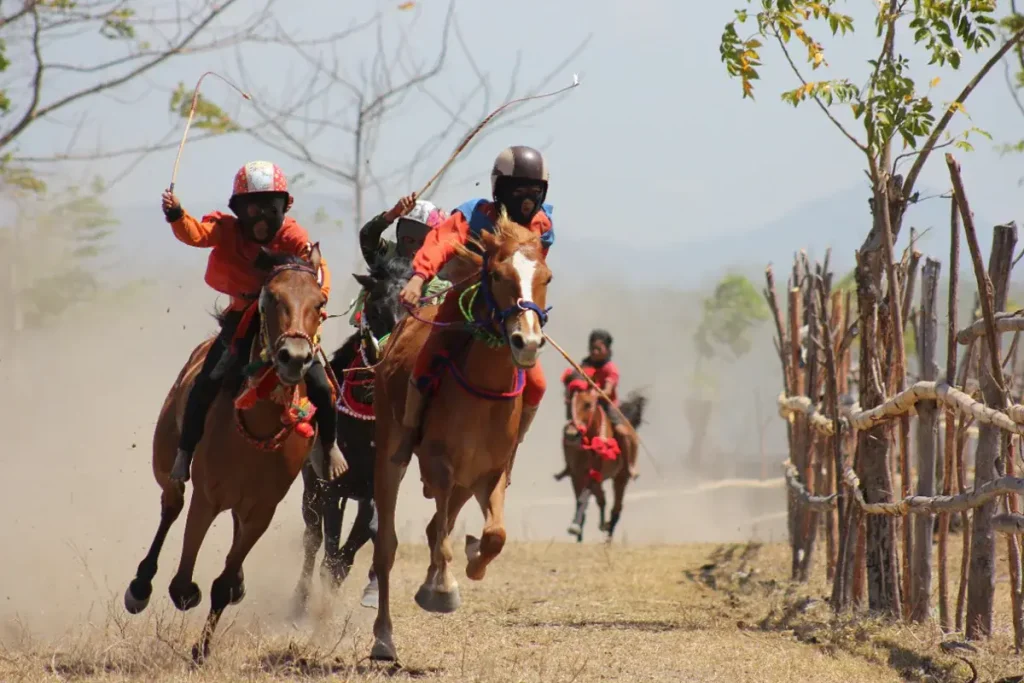
Once the nyale reading confirms the festival, each village stages its Pasola on its own field. Teams of riders — traditionally bareback or with minimal tack — gallop toward the opposing side and throw wooden spears, wheeling away and returning in repeated passes. Today’s spears are deliberately blunted, a change from the sharp weapons of earlier generations, made to reduce serious injuries while preserving the ritual’s force.
This remains a genuine contest, not choreography: riders fall, spears connect, and the crowd’s energy is intense. Participation rules are strict — foreign visitors cannot join the fight and watch from designated spectator areas.
What Visitors Can Witness at the Dawn Nyale Ritual
The nyale gathering is the quieter, and for many guests the more moving, half of the experience. Here is what respectful visitors can typically see:
- The pre-dawn walk to the beach. Families move toward the shore in darkness with baskets and torches; visitors may walk alongside with a local guide.
- The priests at the waterline. The Rato enter the shallows first. Observe from a respectful distance and never step between the priests and the sea.
- The first catch and its reading. Watching the Rato examine the worms is permitted; ask your guide before photographing priests or offerings.
- The communal gathering. Once the reading is done, the beach turns joyful as families scoop nyale from the shallows. Guests are often warmly invited to look, and sometimes to taste.
Dress modestly, keep voices low during the ritual phase, and follow your guide’s lead on where to stand.
How to Plan a Pasola Trip When the Date Is Not Fixed
The practical strategy is to plan around a window, not a date. Build your trip inside the February–March period, keep two to three flexible days in the middle, and work with an operator who hears the village announcements as they happen. That is how our Pasola festival tour package is structured: we position you on Sumba ahead of the expected window, monitor the Rato’s announcements through our local network, and adjust the itinerary so you are at the right field when the riders gather. Between festival days, you ride — beaches, savannah, and traditional villages on the very ponies the festival celebrates.
Sumba Horse operates within the Juara Holding Group ecosystem; you can read more field stories in the group’s Sumba journal. For timing the wider trip, see our notes on the best time to visit Sumba.
Frequently Asked Questions
When exactly is Pasola held?
Once a year between February and March, with different villages riding on different days. The exact dates are set by the Rato after the nyale sea worms appear and are usually confirmed only shortly in advance — there is no fixed Gregorian date.
What is nyale, in plain terms?
Nyale are reef-dwelling sea worms that spawn once a year off Sumba’s coast, drifting ashore just before dawn during the February–March period. In Marapu belief their arrival marks the start of the planting season, and the priests read the first catch as an omen for the harvest.
Can tourists watch the dawn nyale ritual?
Yes. Visitors with a local guide can join the pre-dawn walk, observe the Rato from a respectful distance, and take part in the communal gathering once the reading is complete. Modest dress, quiet behaviour, and asking before photographing priests or offerings are essential.
Can foreigners ride in the Pasola battle?
No. Participation is restricted to local riders; foreign visitors watch from designated spectator areas. This protects both visitors and the integrity of a living religious ceremony.
How should I book a trip if the date is not confirmed?
Book a flexible itinerary inside the February–March window with an operator that has people on the ground. Our Pasola packages hold buffer days and adapt to the village announcements; pricing is tailored to your dates and group size, on request.
Ready to Witness the Nyale Ritual and Pasola?
If you want to stand on a Sumba beach at first light as the Rato read the sea — then watch the Sandalwood ponies thunder across the Pasola field days later — let our team build the trip around the ritual calendar. Message us on WhatsApp at wa.me/6281139414563 or email [email protected], and we will hold the window, watch the announcements, and put you exactly where the season begins.
Keep Reading
Best Luxury Cruise Indonesia After Sumba: 2026 Guide
After a week among Sumba’s sandalwood horses, megalith villages and waterfall pools, the natural next leg is the sea. The best luxury cruise in Indonesia for…
Weekuri Lagoon Sumba 2027: A Kodi Coast Day Plan With Mandorak and Ratenggaro
Weekuri Lagoon sits on the Kodi coast of Southwest Sumba, about 2 to 2.5 hours by road from Tambolaka Airport, and the sensible way to see…

Wairinding Sunrise Viewpoint 2027: Timing the Light and the Horses on East Sumba’s Ridges
The Wairinding sunrise viewpoint is a run of grass ridges inland from Waingapu, about 1.5 to 2 hours by road, so catching first light means leaving…
Planning a Trip to Sumba?
Two trips across the island — shared on a fixed date, or private on yours.