
Rende Village East Sumba 2027: Buffalo-Skin Walls, Stone Tombs and a Two-Hour Drive
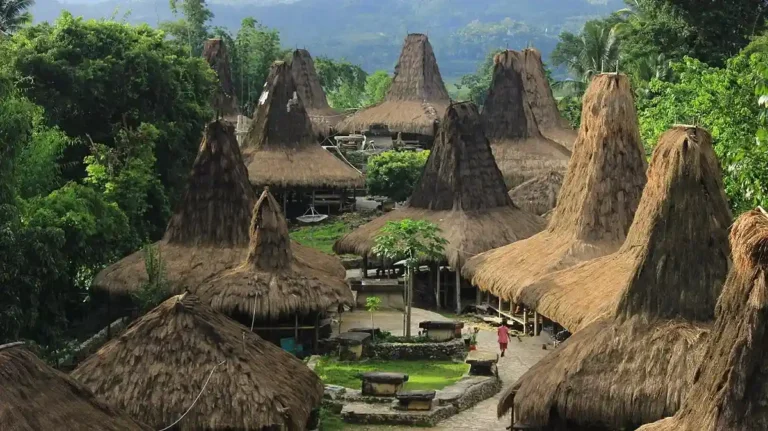
Rende village East Sumba is a living traditional village known for peaked roofs lower than the towering houses of West Sumba, houses with buffalo-skin walls and horn decorations, and enormous stone tombs standing a few steps from the front doors. The drive from Waingapu to Rende takes 2+ hours each way, so budget half a day to a full day for the round trip. Rende is not a museum and not ticketed: you visit with a village representative, donate through the proper channel, and never climb on the graves.
Rende is thinly covered in English, so most of what circulates about it is second-hand. Here is what our drivers deal with on that road, and where the village belongs in an itinerary.
Where Rende sits, and why the drive is the whole story
Rende lies in the eastern part of East Sumba, toward the south-eastern coastal villages. Operator timings put the Waingapu to Rende drive at 2+ hours one way — and that is before photo stops, a slow greeting, and the drive back. Compare that with Prailiu, the weaving village 15 to 30 minutes from town: Rende costs most of a day.
The road mixes paved trunk route with rougher segments once you leave the main line, and average speeds on Sumba sit near 40 to 50 km/h. Rain slows everything. December to March is when the East Sumba savannah is greenest, and also when the approach roads are slowest. June to September gives dry gold grass, burnt-looking hills and roads that behave. Neither season is wrong — they are different photographs and different drive times.
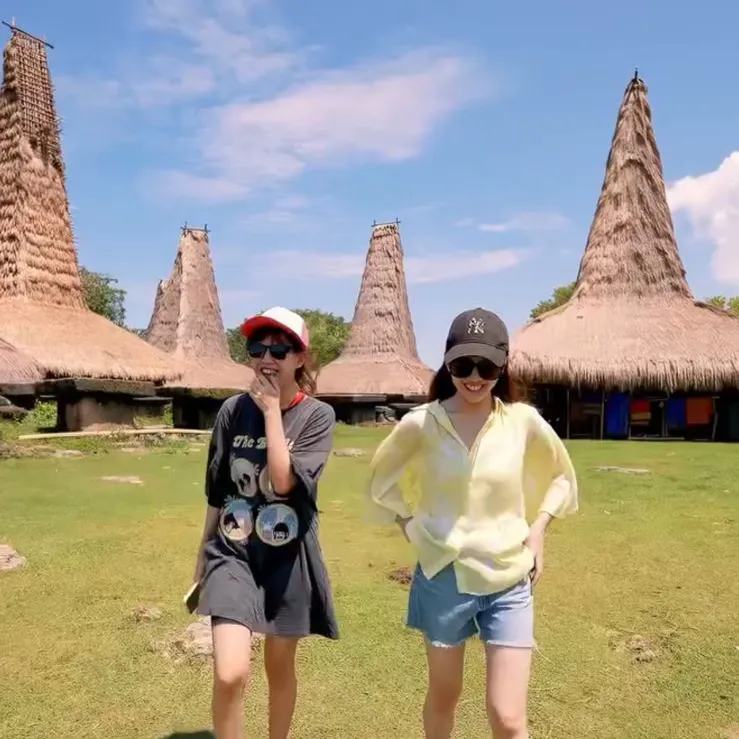
Traditional houses in Sumba, lower than you expect
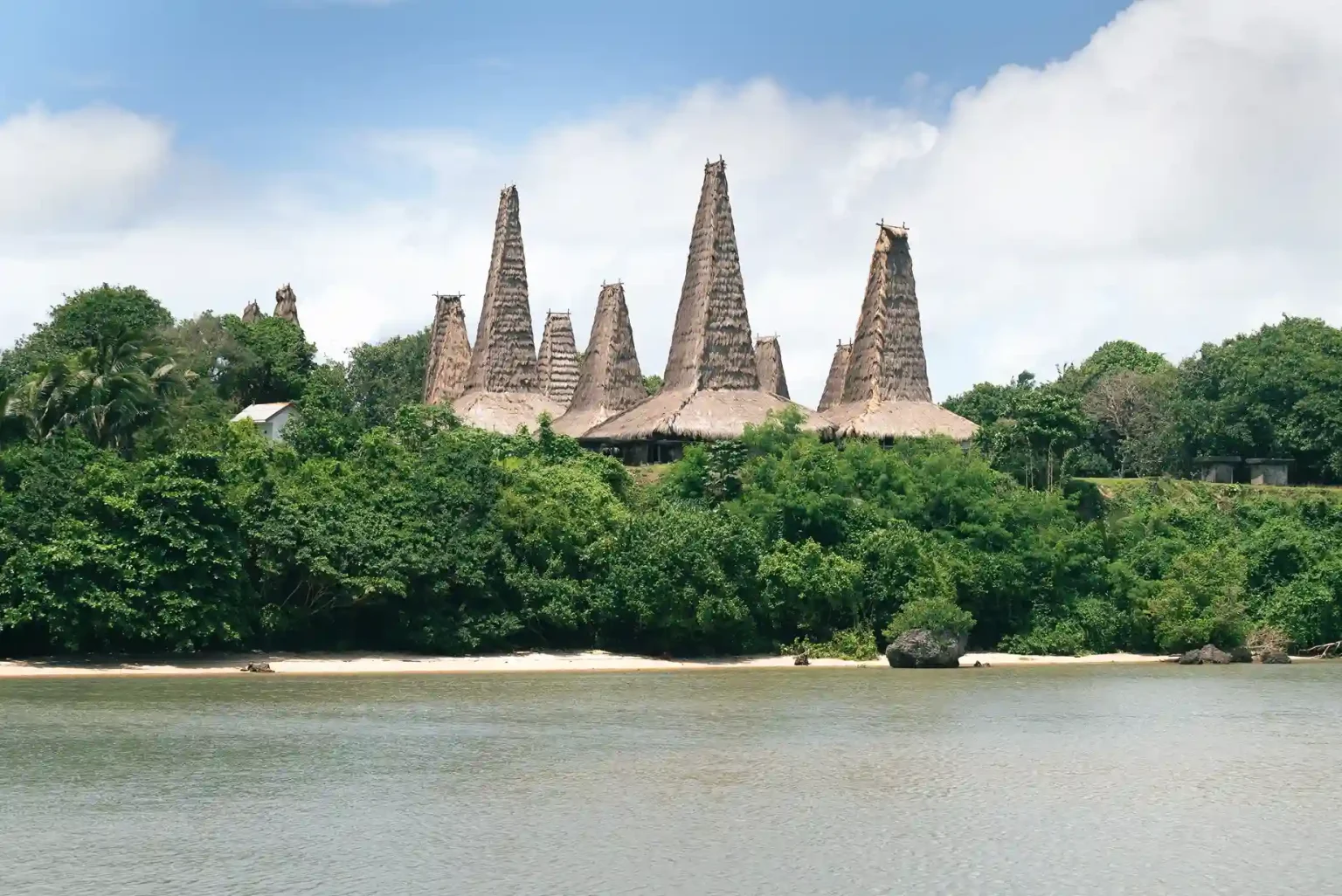
If you have seen photographs of West Sumba, adjust your expectations: the tower-houses of Ratenggaro in Kodi reach some 15 to 20 metres. The traditional houses in Sumba’s eastern regencies, Rende included, follow the same logic — the uma on stilts, animals below, family space in the middle, an upper level tied to ancestors — but the peaked roofs are lower.
What Rende has instead is detail. Sources single out houses with walls made of buffalo skins and facades decorated with skulls and horns — unusual even by Sumbanese standards, and why Rende appears in ethnographic notes yet stays invisible in travel writing. It sits in a dense cluster of east Sumba traditional villages, often discussed alongside neighbouring Prailiang.
Sumba grave stones and tombs, a few steps from the door
What reorders your sense of the place is proximity. Megalithic graves are not fenced off at the edge of town; they sit in the village, table-like slabs on stone supports among the houses. In Rende the large graves stand close to the homes, so daily life happens between them.
These sumba stone megaliths are ancestor graves, not decoration. In the Marapu framework, house and tomb form one continuous relationship between living and dead. Some weigh tens of tons; a king’s tomb in West Sumba’s Praijing is reported at around 40 tons, buried with pigs and woven fabric.
One rule follows, and it is not negotiable on our trips: do not climb, sit or stand on the tombs. They photograph well from ground level. They are also somebody’s grandfather.
Why these villages sat on rocky hills
Ask why a village would sit on awkward, rocky ground instead of flat land, and the answer is defence: villages here historically stood on rocky hilltops to stay out of reach of coastal raiders and slave traders, context routinely attached to Rende and nearby Prailiang. It changes how the layout reads — the tight cluster, the raised position, the sightlines toward the approach. So much for the timeless-village cliché.
Status, livestock and horses, without the theatre
Status here has traditionally been expressed through things visible and costly: the tomb a family can raise, and the livestock it can give away. Both are on display in Rende.
In customary law, belis — bride price paid by the groom’s family to the bride’s family — traditionally includes horses, buffalo and other valuables. Their number and quality signal the family’s standing and the seriousness of the alliance; in some western districts elite marriages have involved dozens of animals. That is the core of sumba wedding customs: a negotiated, public exchange between clans.
The same logic governs sumba funeral traditions. Rank is expressed partly through sacrificed livestock, and the horse sacrifices Sumba history records belong to that: horses slaughtered at high-status funerals, the meat shared among mourners, the animal understood as accompanying the soul. We say it because it is documented and because it explains what you are standing beside. We do not build itineraries around funerals and we do not photograph rituals.
Worth knowing: Marapu is a living ancestral religion, not folklore. Many Sumbanese are registered as Christian or Muslim and still observe Marapu obligations.
Visiting hours, donations and the etiquette we enforce
There is no ticket booth and no posted opening time at Rende. The workable window is daylight, roughly 08:00 to 16:00, with mid-morning and late afternoon the best light. Protocol matters more than the clock:
- Greet first. Our guide presents the group to the customary leader before anyone walks toward the tombs or house platforms.
- Donate through the representative. A modest cash contribution per group, handed discreetly via the guide or adat leadership — not to children. Where appropriate we bring sirih pinang as the customary token.
- Buy, don’t tip. A fair price for ikat puts money where the work is; hard bargaining on cloth that took weeks does not.
- Dress modestly and stay on the paths people actually use.
- Ask before photographing people or interiors, never during prayers — as true on an east Sumba cultural photography tour as on a casual stop.
- Never climb the graves. Worth repeating.
For a sumba village photography tour: shoot wide to show tombs sitting among houses, and spend the first twenty minutes with the camera down.
Where Rende honestly fits in an itinerary
Rende is a 9 to 10 day proposition. On a 4 or 5 day trip, East Sumba time is absorbed by the headline sights — Bukit Wairinding, Puru Kambera, Tanggedu or Waimarang waterfall, Walakiri Beach at sunset, Prailiu on the way through. Add a 2+ hour transfer each way and you have dropped a waterfall or built a twelve-hour day. On a 10-day, 9-night private Sumba trip, Rende fits without wrecking the schedule — a real sumba cultural immersion trip rather than a checklist.
A 7-day, 6-night itinerary can carry Rende too, but something gives way: usually the second waterfall. If you already have your own planner and need only vehicles, driver-guides and village access handled on the ground, that is our Sumba ground operator services.
On cost, in one sentence: our published private Sumba trips start from USD 700 per person (indicative) on the shorter durations, and the 7-day and 10-day routings are quoted on request. One honest quirk — the per-person price rises at 5 and at 9 guests because a second vehicle is needed, so 4 and 8 are the efficient group sizes. Every rate is confirmed per date, group size and accommodation tier, so message us for a current quote rather than working from a number on a page.
Frequently Asked Questions
How long is the drive from Waingapu to Rende village?
Plan on 2+ hours each way, so a half to full day round trip with village time. That is the baseline, not a best case: rough final segments and December-to-March rain stretch it. We never schedule a major waterfall the same day.
Are the houses in Rende as tall as the ones in West Sumba?
No — Rende’s peaked roofs are generally lower. The 15 to 20 metre roofs are in Kodi, Southwest Sumba, especially Ratenggaro. Rende’s signatures are buffalo-skin walls, horn and skull decorations, and large stone graves beside the homes.
Can I photograph the stone tombs and the buffalo-skin houses?
Generally yes, once your guide has introduced the group and permission is given. Ask before photographing people, interiors or anything ceremonial. Climbing sumba grave stones and tombs for a better angle is never acceptable.
How much should I donate, and who do I give it to?
A modest cash contribution per group, handed discreetly through your guide to the customary leader. There is no fixed tariff, which is why it should go through someone who knows the village rather than to children.
Will I see a Marapu funeral or a horse sacrifice?
Not on our itineraries, and be wary of anyone promising otherwise. Horses and buffalo have historically been sacrificed at high-status funerals, which is what the great tombs record — but ceremonies are family obligations, not scheduled events.
Which trip length should I book if Rende matters to me?
The 10-day, 9-night private trip is the natural fit; the 7-day, 6-night works if you trade away a waterfall. Anything shorter and the headline sights crowd it out. Tell us Rende is a priority and we build the days around it.
Plan a Rende visit the village is happy to receive
Sumba Horse is the Sumba specialist desk of the IndonesiaJuara network — IndonesiaJuara Trip, holder of the TripAdvisor Travellers’ Choice Award three consecutive years — 2023, 2024 and 2025, placing it in the top 10% of businesses worldwide. For Rende village East Sumba we handle the airport meet, vehicle and driver-guide, and village access with the correct protocol.
Message us on WhatsApp at wa.me/6281139414563 or email [email protected] with your dates and group size. We will tell you what fits, what does not, and what the drive really costs in hours — then send a current quote.
Keep Reading
Best Luxury Cruise Indonesia After Sumba: 2026 Guide
After a week among Sumba’s sandalwood horses, megalith villages and waterfall pools, the natural next leg is the sea. The best luxury cruise in Indonesia for…
Weekuri Lagoon Sumba 2027: A Kodi Coast Day Plan With Mandorak and Ratenggaro
Weekuri Lagoon sits on the Kodi coast of Southwest Sumba, about 2 to 2.5 hours by road from Tambolaka Airport, and the sensible way to see…
Wairinding Sunrise Viewpoint 2027: Timing the Light and the Horses on East Sumba’s Ridges
The Wairinding sunrise viewpoint is a run of grass ridges inland from Waingapu, about 1.5 to 2 hours by road, so catching first light means leaving…
Planning a Trip to Sumba?
Two trips across the island — shared on a fixed date, or private on yours.