
Sumba’s Bareback Horse Racing Tradition: Speed, Pride & the Sandalwood Pony
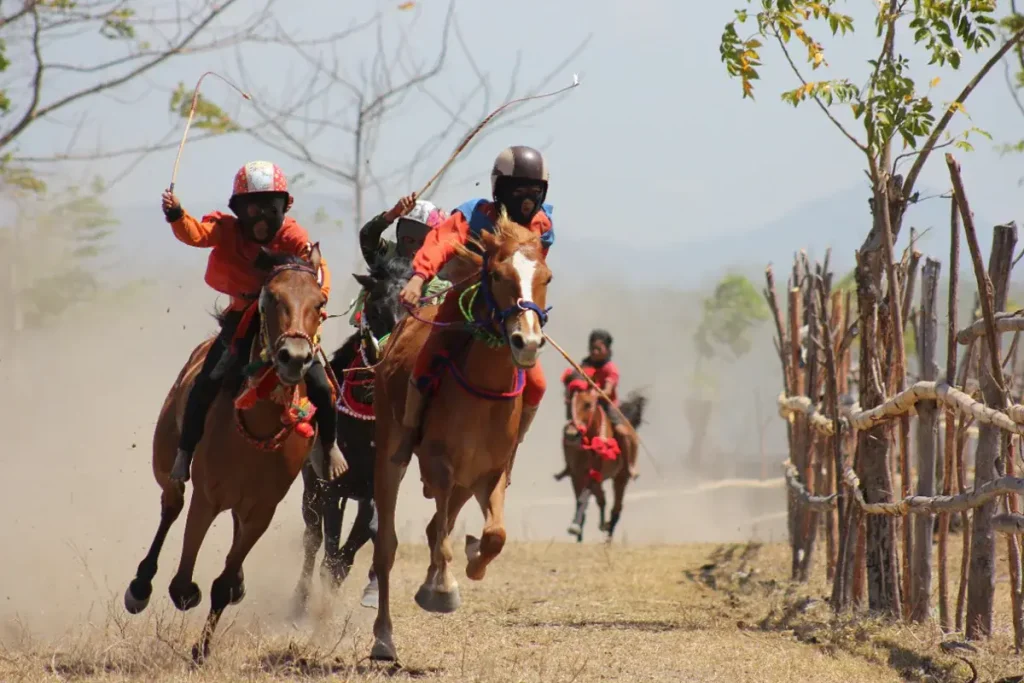
Sumba horse racing is a bareback speed tradition in which local Sandalwood ponies are raced without saddles over distances of two to three miles, ridden by young local jockeys in front of crowds that treat every heat as a matter of village pride. This guide covers where the tradition comes from, why the Sandalwood pony is built for it, how it differs from Pasola, and how to watch a race day respectfully.
What Is Sumba Horse Racing?
Unlike the manicured turf tracks of Europe or Australia, racing on Sumba is raw, close to the ground, and deeply local. Riders sit directly on the horse’s back — no saddle, often no more than a rope bridle — and gallop flat out over long dirt courses. The traditional format is a race of two to three miles, a distance that rewards stamina as much as raw speed.
Racing here is not a commercial spectacle; it is a proving ground. A winning horse raises the standing of the family that bred it, and a fast bloodline becomes part of a household’s reputation. That is why race days feel less like a sporting event and more like a community gathering with hooves.
The Sandalwood Pony: Built for Speed and Endurance
The horse at the centre of it all is the Sandalwood pony, one of Indonesia’s eight officially recognised horse breeds and native to Sumba and neighbouring Sumbawa. The breed takes its name from the sandalwood (cendana) tree that was once Sumba’s most famous export, and its history stretches back to around the 8th century, when traders brought Arabian horses to the island and crossed them with hardy local ponies.
That Arabian inheritance still shows: a light head, small ears, deep chest, and sloping shoulder, with a comparatively high proportion of Arabian and Thoroughbred blood for an Indonesian island breed. Sandalwood ponies stand roughly 12 to 13 hands — about 120 to 132 centimetres at the withers — which sounds small until you watch one hold a gallop across open savannah. Riders consistently describe them as hardy, fast, high in endurance, and unusually easy to work with: exactly the combination a bareback jockey needs. Our guide to the Sandalwood pony breed goes deeper into conformation, colours, and history.
Waingapu and the Racing Heartland of East Sumba
Ask anyone on the island where racing lives and the answer is usually East Sumba, with Waingapu — the region’s main town and port — at its centre. East Sumba’s wide, dry grasslands have always been horse country: this is where large herds graze, where breeding families concentrate, and where a culture of comparing, trading, and testing horses naturally evolved into organised racing.
The tradition grew out of practical horsemanship: on an island where horses serve as transport, pack animals, and farm workers, a fast horse was always worth identifying. Informal match races between proud owners hardened into recurring race meets, and today a race day around Waingapu draws spectators from villages across the region — food stalls, family groups, and intense debate about bloodlines you will not find written down anywhere.
Child Jockeys: An Honest Look at the Controversy
There is one part of this tradition that deserves a straight answer rather than a glossy brochure: the jockeys are often children. Local racing culture prizes light riders, and boys begin riding very young, sitting bareback on galloping horses at an age that surprises most foreign visitors. Within the community this has historically been seen as an honour and a pathway to status; many adult horsemen speak of their racing childhood with real pride.
At the same time, child-welfare advocates in Indonesia have raised legitimate concerns about young jockeys in island racing traditions — injuries, protective equipment, schooling, and whether a child can meaningfully consent to the risks. These debates have brought growing pressure for measures such as helmets and padding. We will not pretend the issue is settled. As a visitor, know what you are watching, form your own view, and understand that this is a living tradition negotiating change from within — not a performance staged for tourists.
When Are the Races? Understanding the Calendar
Here is the honest answer most websites avoid: there is no fixed, published national calendar for traditional Sumba horse racing. Race meets are organised locally, often tied to regional celebrations and public holidays, and dates are typically confirmed close to the event. This is normal for Sumba — even Pasola, the island’s most famous horse ritual, is timed each year by local priests rather than by a Gregorian calendar.
The reliable way to catch a race is to plan with someone who has people on the ground. Our team checks locally which meets are expected around your travel window and builds the rest of the itinerary — beaches, villages, savannah rides — so a shifting race date never breaks the trip. Treat any exact dates found online as indicative until confirmed locally.
Horse Racing vs Pasola: What’s the Difference?
Visitors often conflate the two, but they are different events with different meanings. Pasola is a ritual mounted spear-fighting festival rooted in the Marapu ancestral religion, held once a year between February and March in western Sumba, timed to the appearance of the nyale sea worms and the start of the planting season. Teams of riders charge each other throwing blunt wooden spears, and foreign tourists watch from designated areas — they cannot join.
Horse racing, by contrast, is competitive sport rather than religious ritual: no spears, no ceremonial battle, just speed over distance. What the two share is the horse — both are ridden bareback on Sandalwood ponies — and the sense that horsemanship sits at the core of Sumbanese identity. If the ritual side draws you, our Pasola festival tour package is built around the February–March window, with riding experiences woven around it.
How to Watch a Race Respectfully
A race day is a community event first and a spectacle second. A few principles keep you a welcome guest:
- Go with a local guide. A guide explains what is happening, introduces you to owners, and keeps you clear of the track — loose horses and excited crowds are a real hazard.
- Ask before photographing people, especially young jockeys and their families, and respect a refusal.
- Stay off the course. Spectator areas are informal, so use common sense about distance.
- Never pay to put a child on a horse or encourage extra risk for a photo. Watch the tradition as it is, not as content.
- Spend locally. Buying from food stalls and village vendors is the simplest way to give something back.
If you would rather meet the horses at walking pace before seeing them at full gallop, our Sandalwood pony stable experience lets you groom, handle, and learn about the breed with our own herd — the best possible primer for understanding what you are watching on race day. For broader cultural background, the Sumba stories from the Juara Holding Group team are worth reading before you fly.
Frequently Asked Questions
How long are traditional Sumba horse races?
Traditional races are run over roughly two to three miles, ridden bareback. The distance is a genuine endurance test, which is why the Sandalwood pony — famous for combining speed with stamina — dominates the sport.
Can tourists ride in a Sumba horse race?
No. Racing is a local tradition contested by local riders, and as with Pasola, visitors watch rather than participate. What you can do is ride the same breed on beaches, savannah, and village trails through our guided Sumba horse riding tours, designed for everyone from beginners to experienced riders.
Is Sumba horse racing the same as Pasola?
No. Pasola is a ritual spear-fighting festival tied to the Marapu religion, held between February and March in western Sumba. Horse racing is a secular speed competition held at locally announced meets, mainly in East Sumba around Waingapu. Both feature bareback riding on Sandalwood ponies.
When is the best time to see horse racing in Sumba?
There is no fixed public calendar; meets are arranged locally and often coincide with regional celebrations. The dependable approach is to tell us your travel dates — we confirm on the ground whether a race meet falls within your window and plan alternatives if not.
Are the child jockeys safe?
Young jockeys are a genuine part of the tradition and a genuine subject of controversy. Safety practices vary, welfare advocates continue to push for protections such as helmets, and the culture is evolving. We present it honestly and let guests observe with informed eyes.
Plan Your Sumba Horse Racing Experience
Whether you want to stand trackside in East Sumba, time your trip for Pasola, or simply gallop a Sandalwood pony down an empty beach, our Sumba-based team designs the journey around what is actually happening on the island. Itineraries are private and tailor-made, with pricing on request depending on season, group size, and inclusions. Message us on WhatsApp at wa.me/6281139414563 or email [email protected], tell us your dates, and we will tell you what race season looks like when you land.
Keep Reading
Best Luxury Cruise Indonesia After Sumba: 2026 Guide
After a week among Sumba’s sandalwood horses, megalith villages and waterfall pools, the natural next leg is the sea. The best luxury cruise in Indonesia for…
Weekuri Lagoon Sumba 2027: A Kodi Coast Day Plan With Mandorak and Ratenggaro
Weekuri Lagoon sits on the Kodi coast of Southwest Sumba, about 2 to 2.5 hours by road from Tambolaka Airport, and the sensible way to see…

Wairinding Sunrise Viewpoint 2027: Timing the Light and the Horses on East Sumba’s Ridges
The Wairinding sunrise viewpoint is a run of grass ridges inland from Waingapu, about 1.5 to 2 hours by road, so catching first light means leaving…
Planning a Trip to Sumba?
Two trips across the island — shared on a fixed date, or private on yours.