
Walakiri Beach Sunset Guide: Tides, Timing & the Famous Dancing Mangroves
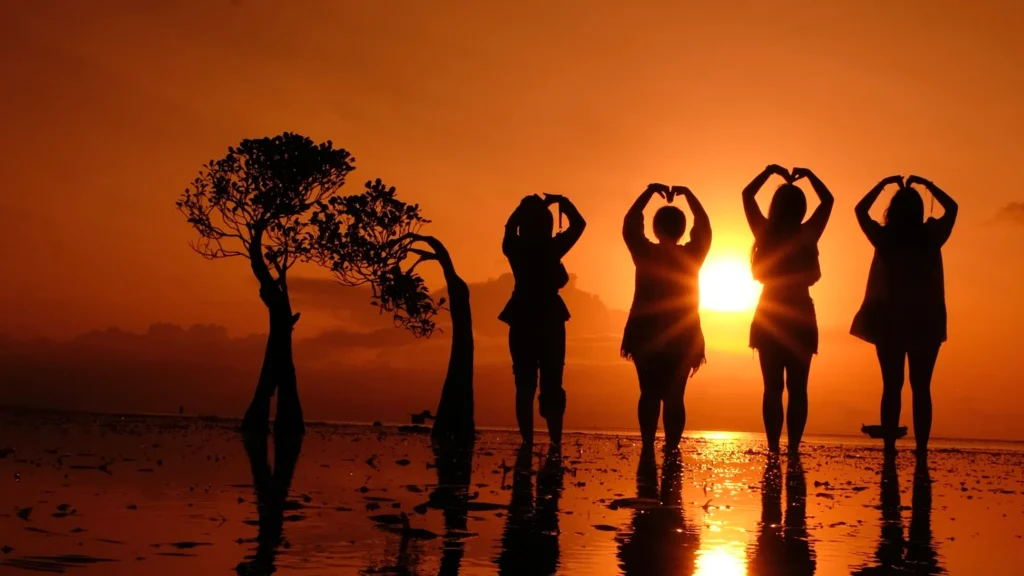
The best Walakiri Beach sunset happens when two clocks line up: the sun dropping toward the horizon between roughly 5:30 and 6:15 pm, and a falling tide that leaves the famous “dancing” mangroves standing in a thin sheet of silver water. Arrive ninety minutes early on a receding tide and East Sumba’s most photographed trees become perfect silhouettes — this guide explains how to time it, where to stand, and how to add a horse and rider to the frame.
Most articles stop at “come for sunset.” This one explains the tide mechanics that decide whether you get glassy reflections or a dry mudflat — and how to coordinate a Sandalwood pony and rider into the frame, because our Walakiri Beach horse riding experience is built entirely around this tide-and-light window.
Why Walakiri’s Mangroves Are Called the “Dancing Trees”
Walakiri’s shoreline is dotted with low, wind-sculpted mangroves growing in scattered clusters on a wide, shallow tidal flat. Steady onshore breeze and tidal movement have bent their trunks into curved, gesturing shapes — arms raised, torsos twisted — so when backlit at dusk they look like figures frozen mid-dance across the water. The illusion is strongest at sunset: with the sun behind them, texture disappears and only the choreography of the branches remains.
Two things make the effect unique here. The trees stand apart rather than in a dense forest wall, so each silhouette reads individually — and the flat is so level that a few centimetres of remaining seawater becomes a mirror, doubling every tree into its own reflection.
Golden Hour at Walakiri: Timing by Season
Sumba sits close to the equator, so sunset times shift only modestly — but the light changes character with the seasons.
- Dry season (roughly April to October): the most reliable window. Skies are typically clear, sunsets fall around 5:30–6:00 pm, and golden hour delivers warm, clean light on the flats — peak season for photographers.
- Shoulder months (March and November): a gamble that often pays off. Building clouds can block the sun entirely — or catch fire in orange and violet for the most dramatic skies of the year.
- Wet season (roughly December to February): afternoon storms wash out some evenings, but gaps between rain cells can produce spectacular, moody light. Sunsets run slightly later, closer to 6:00–6:15 pm.
Whatever the month, be on the sand no later than one hour before sundown. The best colour often arrives 15–25 minutes after the sun disappears, during blue hour, so budget time on both sides.
Reading the Tide: The Real Secret to the Silhouette Shot
Here is what most visitors learn the hard way: Walakiri at high tide and at low tide are two different beaches. At high water the mangroves stand deep in the sea; at dead low on a big tide the flat can drain almost dry and you lose the mirror. The magic zone is in between — ankle to shin-deep water around the trees.
How to read a tide schedule for Walakiri:
- Check a tide table for Waingapu / East Sumba for your date, looking for the time of low water in the late afternoon or evening.
- Aim for a falling tide that reaches low water near or just after sunset — a slowly shrinking sheet of water through golden hour gives reflections early and textured flats later.
- Note the tide height, not just the time. Around full and new moon, “spring” tides bring lower lows that expose more flat and let you walk far out among the trees. Between moon phases, “neap” tides leave more water standing — better for mirror reflections.
- If low tide falls at midday, sunset coincides with rising water: you can still shoot from the beach edge, but wading out becomes difficult.
The full-moon connection matters for another reason: those same spring tides and bright moonlit flats make our full moon night horse ride possible — continuing after sunset, out onto the exposed flat under moonlight.
Photo Composition Spots — Without a Horse
Working the beach on foot, three set-ups consistently deliver:
- The classic silhouette line: stand east of a mangrove cluster and shoot west, putting the trees between your lens and the setting sun. A low angle near the water maximises the reflection.
- The lone tree: several isolated trees stand well apart from the groups. One tree, its mirror image, and a colour-graded sky is the cleanest frame on the beach — and where phone photographers do best.
- Texture foregrounds: as the tide drops, ripple patterns emerge. Use them as leading lines toward the trees during blue hour, when the sky reflects in the wet channels.
Bring sandals you can wade in, protect your gear from salt spray, and step carefully — the ground near the roots can be soft.
Adding a Horse: How the Rider Silhouette Actually Happens
The image most people come to Sumba chasing — a rider on a Sandalwood pony silhouetted beside the dancing trees — is not a lucky snapshot. It is a timing exercise, and this is the coordination almost no guide explains.
The horse needs water shallow enough to stand calmly (ankle to knee depth on a pony of roughly 12–13 hands), the sun within about twenty minutes of the horizon, and the rider positioned so horse, trees, and sun stack into one clean line. The ride is planned backwards from the tide table: guides walk the horses onto the flat as the water recedes, settle them near a chosen tree cluster before peak colour, and keep the session short so the animals stay relaxed. Sandalwood ponies suit this work perfectly — the breed is known for being hardy, calm, and easy to handle.
If you want that frame with yourself in the saddle, this is precisely what the Walakiri Beach ride is choreographed for. No experience required — a handler stays at the horse’s head for beginners while the photographer directs the line-up.
Getting There from Waingapu: Access and Facilities
Walakiri Beach lies east of Waingapu, East Sumba’s main town and airport hub, roughly half an hour along the coastal road. Practical notes:
- Transport: no public transport reaches the beach. Visitors come by rented car with driver, scooter, or guided tour; the road is paved and straightforward.
- Facilities: basics only — simple local warungs selling drinks and snacks, informal parking, no changing rooms. Bring water, insect repellent, and small cash.
- Timing your return: the drive back after dark is fine with a driver, but arrange it in advance; do not count on finding transport at the beach in the evening.
- Combining stops: most visitors pair Walakiri with other East Sumba sights in one loop. Our Sumba horse riding day tours do exactly this — savannah or village riding earlier, Walakiri as the sunset finale, with the tide table checked before the itinerary is fixed.
Beyond small local parking contributions there is no formal entrance fee; tour pricing is quoted on request depending on group size and season.
Frequently Asked Questions
What time should I arrive at Walakiri Beach for sunset?
Be on the sand at least one hour before sundown — sunset falls roughly between 5:30 and 6:15 pm depending on the month. Ninety minutes early gives you time to read the water level, pick your composition, and enjoy the full golden hour.
Do I need low tide to photograph the dancing mangroves?
You need a falling or low-ish tide, not the lowest of the day. Ankle-to-shin-deep water gives the mirror reflections the beach is famous for; a very low spring tide can drain the reflection away. Check a Waingapu tide table and aim for low water near sunset.
Can beginners join the horse riding at Walakiri?
Yes. The Sandalwood ponies are small, calm, and handler-led for anyone new to riding, and the sunset session is a walk-pace experience on flat ground. Children can usually take part with a guide at the horse’s head — mention ages when you enquire.
How far is Walakiri Beach from Waingapu?
Roughly a thirty-minute drive east of Waingapu along a paved coastal road. There is no public transport, so arrange a car with driver, a scooter, or a guided tour that includes the transfer both ways.
Is Walakiri worth visiting outside sunset hours?
It is a quiet, pleasant beach by day, but the dancing-tree silhouettes only appear with the sun low and behind them. If your schedule allows one visit, make it sunset on a falling tide.
Plan Your Walakiri Sunset Around the Right Tide
The difference between a postcard evening and a missed one at Walakiri is fifteen minutes of tide and light — easy to get right with local planning. Tell us your travel dates and we will check the tide tables, pick the best evening in your window, and arrange the ride, transfer, and photography timing. Message us on WhatsApp at wa.me/6281139414563 or email [email protected] — with or without a horse in the frame, we will build your sunset around the evening the trees dance best.
Keep Reading
Best Luxury Cruise Indonesia After Sumba: 2026 Guide
After a week among Sumba’s sandalwood horses, megalith villages and waterfall pools, the natural next leg is the sea. The best luxury cruise in Indonesia for…
Weekuri Lagoon Sumba 2027: A Kodi Coast Day Plan With Mandorak and Ratenggaro
Weekuri Lagoon sits on the Kodi coast of Southwest Sumba, about 2 to 2.5 hours by road from Tambolaka Airport, and the sensible way to see…
Wairinding Sunrise Viewpoint 2027: Timing the Light and the Horses on East Sumba’s Ridges
The Wairinding sunrise viewpoint is a run of grass ridges inland from Waingapu, about 1.5 to 2 hours by road, so catching first light means leaving…
Planning a Trip to Sumba?
Two trips across the island — shared on a fixed date, or private on yours.