
Prailiu Ikat Village Visit 2027: Watching East Sumba Weavers Two Kilometres From Waingapu
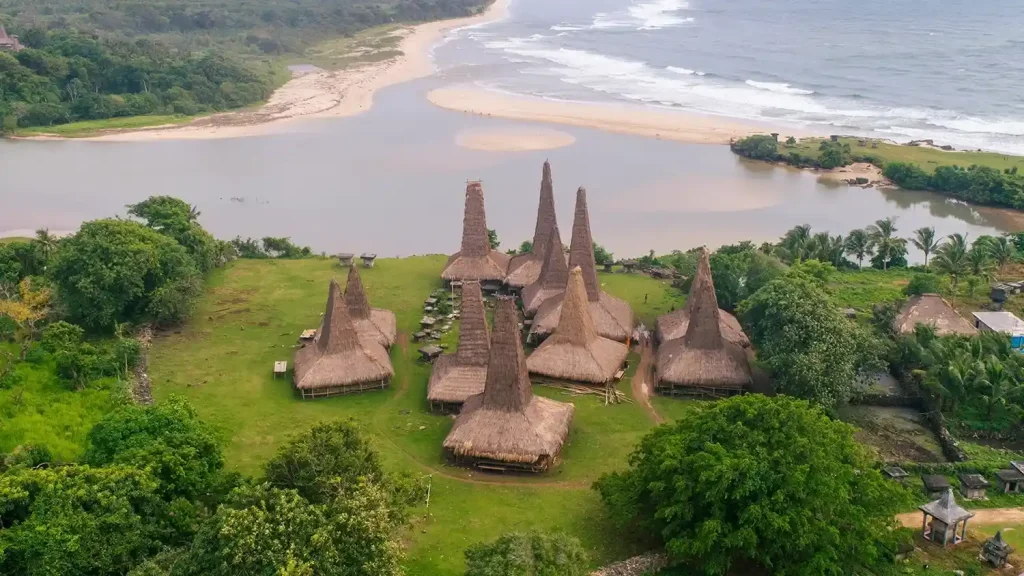
A Prailiu ikat village visit means driving about 2 kilometres out of Waingapu to Kampung Raja Prailiu, East Sumba, and spending an hour or two in the yards where families tie, dye and weave ikat beside their ancestors’ stone tombs. Plan 60 to 90 minutes, expect no ticket booth but a customary contribution, and note that this is the one traditional village in East Sumba you reach on sealed road. Most travellers give it thirty minutes and go home with a scarf they cannot explain; this page is written so you do not.
Where Prailiu is, and what a visit involves
Prailiu sits roughly 2 km from the centre of Waingapu, the main town of East Sumba. The driving itself is only 5 to 10 minutes on sealed road; we still block 15 to 30 minutes door to door, because the pick-up, the market stretch and the walk in from where the car stops eat the rest. Of the island’s traditional villages, this is the one you reach without surrendering half a day to potholes.
A normal visit runs 60 to 90 minutes: greet whoever receives guests, walk the lanes, sit with a family at the loom, ask questions, buy directly from the household. There is no ticket booth, but a customary contribution is expected; your guide handles it discreetly. One honest caveat — weaving is household work, not a scheduled performance. If the family is at a funeral or in the fields, no loom runs that hour, so we check on the morning itself.
Walking in: a royal village with two kinds of roof
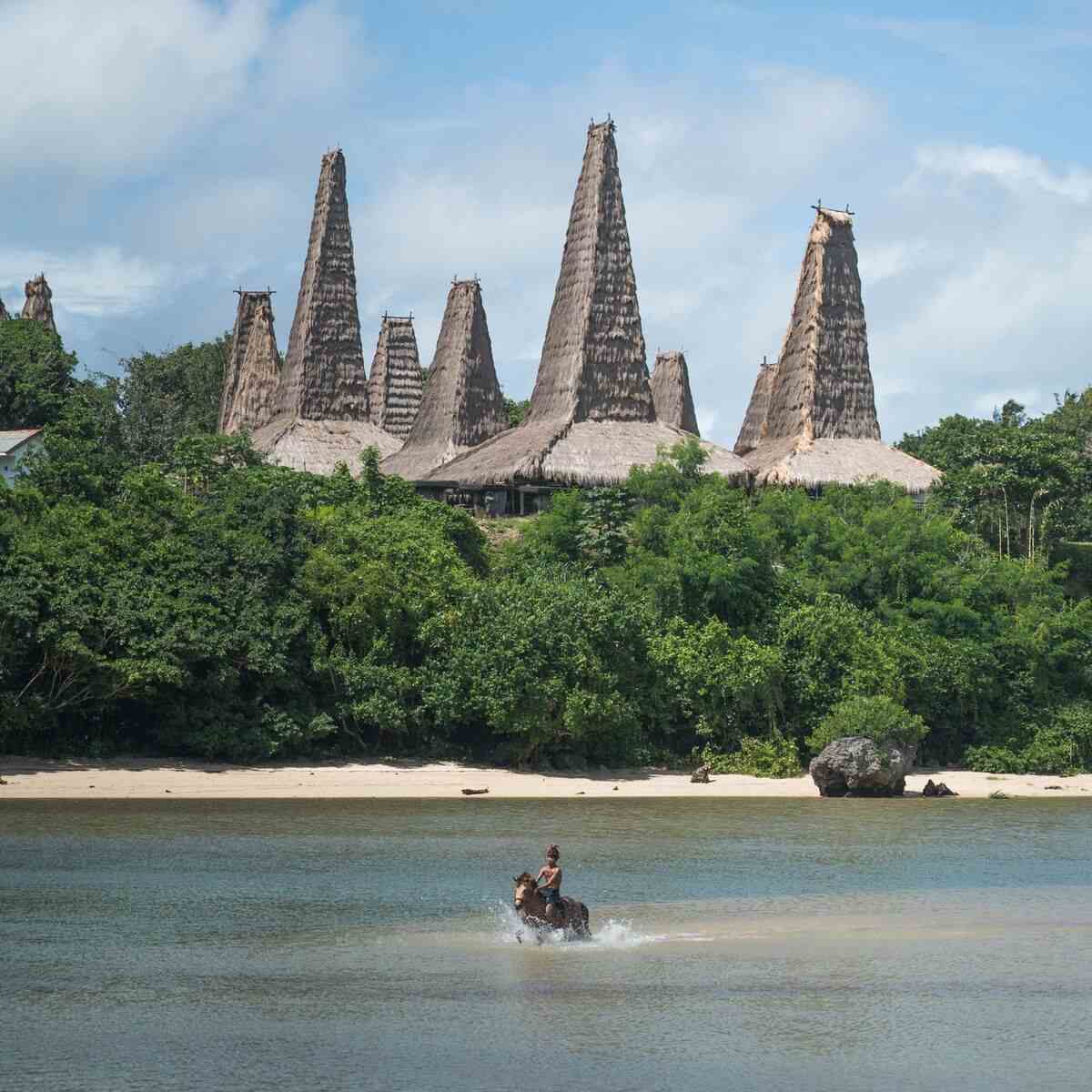
Prailiu’s full name is Kampung Raja Prailiu, a royal village. You will see a mixture: tall uma mbatangu houses with sharp thatched peaks beside ordinary modern homes with zinc roofs. That mixture is the truest thing here — a community keeping its adat house standing while also putting a metal roof over a family that gets rained on.
Between the houses are megalithic tombs: flat, table-like stone slabs, some enormous. These are graves. Do not sit, climb or stage photographs on them. Dress modestly, greet the elders or the kepala adat first, and ask before photographing a person or an interior. Our guides carry sirih pinang to present on arrival. Wider ground rules sit in our Sumba cultural etiquette guide; the island-wide map of traditional ikat villages in East Sumba has its own page.
How one ikat cloth is actually made
Ikat is not printing. The pattern is created in the thread before a single row is woven: weavers bind sections of the warp with fibre so they resist the dye, dye the bundle, then untie and re-tie for each further colour. Only once every colour is locked into the threads does the cloth reach the loom.
That is why a serious East Sumba cloth is measured in months, worked around farming, cooking and ceremonies. An ikat weaving demonstration in Sumba shows one stage of that process — usually tying or weaving, rarely the dyeing.
Dyes: what is natural, and what is not
Traditionally the East Sumba palette came from plants: Indigofera for blues, Morinda citrifolia — noni root — for deep reds and rust browns, bark and earth for blacks. Natural dyeing means repeated immersions over long periods, which is much of why heirloom-grade cloth costs what it costs.
Being straight with you: synthetic dyes are now common here, especially in bright, low-priced pieces. That does not make them fake — it is still hand-woven ikat — but it is a different product at a different price. Ask, and the answer explains the number.
Motifs and meaning — why the horse keeps appearing
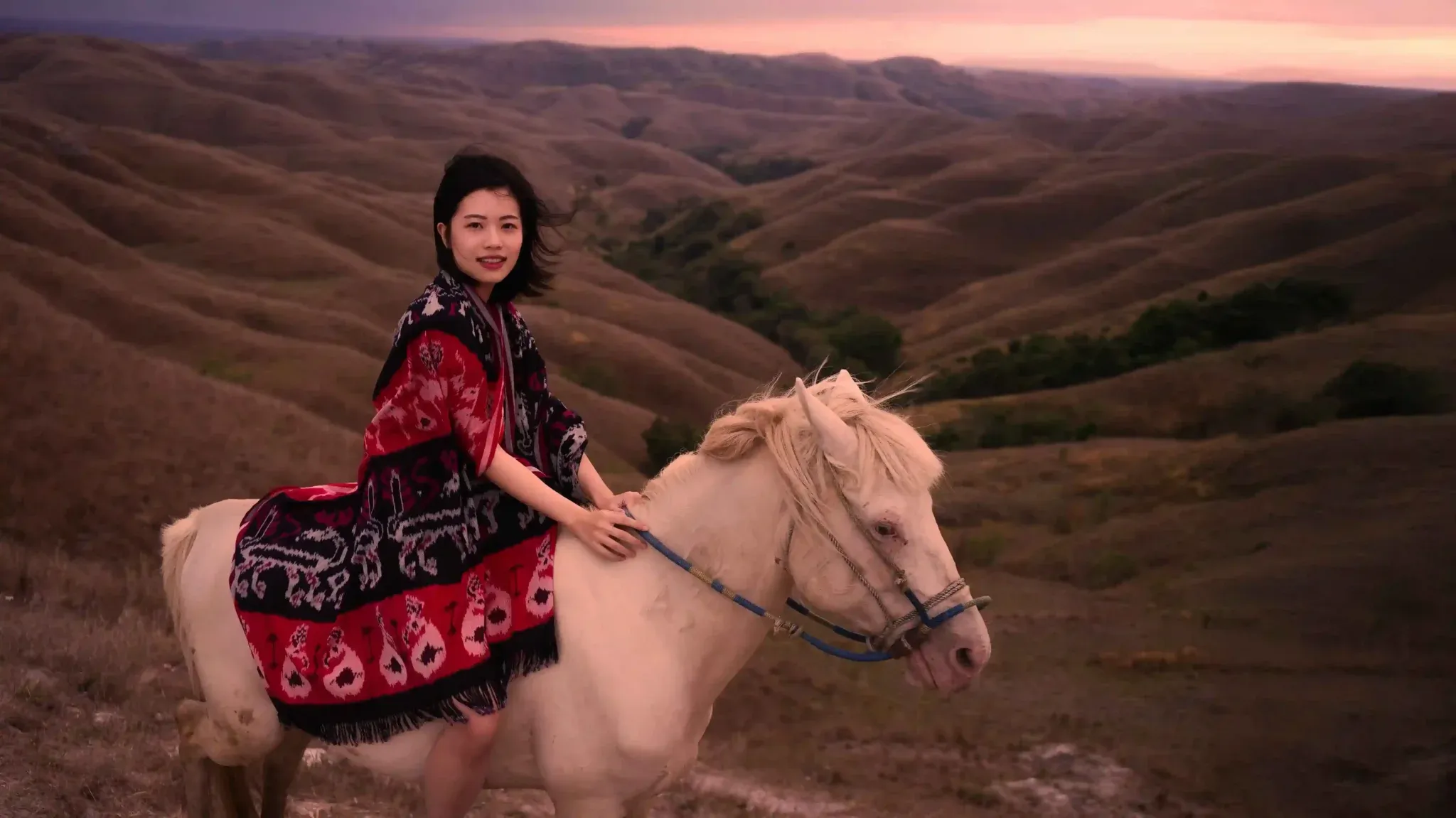
Sumba ikat patterns carry meaning rather than decoration: animals, ancestor figures, and the horse. The horse recurs because Sumba is genuinely an island of horses, Pulau Kuda. In Marapu belief horses are sacred companions tied to ancestors; they are counted in belis, the bride price negotiated between clans; they are sacrificed at high-ranking funerals to accompany the soul. A woven horse is closer to a coat of arms than to decoration.
Do not take a stranger’s word for a specific motif, ours included. Meanings vary by clan, region and family rank, and some designs historically belonged to noble houses. Ask the weaver through your guide — that turns shopping into conversation, which is why an ikat weaving tour with a local guide beats a drop-off at the gate.
Telling original Sumba ikat from a printed replica
- Turn it over. On genuine hand-woven ikat the pattern is essentially identical on both faces, because the colour lives inside the threads. A print has a face and a back.
- Read the motif edges. Real ikat edges are slightly feathered — unavoidable when you dye thread before weaving. Perfectly crisp lines are a warning sign.
- Feel the cloth. Hand-woven fabric is denser and irregular, with small variations where the weaver’s tension shifted.
- Check the ends. Hand-woven pieces have integral selvedges and finished or fringed ends; machine goods often have overlocked hems.
- Buy where the loom stands. Provenance beats every test, which is why where to buy ikat in Sumba should be answered with a village, not a shop.
Buying fairly from the women who wove it
Weaving here is overwhelmingly women’s work, and for many households one of few reliable sources of cash. Modest negotiation is normal in Indonesia. Grinding a price down by half is a different act — it moves weeks of a woman’s labour into your suitcase at a discount she cannot afford to give.
What we tell our guests: buy from the family or a weaver group where pricing is discussed openly; pay more for natural dyes and ceremonial complexity; treat a good cloth as an heirloom; put money into textiles rather than handing cash to children. Ask how long the piece took, which dyes were used, who wove it, what the motif means. None of it is rude.
Where Prailiu fits in your Sumba itinerary
Use Prailiu as a late-afternoon closer, not a headline. East Sumba’s big days are long: Puru Kambera savannah, Wairinding’s ridges, Tanggedu’s canyon waterfall with its off-road approach and trek. They all end with you driving back toward Waingapu, and Prailiu is 2 km from your Waingapu hotel — an experience that adds no distance, at the hour families are home.
December to March is the wet season in Sumba: the grass turns green and the savannah photographs at its best, but rain slows every road outside town. June to September is the dry season: driving is dependable and the hills go blond and bare. Prailiu itself works year round, because it is tarmac all the way — rare on this island.
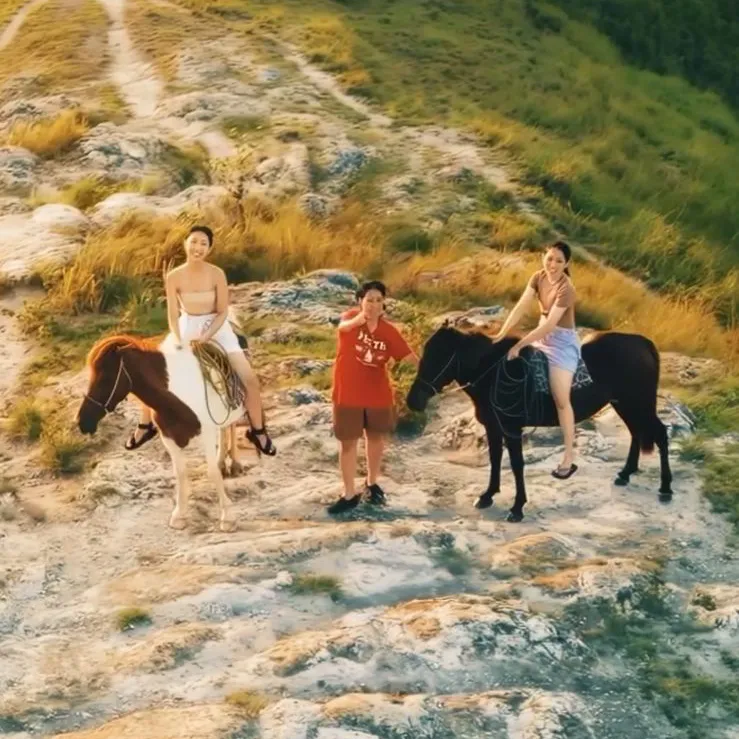
In our trips Prailiu sits inside the East Sumba leg. The 6D5N private Sumba trip covers it with the eastern hills, waterfalls and Walakiri sunset; the 10D9N Sumba expedition allows a slower village day and a second weaving household; a tailor-made Sumba private charter suits travellers who came for textiles. Our sibling product, Private Trip Sumba 4D3N–6D5N by IndonesiaJuara, runs the same ground operation.
Rates are indicative, not fixed: the 4D3N runs from around USD 700 per person and the 6D5N from around USD 1,060 per person, at the group sizes that fill a vehicle best. Those figures cover private vehicle, driver-guide, fuel, parking, village and site contributions, drinking water, and coordination from airport meet to final drop-off. Accommodation and flights are quoted separately, and the 10D9N is priced on request. One honest quirk: per-person cost rises at 5 and 9 guests because a second vehicle becomes necessary, so parties of 4 and 8 are the sweet spots. Final quotes are confirmed against your dates, group size and accommodation tier — ask us for the current figure before you budget.
Frequently Asked Questions
How far is Prailiu village from Waingapu?
Prailiu is about 2 kilometres from the centre of Waingapu, which is 5 to 10 minutes of actual driving on sealed road; budget 15 to 30 minutes door to door from your hotel. It is the most accessible traditional village in East Sumba, so we treat it as an afternoon stop, not an excursion.
How long should I spend at Prailiu ikat village?
Sixty to ninety minutes suits most visitors — enough to greet the hosts, walk the village, sit with a weaving family and choose a textile without rushing anyone. Collectors should budget half a day; we will arrange a second household.
Do I need a guide, and is there an entrance fee?
There is no formal ticket, but a customary contribution is expected and a guide matters more here than at a viewpoint. A guide presents sirih pinang correctly, introduces you to the right person and translates your questions. Contributions are included in our rates.
How do I tell original Sumba ikat from a printed replica?
Turn the cloth over — genuine hand-woven ikat looks the same on both sides, because the colour is dyed into the thread before weaving. Then check for feathered motif edges, small irregularities, and integral selvedges rather than overlocked hems.
Is bargaining acceptable when buying ikat in Sumba?
Modest negotiation is normal and expected; aggressive bargaining is not. A complex, naturally dyed piece can represent months of a woman’s work, so pushing the price to a fraction of the asking figure takes money out of a household with few alternatives.
Can I combine Prailiu with other East Sumba sites in one day?
Yes — Prailiu pairs with a savannah morning at Wairinding or Puru Kambera, or a Walakiri Beach sunset afterwards. What does not work is Prailiu plus Tanggedu Waterfall plus a distant village; that is a ten-hour day, and we will say so.
To have Prailiu done properly — right household, right hour, right questions in the right language — message us on WhatsApp at +62 811 3941 4563 or email [email protected] with your dates and group size. We are the Sumba desk of the IndonesiaJuara network, part of Juara Holding Group, holder of the TripAdvisor Travellers’ Choice Award in 2023, 2024 and 2025.
Keep Reading
Best Luxury Cruise Indonesia After Sumba: 2026 Guide
After a week among Sumba’s sandalwood horses, megalith villages and waterfall pools, the natural next leg is the sea. The best luxury cruise in Indonesia for…
Weekuri Lagoon Sumba 2027: A Kodi Coast Day Plan With Mandorak and Ratenggaro
Weekuri Lagoon sits on the Kodi coast of Southwest Sumba, about 2 to 2.5 hours by road from Tambolaka Airport, and the sensible way to see…

Wairinding Sunrise Viewpoint 2027: Timing the Light and the Horses on East Sumba’s Ridges
The Wairinding sunrise viewpoint is a run of grass ridges inland from Waingapu, about 1.5 to 2 hours by road, so catching first light means leaving…
Planning a Trip to Sumba?
Two trips across the island — shared on a fixed date, or private on yours.