
Waimarang Waterfall Sumba 2027: The Turquoise Pool Day Trip From Waingapu
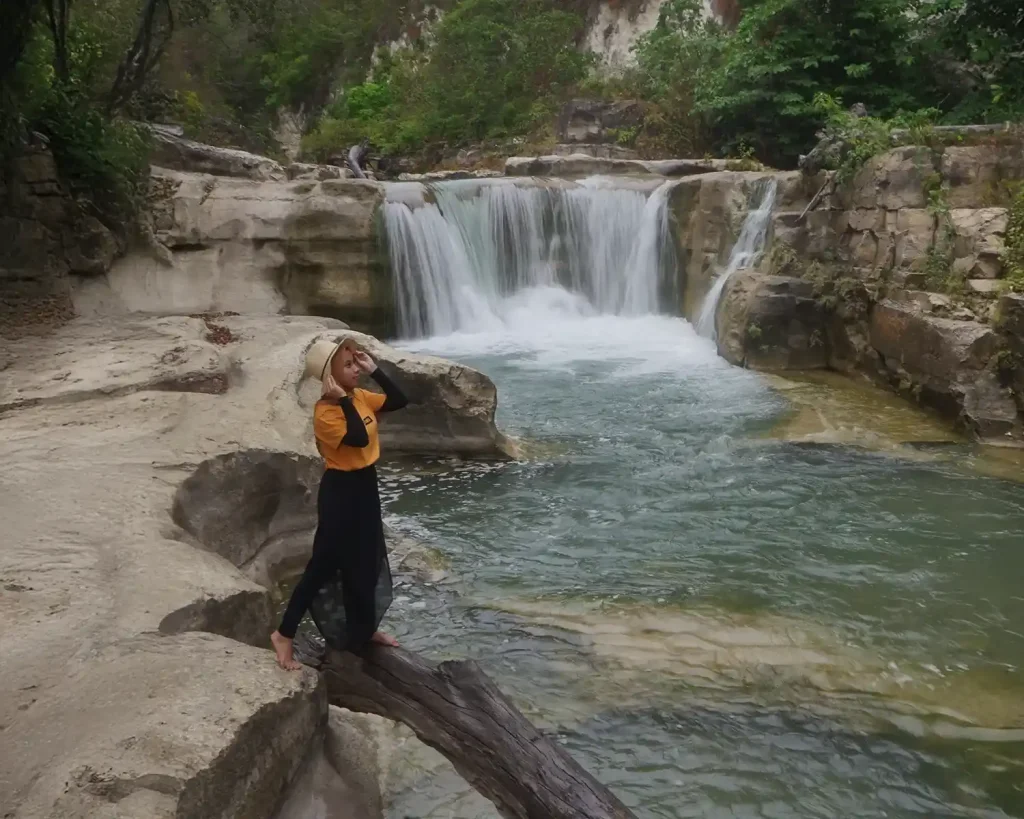
Waimarang Waterfall sits roughly 2.5 to 3 hours by road from Waingapu, plus a hike in and out, which makes it a full day trip rather than a stop you slot between two other sights. If you want the turquoise pool with time to actually swim in it, budget the whole day: leave early, allow two to three hours on site, and plan the drive home around sunset instead of against it.
We are a Sumba ground operator, and Waimarang is where guests most often arrive holding a schedule written by someone who has never driven the road. This is the version we give our own drivers: road surface, the descent, the water safety judgement, and why pairing waimarang waterfall sumba with Tanggedu in one day is the classic East Sumba planning error.
What Waimarang actually is
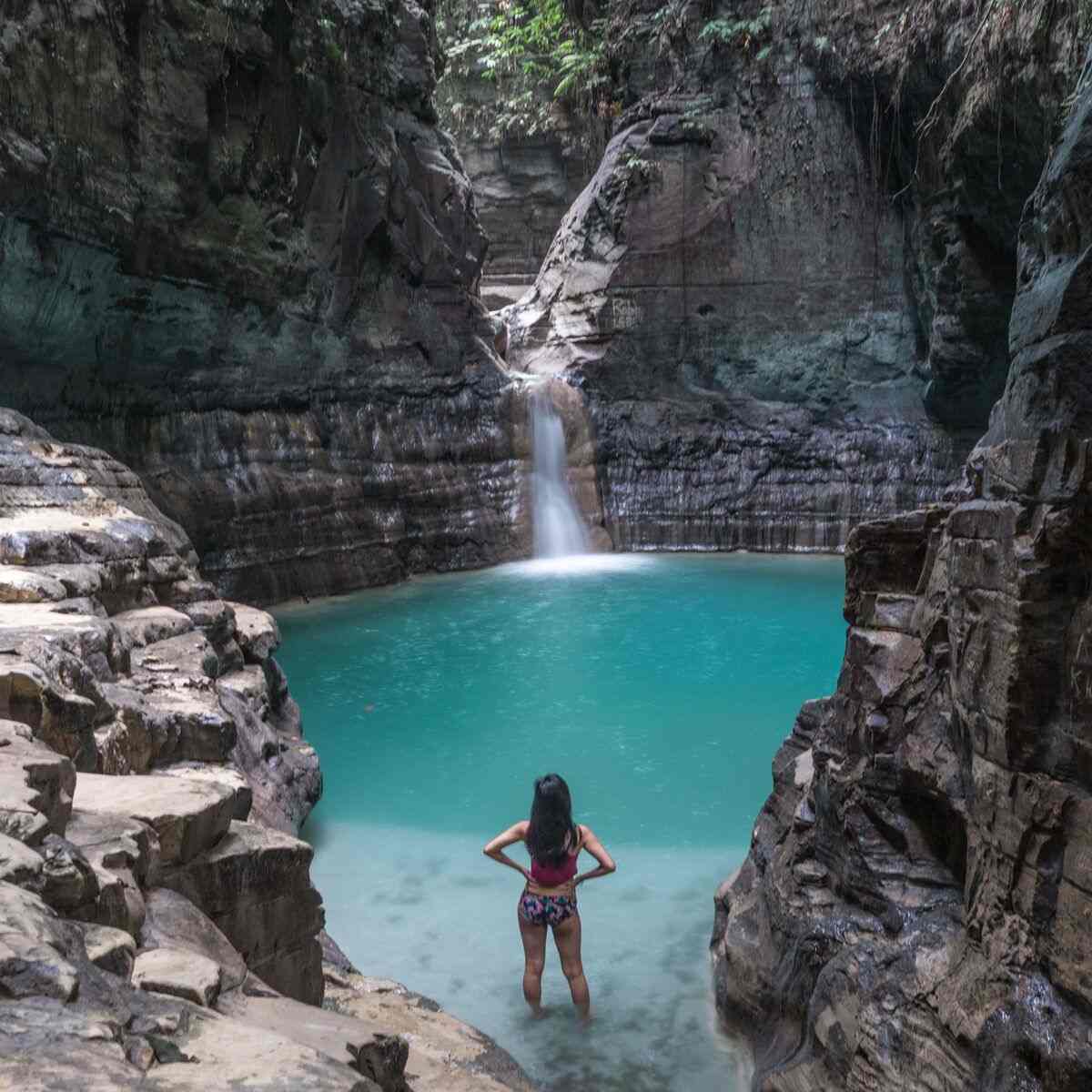
Waimarang is a pool-type waterfall — a modest drop feeding a wide, deep, mineral blue-green basin ringed by rock. Among east sumba waterfalls it is the swimming one. Nobody comes for the height of the fall; they come because the pool holds a turquoise that photographs almost unreal in late-morning light, and because you get into it.
It also stays quiet — on a weekday you may share it with one or two small groups. Waimarang is genuinely east sumba off the beaten path, a product of the same distance that wrecks over-packed itineraries.
The drive, the parking point, and the walk down
Plan 2.5 to 3 hours of driving each way from Waingapu. The first stretch is ordinary Sumba main road: sealed but narrow, no shoulders, patched and potholed, so realistic speed is 40 to 60 km/h, not what the map promises. The final approach turns rough and partly unpaved, dropping us to 20 to 30 km/h. In the wet months that section decides the day: after heavy rain we cancel rather than take a vehicle onto a greasy rutted track hours from any workshop.
The car stops at a simple parking area by the village that manages the site, where an entrance contribution is paid locally; we settle that in advance. From there it is a walk down: earth and rock steps, root sections, downhill all the way in — which means uphill all the way out. Not technical, but real waterfall hiking sumba terrain, slippery when wet, and the climb back in midday heat is what people underestimate. Wear shoes with grip.
How long to allow on site: two to three hours
The arithmetic we run before promising a Waimarang day:
- Drive out: 2.5–3 hours
- Walk down: 20–40 minutes
- At the pool: 2–3 hours — swim, dry off, eat, photograph
- Walk up: 30–50 minutes, slower than the descent
- Drive back: 2.5–3 hours, or 2–2.5 hours routed via the coast
That is a nine to eleven hour day before lunch stops. Cutting pool time to 45 minutes to rescue a schedule is the worst trade available: you keep every hour of driving and delete the only hour that was the point. Of all east sumba day trips from waingapu, this one takes the whole day or comes off the plan.
The classic mistake: Waimarang and Tanggedu on one day
We see it constantly: Waimarang in the morning, Tanggedu in the afternoon, both from Waingapu. On paper it looks efficient; on the ground it does not exist.
Tanggedu is its own commitment: roughly 2.5–3 hours of driving including rough segments, a 45 to 60 minute trek each way, then time in the canyon. Attempt both and the pattern is identical — 30 rushed minutes at the first pool, a stressed drive, a tanggedu waterfall hike started far too late, and the walk out finished by phone torch. Our rule is blunt: one major waterfall per day, no second big walk after it. Still comparing sites? See our overview of the best waterfalls in Sumba.
The pairing that works: Waimarang morning, Walakiri sunset
One combination we build on purpose. Leave Waingapu early, reach Waimarang mid-morning while the light is still on the pool, take the full two to three hours, then start back after lunch via Walakiri Beach for sunset — about 2 to 2.5 hours of driving, then 30 to 45 minutes home.
It works because Walakiri costs no energy: at low tide the mangrove flats ask only that you stand still while the light turns copper — the best of the region’s east sumba photography spots to end on. Anything requiring another climb after Waimarang, we refuse.
Water safety: what we actually enforce
Waimarang is a river pool in a remote valley: no lifeguard, no rescue post, no fast evacuation — the nearest hospital is hours back down the road you came in on. Sumba waterfall swimming safety here is entirely the judgement inside your group.
- Rain changes the pool. Flow rises, turquoise turns milky brown, the current strengthens, and cloudy water hides the rock beneath. If it rained hard upstream, we do not swim.
- Wet rock has almost no grip. Most waterfall injuries are falls on the approach, not drownings.
- No jumping. Depth shifts by season and boulders move after big rains, so we do not allow it.
- Our rule for children: under 12 stay in the shallow margin, within arm’s reach of a parent, in a life vest we bring, and only in clear, calm water. Otherwise it is a paddling and picnic day.
- Nobody swims alone. The guide is the last person out of the water.
Waimarang or Tanggedu: pool or canyon
Two different days, so choose by temperament. Waimarang is the swim: contained, deep, blue-green, restful. Best for guests who want water time, families with confident teenagers, and anyone whose ideal photograph is colour rather than scale.
Tanggedu is the landscape: a canyon of terraced rock shelves and braided channels, where the drama is the geology rather than one basin. Longer, more exposed trek, and you walk through a formation instead of floating in one.
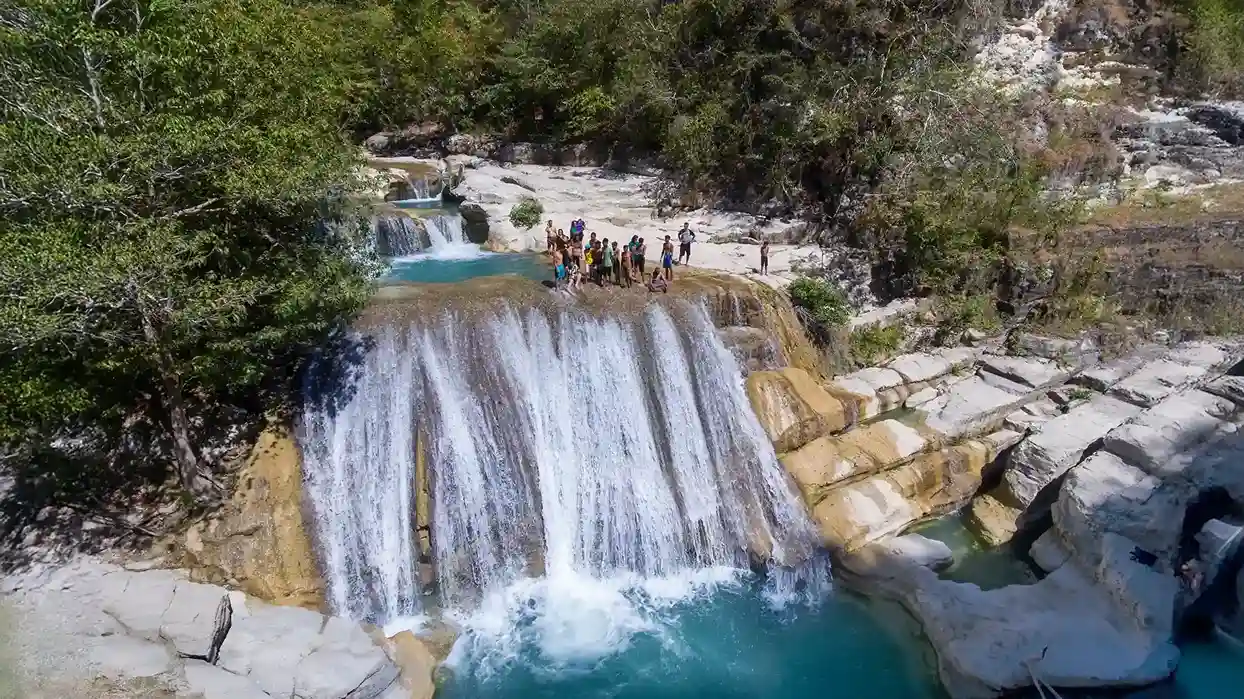
On season: December to March brings green savannah and the fullest water, plus the highest cancellation risk. June to September gives dependable roads and clear pools on browner terrain. Both are good, simply different, and an honest east sumba travel guide says so rather than selling a photograph from the wrong month.
Building Waimarang into a private trip
Waimarang belongs in a plan with room in it. On our 5D4N private Sumba trip it runs as a dedicated East Sumba day with the Walakiri sunset return, alongside the savannah hills and a weaving village — from USD 890 per person (indicative) at our most efficient group size. The 6D5N private Sumba trip, from USD 1,060 per person (indicative), is the one to take if you want Waimarang and Tanggedu properly, plus a weather buffer day.
Pricing is not a smooth curve, and we would rather explain it than hide it. A second vehicle is required once a group passes four guests, so the per-person rate rises at five and again at nine — groups of six to ten always travel in two vehicles, which makes four and eight the efficient sizes. Trips meet at Tambolaka Airport (TMC) and, on the overland routing, usually finish on the Waingapu side. If you already have an itinerary and hotels, our Sumba ground operator services cover vehicle, driver-guide, village protocol and site logistics alone. Every rate here is indicative only: the final figure is confirmed against your dates, group size and accommodation tier, so ask us for a current quote before you budget.
Frequently Asked Questions
How far is Waimarang Waterfall from Waingapu?
About 2.5 to 3 hours of driving each way, plus the hike in and out. The first part is sealed but narrow and patched; the final approach is rough and partly unpaved. Budget a full day.
Can I visit Waimarang and Tanggedu in one day?
No, not properly. Each is 2.5 to 3 hours of driving from Waingapu plus a substantial walk, so combining them means 30 rushed minutes at each and a finish after dark. Give each its own day, or pick one.
Is it safe to swim at Waimarang Waterfall?
Yes in calm, clear conditions and with judgement — there is no lifeguard and no fast evacuation. We do not swim when the water is brown or the flow strong after rain, we do not permit jumping from rocks, and under-12s stay in the shallow margin in a life vest beside a parent.
How long should I spend at the waterfall itself?
Two to three hours — swim, dry off, packed lunch, photographs, without watching the clock. Under an hour means six hours of driving absorbed for almost none of the reward.
What is the best time of year to go?
December to March gives green savannah and the fullest water but the highest chance of the road or the swim being called off; June to September gives reliable roads and clear pools on drier terrain. See our notes on the Sumba rainy season before locking dates.
Does Waimarang fit a 4-day East Sumba plan?
Yes, as one dedicated day. A workable east sumba itinerary 4 days runs a village and hill day, one waterfall day, a savannah and coast day, and a short departure morning. Both waterfalls need five or six days.
Want Waimarang done properly — early start, full time in the pool, Walakiri on the way home, and a driver-guide who tells you honestly when the water is not safe? Message us on WhatsApp at +62 811-3941-4563 or email [email protected] with your dates and group size. We are the Sumba desk of the IndonesiaJuara network, holder of the TripAdvisor Travellers’ Choice Award in 2023, 2024 and 2025, and we will send an indicative quote with a realistic day-by-day plan.
Keep Reading
Best Luxury Cruise Indonesia After Sumba: 2026 Guide
After a week among Sumba’s sandalwood horses, megalith villages and waterfall pools, the natural next leg is the sea. The best luxury cruise in Indonesia for…
Weekuri Lagoon Sumba 2027: A Kodi Coast Day Plan With Mandorak and Ratenggaro
Weekuri Lagoon sits on the Kodi coast of Southwest Sumba, about 2 to 2.5 hours by road from Tambolaka Airport, and the sensible way to see…
Wairinding Sunrise Viewpoint 2027: Timing the Light and the Horses on East Sumba’s Ridges
The Wairinding sunrise viewpoint is a run of grass ridges inland from Waingapu, about 1.5 to 2 hours by road, so catching first light means leaving…
Planning a Trip to Sumba?
Two trips across the island — shared on a fixed date, or private on yours.