
Pasola Festival Rules for Visitors 2027: Where to Stand, What to Wear, What Not to Film
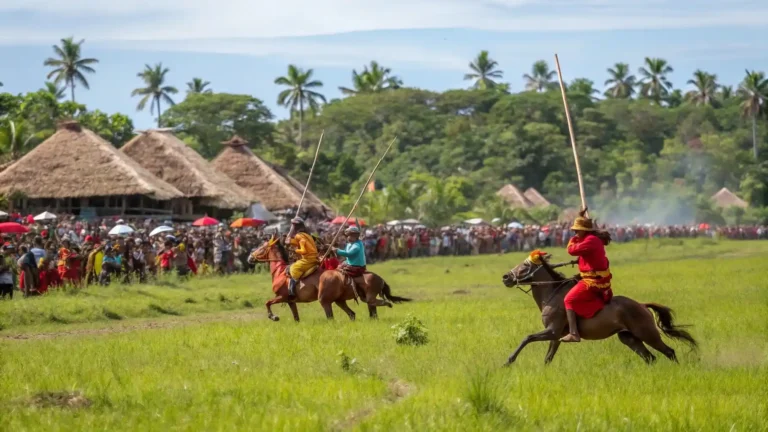
The Pasola festival rules for visitors are short and non-negotiable: stay behind the rope line, never step onto the field, follow the committee and village elders without arguing, dress modestly, and keep the drone in the bag. The rest of this page explains why, because Pasola is a Marapu ritual with a mounted contest inside it — not a show staged for an audience.
We take guests to these fields every February and March. This is the etiquette-and-safety companion to our private Pasola festival departure, which handles the nyale-timed window, beds and driving; for ritual background and the district rotation, read the Pasola explainer.
Pasola festival rules for visitors, in one place
Nobody hands you a rulebook at the gate. There is no ticket booth and no numbered seating, only a rope line, a committee, police, and a crowd of locals who know where the sensible ground is. This is what our guides brief before every departure.
| Rule | Why it exists |
|---|---|
| Never enter the field | Riders charge the full width; a stray person changes a horse’s line |
| Stand behind the rope, among locals | They read the run of play better than any first-time visitor |
| Obey elders and committee instantly | Instructions are about danger, not your view |
| Modest clothing, closed shoes | Ritual ground and long grass; beachwear reads as disrespect |
| No drones, no lens in the ritual | Nyale prayers and the rato are the sacred core of the day |
| No mocking, no drunkenness | Marapu taboos bind everyone on ritual ground, guests included |
Is Pasola festival dangerous? The honest answer
Yes, in a limited and manageable way — and people asking is Pasola festival dangerous usually get either a scare story or a whitewash. Spears today are blunt wooden shafts, iron tips banned and the ban enforced by elders and authorities alike. Blood on the field was historically read as a good omen for the harvest; modern practice keeps the ritual and removes the metal.
What it cannot remove is the physics. Riders fall, horses collide, and blunt wood thrown from a galloping pony still breaks bones. That is why Pasola festival safety for tourists rests on the same arrangement every season: police and health workers on site, ambulances standing by. For spectators the risk is almost entirely position. Spears leave the field; horses leave the field. Onlookers get hurt when they have drifted forward for a photo or stood at the open ends where charges run out.
Where to stand: rope line, open ends, escape route
Pick your ground in the first ten minutes, before the crowd thickens. Three things decide a good spot: stand behind the rope inside a block of local spectators; avoid the ends of the field, where riders and loose horses exit at speed; and keep something open behind you to move into if the crowd surges. Never box yourself against a fence or a parked truck.
Once the riders enter, the boundary tightens and moving becomes impossible without shoving. Choose once, commit, and use a longer lens rather than walking closer. If an official waves you back, step back first.
Pasola festival etiquette: dress, conduct and local taboos
Good Pasola festival etiquette starts before the field. Arrive with a guide who has spoken to people in the host village, not as a car that parks and unloads strangers. Dress modestly — shoulders, midriff and thighs covered, the standard we apply at every kampung adat in our village visit protocol — with closed shoes and clothes you can sweat in for five hours.
Conduct is where visitors slip without noticing, because Pasola festival and local taboos overlap: prohibitions bind the riders in the lead-up and, by extension, everyone on ritual ground. Do not mock a fall, do not cheer a hit as if it were sport, do not turn up drunk, and keep your voice down whenever a ceremony is underway.
One thing is easily missed. Pasola festival traditional costumes — ikat cloths, headcloths, decorated ponies — belong to the riders and their clans. Ask before photographing a rider close up, and never touch or rearrange regalia or a horse’s decoration for a picture.
What not to film: drones, nyale prayers and the rato
The day opens on a beach in darkness, with the rato — Marapu ritual specialists — watching for the nyale sea worms and making offerings. That hour is the sacred core of the event. No drone over it, and none over the field or village. Do not walk into the prayer circle for a low angle, and no flash during offerings.
Photography at the field is generally accepted; locals shoot it constantly on their phones. The line runs between documenting a public contest and intruding on a religious act. If unsure, ask your guide and take the answer.
The horses, and why the crowd treats them the way it does
Understanding the cultural significance of Pasola improves behaviour more than any rule sheet. It is a ritual war on horseback tied to the harvest cycle and to fertility: the nyale swarm signals the moment, the priests confirm it, and the contest is an offering as much as a competition. Writers often file it under Pasola and Sumbanese animism; the accurate name is Marapu, a living ancestral religion that still shapes houses, tombs, marriage and planting here.
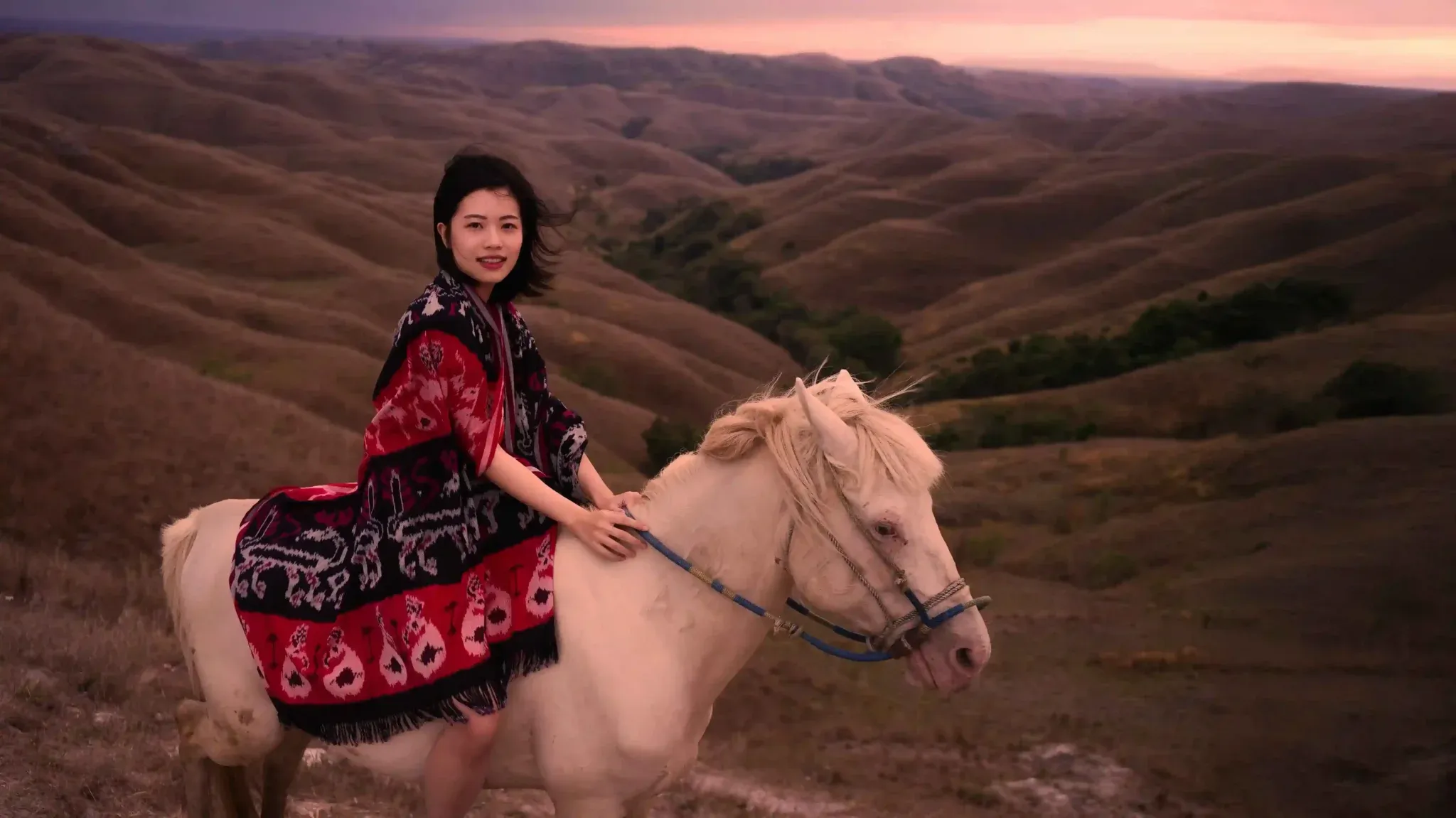
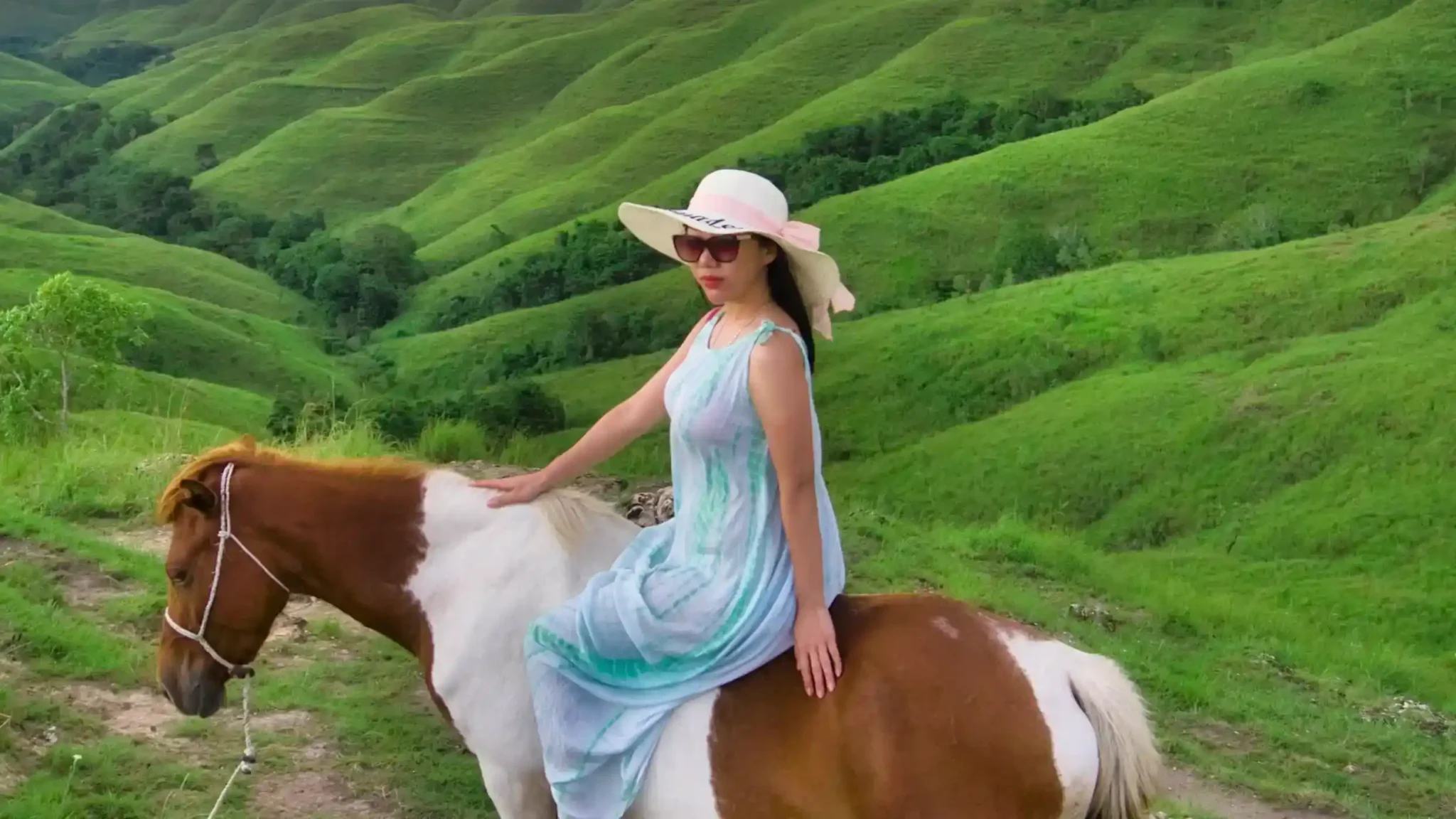
The horses in Pasola festival are the medium of all that. Sumba’s Sandalwood pony stands around twelve hands, roughly 120 to 122 centimetres at the withers, shaped by Chinese and Mongolian stock plus significant Arabian blood and hardened by dry savannah. Horses carry status: they move as bride price in belis negotiations and are sacrificed at the funerals of clan leaders. The Sandalwood ponies in Pasola festival are not the animals that haul water the rest of the year — riders keep and groom them separately, decorate them with coloured cloth and beads, and give them honorific names. When one passes you at the rope it carries a household’s standing, which is why nobody grabs a bridle for a selfie.
The practical morning: pre-dawn start, parking, heat and children
The most useful Pasola festival travel tips are unglamorous. You leave in the dark, typically 03:30 to 04:30 depending on the distance to the ritual beach, because the nyale ceremony happens before sunrise and the field opens from mid-morning. Sleep is short; plan a slow day after it.
Cars stop where the lane runs out, which on a busy morning means several hundred metres on foot in strong sun, and West Sumba’s narrow lanes fill with motorbikes in Pasola week. Our drivers go early to hold a workable spot; independent visitors should assume a long walk in and a longer exit. The field has no shade, no seating and no reliable water stall — carry more water than feels sensible, plus hat and sunscreen.
Distance decides how brutal that alarm is. Lamboya and Wanukaka sit south of Waikabubak, roughly one to one and a half hours from Tambolaka on narrow paved road, then a slower run down to the coast. Kodi is the far southwest, two to two and a half hours out and longer in Pasola week. Gaura falls between the two clusters. Since nobody knows in October which field will be active in February, stay within reach of all four rather than at the prettiest address — the wider matrix sits in our Sumba driving times and road conditions guide.
The season is the other thing brochures skip. Pasola falls inside Sumba’s wet season, roughly November to April, which is exactly why the savannah is green and photogenic from December to March — and exactly why you will drive through rain to reach it. Sumba’s main roads are mostly paved but narrow, shoulderless and patchy, with realistic average speeds of about 40 to 60 km/h and well below that on rough coastal approaches; a wet pre-dawn run is slower again. The easy-road months are June to September, when the grass is brown and there is no Pasola. Pack shoes you can ruin, budget time instead of trusting the map, and expect at least one muddy transfer.
Frequently Asked Questions
What are the main Pasola festival rules for visitors?
Stay behind the rope, never enter the field, follow elders and the committee immediately, dress modestly, fly no drones, and keep cameras out of the nyale prayers. Those six cover almost every problem visitors cause.
Is Pasola festival dangerous for tourists?
It is safe for spectators who stay behind the boundary and away from the open ends of the field. Spears are blunt wood with iron tips banned, but riders fall and horses collide, which is why police, health workers and ambulances are on site every season.
Can children attend Pasola festival?
There is no rule against it and Sumbanese children attend in numbers, but the practicalities are hard for young foreign visitors: a 03:30 start, hours in open heat, a packed crowd and the need to move quickly if the action spills. Older children only, one adult each at the rope; families we take often split the day and rejoin after the ritual.
What should I wear to Pasola?
Modest, breathable clothing covering shoulders, midriff and thighs, plus closed shoes for uneven ground and long grass. Add a hat and sunscreen, and skip Sumbanese ceremonial dress — that regalia belongs to riders and their clans.
Do I need a local guide to attend Pasola?
Practically, yes. The date is confirmed only days ahead by the priests, the active district changes year to year, safe standing ground is local knowledge, and the etiquette is written nowhere. Vehicle, driver-guide, access and protocol are what our Sumba ground operator service exists for.
When is Pasola held in 2027?
Pasola runs across February and March 2027, with no exact date fixed in advance. The nyale sea worms must swarm first and the rato confirm the morning only days ahead. The usual pattern is Lamboya and Wanukaka in February, Gaura and Kodi into March, though the order shifts year to year — which is why you book a February–March window with a reserve day rather than a calendar date.
Plan your Pasola window with a local Sumba desk
Book a window rather than a date and let people who live with the ritual calendar handle the confirmation — our private Pasola departure is built that way, with a reserve day inside it. If you would rather have the festival as one morning inside a fuller island trip, the 6D5N private Sumba trip leaves room for savannah, waterfalls and villages, from USD 1,275 per person (indicative) on a group of six and confirmed per date, group size and accommodation tier. That figure rises at five and again at nine guests, because a second vehicle is required at those thresholds and groups of six to ten always run two cars — which is why four and eight are the sweet spots. Ask us for the current matrix before you budget; every rate is indicative until we confirm it against your date.
The wider network product and rate card sit with IndonesiaJuara’s Sumba private trip, holder of the TripAdvisor Travellers’ Choice Award for three consecutive years — 2023, 2024 and 2025, placing it in the top 10% of businesses worldwide.
WhatsApp: https://wa.me/6281139414563
Email: [email protected]
Keep Reading
Best Luxury Cruise Indonesia After Sumba: 2026 Guide
After a week among Sumba’s sandalwood horses, megalith villages and waterfall pools, the natural next leg is the sea. The best luxury cruise in Indonesia for…
Weekuri Lagoon Sumba 2027: A Kodi Coast Day Plan With Mandorak and Ratenggaro
Weekuri Lagoon sits on the Kodi coast of Southwest Sumba, about 2 to 2.5 hours by road from Tambolaka Airport, and the sensible way to see…
Wairinding Sunrise Viewpoint 2027: Timing the Light and the Horses on East Sumba’s Ridges
The Wairinding sunrise viewpoint is a run of grass ridges inland from Waingapu, about 1.5 to 2 hours by road, so catching first light means leaving…
Planning a Trip to Sumba?
Two trips across the island — shared on a fixed date, or private on yours.