
Sumba Village Donation Customs 2027: Sirih Pinang, Cash and What Never to Do
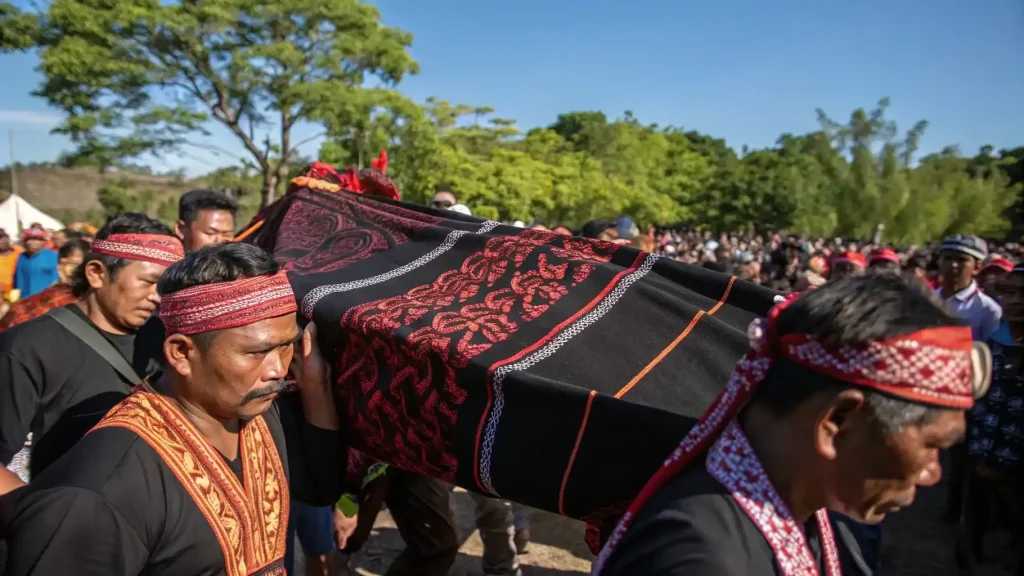
The short answer to sumba village donation customs: bring sirih pinang (betel leaf and areca nut) if a local guide is with you who knows how to present it, and give one discreet cash donation per group through that guide or the kepala adat — never notes handed out to children. Everything else follows from one idea: you are a guest in somebody’s house yard and family graveyard, not a ticket holder at an attraction.
We run Sumba every week, and this is what guests ask in the car before Ratenggaro or Prailiu.
What a “donation” actually means in a kampung adat
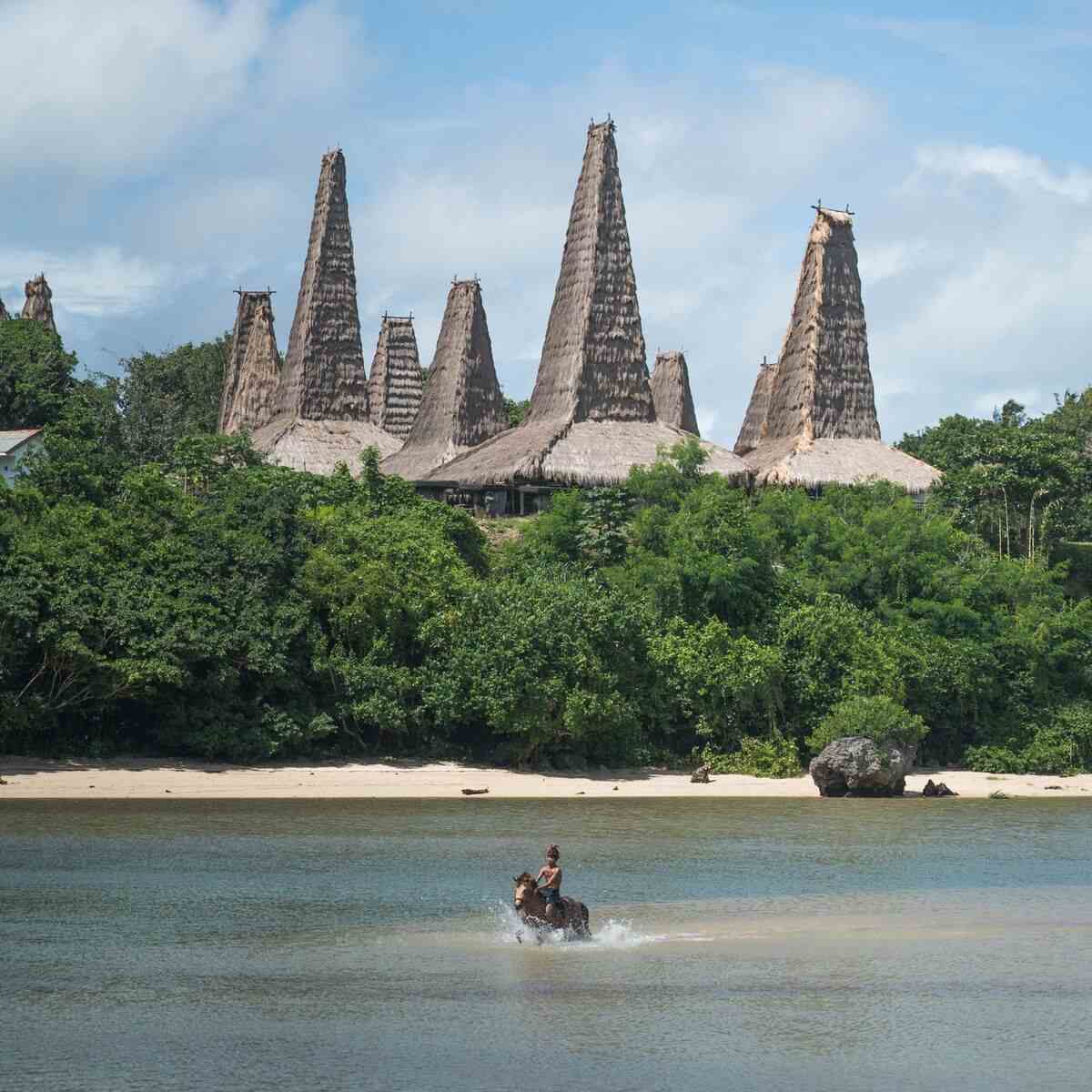
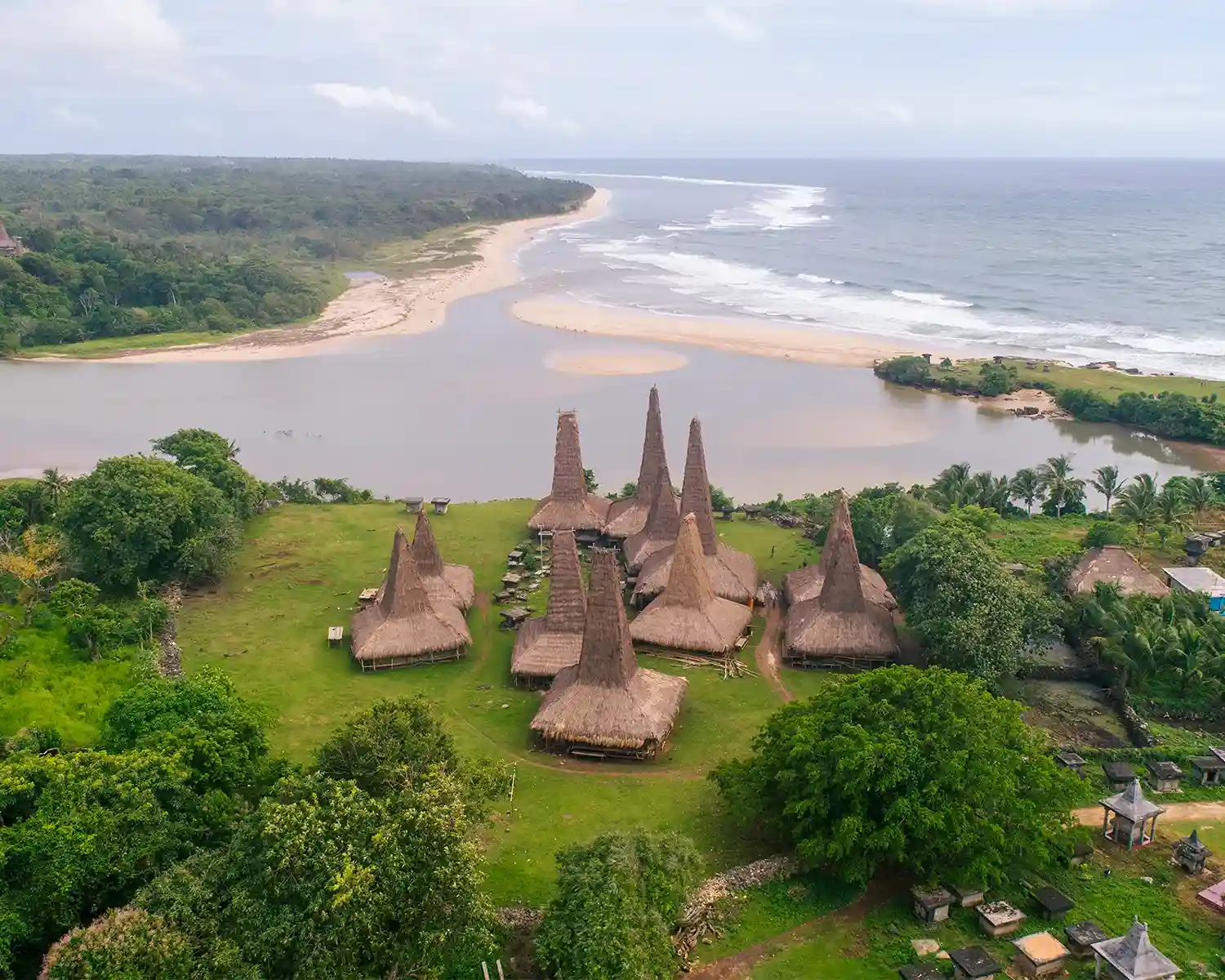
A kampung adat is a living village: uma houses on stilts with high peaked roofs, buffalo skulls on the posts, and massive stone tombs in the yard between them. People sleep there and bury their parents there. Your money is not an entrance fee — it is a contribution to a household and a clan.
There is no printed tariff for a Sumba village donation. Anyone quoting a fixed island-wide rate is guessing: the customary level shifts by village, by season, and by whether a ceremony is running. Some villages ask you to sign in on arrival, some do not, and neither tells you anything about what to give.
Sirih pinang: the oldest way to open a door in Sumba
The sumba betel nut tradition is the island’s greeting protocol. Betel leaf with areca nut, sometimes with lime, is offered as a token of respect to elders and the host family. It is the handshake, not the payment: sirih pinang does not replace a donation, it earns you a proper welcome first.
Buy it at a market on the way in, Waikabubak or Waingapu, and let your guide hand it over. Who receives it first matters, and getting that order wrong in front of the village is worse than arriving empty-handed. If you have none, say so through the guide rather than improvising.
How much cash, and how to hand it over
This is the core of gift etiquette in Sumba villages, and the rules are about form more than amount:
- One envelope per group, not per person. A family of four gives once; splitting it reads as tipping.
- Give at the end, not at the gate. The visit comes first, the contribution closes it.
- Hand it over quietly, with two hands, to the kepala adat or your host household — or let your guide do it. No counting notes in public.
- Ask your guide that morning what the customary level is for that village; it changes. On our trips it is already inside your rate, so guests never negotiate at the door.
- Never give money, sweets or pens to children. We have watched it turn a village gate into a scramble within one season, and it bypasses the adults who actually carry the ritual costs.
Buy the weaving: the best donation is a fair price
Given the choice between an envelope and a purchase, buy. Sumba ikat is made by tying and dyeing the threads before a single row is woven, and a ceremonial cloth can hold months of work. In Prailiu, half an hour from Waingapu, you can watch it happen and buy from the family.
How to spot the real thing: the pattern reads identically on both faces, motif edges are soft rather than printer-sharp, and the side edges are woven in rather than overlocked. Modest negotiation is normal; grinding a weaver down to a bargain is not: it prices out the skill you flew in to see. See our Sumba ikat textile villages guide before you shop.
Sumba village etiquette: the behaviour rules that matter
If you remember only six things about how to behave in Sumba villages, remember these:
- Report in first. Greet the elders or the kepala adat on arrival, before walking to the tombs with a camera.
- Dress code for Sumba villages: shoulders, midriff and thighs covered; a sarong solves it. Beachwear inside a village reads as contempt, even with the Kodi surf minutes away.
- Never sit, stand or climb on a megalithic tomb. These are ancestor graves; some weigh tens of tons, and a king’s tomb at Praijing is reported at around 40 tons.
- Do not step over offerings. Stay on the walkways your guide uses.
- Do not enter a house uninvited. The upper level of an uma is ancestor space, not a viewpoint.
- Respecting taboos in Sumba villages means accepting a closed day. During ritual periods such as Wula Poddu at Tarung a village may be off limits; we reroute rather than negotiate our way in.
Photography rules in Sumba villages, including drones
Can you take photos in Sumba villages? Usually yes — the architecture is fine to shoot and most families are relaxed. The limits are specific: ask before photographing people, house interiors and rituals; do not shoot during prayers or sacrifice preparations; and ask again before close-ups of tombs, which are graves.
Treat a drone as rude until someone with authority says otherwise; a drone over a ceremony disrupts the ritual itself, and we have had permission withdrawn on the spot for it. At Pasola, spectators are held back by rope lines or informal boundaries — stay behind them, never step into the fighting ground, and keep drones and long lenses out of the dawn nyale prayers. If you want a portrait, the right payment is a cloth bought fairly or the group donation, not cash per frame.
Why the donation genuinely matters here
Sumba is widely recognised as poorer and less developed than many Indonesian islands. Many households live on small-scale farming, animal husbandry and weaving, while Marapu obligations are expensive: ceremonies, sacrificial animals, funerals and tomb stonework all cost real money. So does the village fabric itself. Roofs are thatched in alang-alang grass, hay, reeds or rice straw, and that thatch has to be renewed — on a Kodi uma kalada whose tower roof reaches 15 to 20 metres, that is a serious, recurring expense. It is one reason zinc and concrete keep appearing even inside traditional villages like Prailiu, a gradual material change rather than a loss of the culture.
The envelope is not charity, then, but a share of the cost of keeping alive the thing you travelled to see. One caveat: do not romanticise. These communities are negotiating change on their own terms, and responsible travel does not shop for controversial customs as spectacle. Background sits in our Sumba cultural etiquette and Marapu belief notes.
Do you need a guide in Sumba villages? Practically, yes
Protocol is only half of it; the other half is distance. Tambolaka to Ratenggaro takes two to two and a half hours one way. Tambolaka to Waingapu is five to six hours of net driving before you add a single stop, which is why operators treat it as a full day rather than a transfer. The roads are mostly paved but narrow and patchy, with potholes in places, so 40 to 50 km/h is a realistic average speed. The savannah is greenest from December to March, while roads are most reliable in the dry season from June to September.
Our Sumba ground operator services cover the airport meet at Tambolaka (TMC), private vehicle with driver-guide, fuel and parking, drinking water, and the entrance fees and customary village donations — settled before you step out of the car.
The private 6D5N Sumba trip is from USD 1,060 per person (indicative, based on eight guests sharing). The 4D3N is from USD 700 per person (indicative, on the same basis). Rates move with group size, travel date and accommodation tier, so treat both figures as a starting point and confirm the current rate with us before you budget. One honest quirk worth knowing: the per-person price rises at five and at nine guests, because a second vehicle is required from six guests up — groups of four and eight are the sweet spots. For February and March, see the private Pasola festival departure for 2027; dates are set by the nyale worms, not a calendar, across Lamboya, Wanukaka, Gaura and Kodi.
We are the Sumba desk of the IndonesiaJuara network, part of Juara Holding Group, which holds the TripAdvisor Travellers’ Choice Award for three consecutive years: 2023, 2024 and 2025. Package detail sits on the IndonesiaJuara Sumba trip page.
Frequently Asked Questions
Is it rude to give money in a Sumba village?
No — giving is expected, but the manner decides whether it lands as respect or as a tip. Give once per group, quietly, at the end of the visit, through your guide or to the customary leader with two hands.
How much should our group donate?
There is no fixed tariff, so ask your guide on the day rather than trusting a number online. Customary levels vary by village and by whether a ceremony is running; on our private trips the donation and entrance are already inside the rate.
Can you take photos in Sumba villages?
Yes for the architecture and setting, with permission for people, interiors and rituals. Do not photograph during prayers, keep tomb close-ups to what your guide clears, and treat drones as prohibited unless a village authority agrees.
What is the dress code for Sumba villages?
Cover shoulders, midriff and thighs — a sarong over shorts is enough. This applies at coastal villages like Ratenggaro too, and to men as well as women.
Do you need a guide in Sumba villages?
In practice, yes. A local guide greets the kepala adat, presents sirih pinang correctly, knows which villages are closed for ritual that week, and translates — and the driving distances make independent day trips easy to misjudge.
Is it safe to visit Sumba villages?
Yes. Villages welcome guests; the real risks are road conditions, heat on long transfer days, and etiquette mistakes that sour a welcome. At Pasola, stay behind the rope lines or informal boundaries and never cross into the fighting ground — falls and collisions are common, which is why police and health workers are on site with ambulances on standby.
Tell us your dates, group size and which side of the island you want to start from. We will build the route, brief you on village protocol, and carry the sirih pinang and the donation. Message us on WhatsApp at +62 811 3941 4563 or email [email protected] for a current quote.
Keep Reading
Best Luxury Cruise Indonesia After Sumba: 2026 Guide
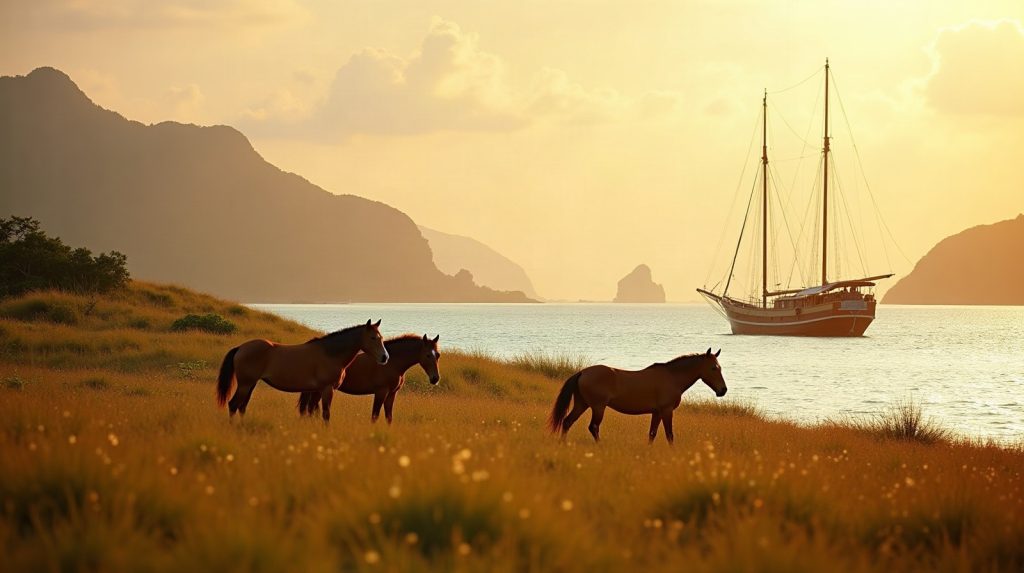
After a week among Sumba’s sandalwood horses, megalith villages and waterfall pools, the natural next leg is the sea. The best luxury cruise in Indonesia for…
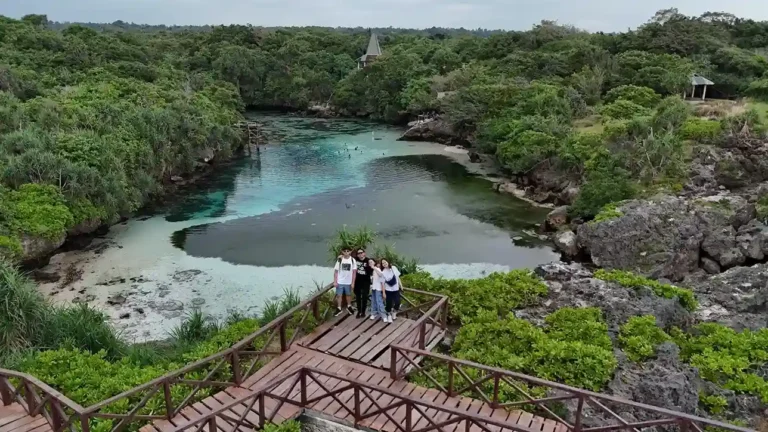
Weekuri Lagoon Sumba 2027: A Kodi Coast Day Plan With Mandorak and Ratenggaro
Weekuri Lagoon sits on the Kodi coast of Southwest Sumba, about 2 to 2.5 hours by road from Tambolaka Airport, and the sensible way to see…

Wairinding Sunrise Viewpoint 2027: Timing the Light and the Horses on East Sumba’s Ridges
The Wairinding sunrise viewpoint is a run of grass ridges inland from Waingapu, about 1.5 to 2 hours by road, so catching first light means leaving…
Planning a Trip to Sumba?
Two trips across the island — shared on a fixed date, or private on yours.